

Introduction
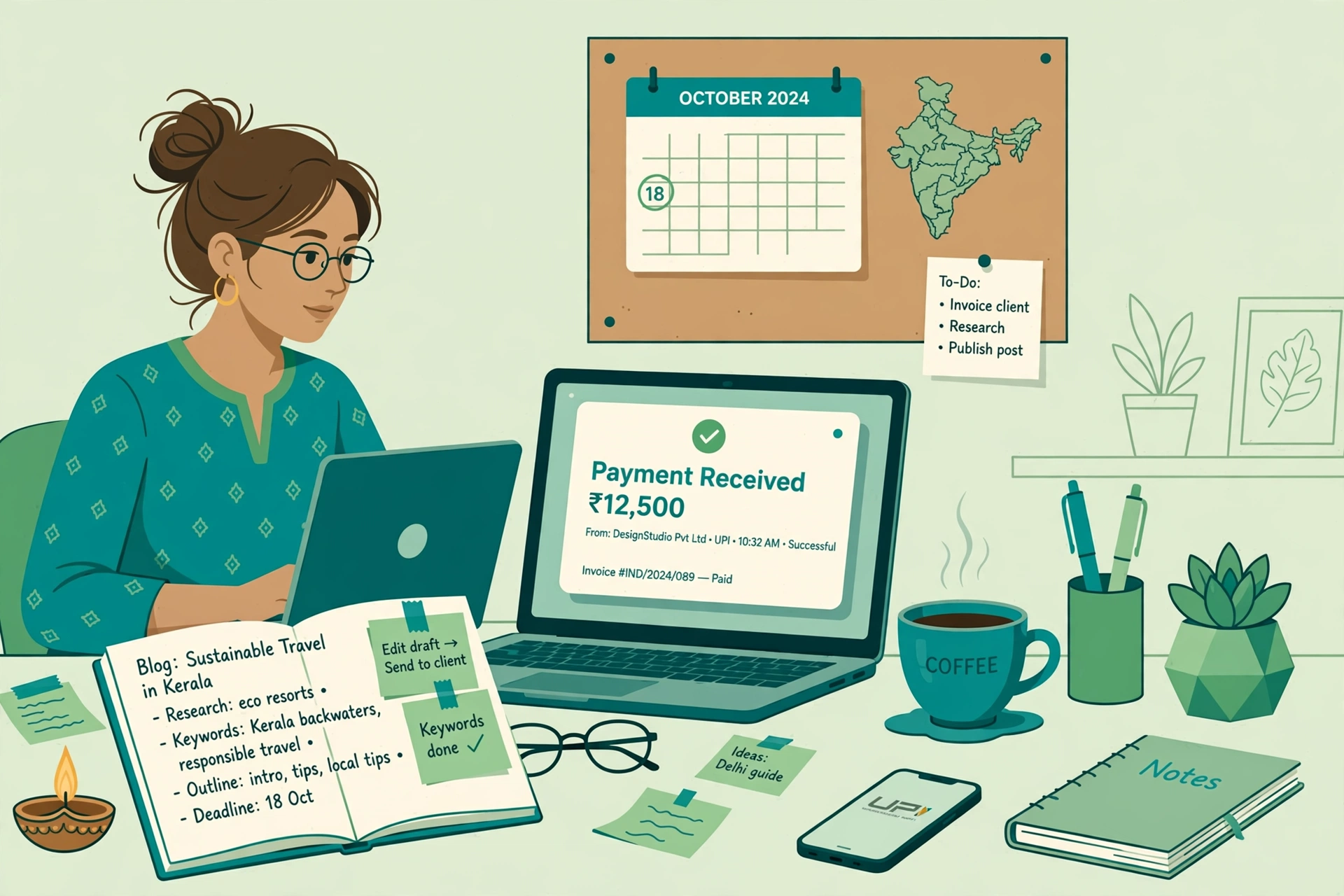
Freelance content writing is one of the most accessible ways to earn online in India in 2026. You need no office, no investment, and no degree in English literature: just a laptop, an internet connection, clear writing, and a plan to find paying clients.
The demand is real: Indian startups, agencies, ecommerce brands and bloggers publish millions of articles every year, and most of them do not have in house writers.
This guide takes you week by week from zero to your first paying clients, with a 2026 rate card, platform comparisons, and the practical details most guides skip: GST, invoicing, contracts, advance payments and realistic income.
What Freelance Content Writing Actually Involves
A freelance content writer is paid to produce content that serves a business goal, usually traffic, leads, or sales: blog posts, website copy, product descriptions, captions, newsletters, case studies, and scripts. Most beginners start with blog posts, where the volume is. You also run a small business: finding clients, negotiating rates, invoicing, chasing payments, and managing taxes.
The 2026 Starter Roadmap: Week by Week
Weeks 1 and 2: Build your core skills. Learn the two skills that decide your income: clear writing and basic SEO. Practise daily: rewrite a popular article in your own words and write 500 words a day on topics you enjoy. Learn the honest use of AI tools too. AI can help with outlines, research summaries, and grammar, but it cannot replace your research and judgement, and clients in 2026 reject fully AI generated text. Our guide to the Best AI Writing Tools for Indian Creators in 2026 explains which tools are worth your time.
Weeks 3 and 4: Choose your niche. Generalist writers compete with everyone. Niche writers compete with few and charge more: a writer covering finance, health, technology or education can charge double the generalist rate. Pick a niche using three filters: what you know or enjoy, what pays, and what has demand. Finance, SaaS, healthcare, real estate and technology pay best.
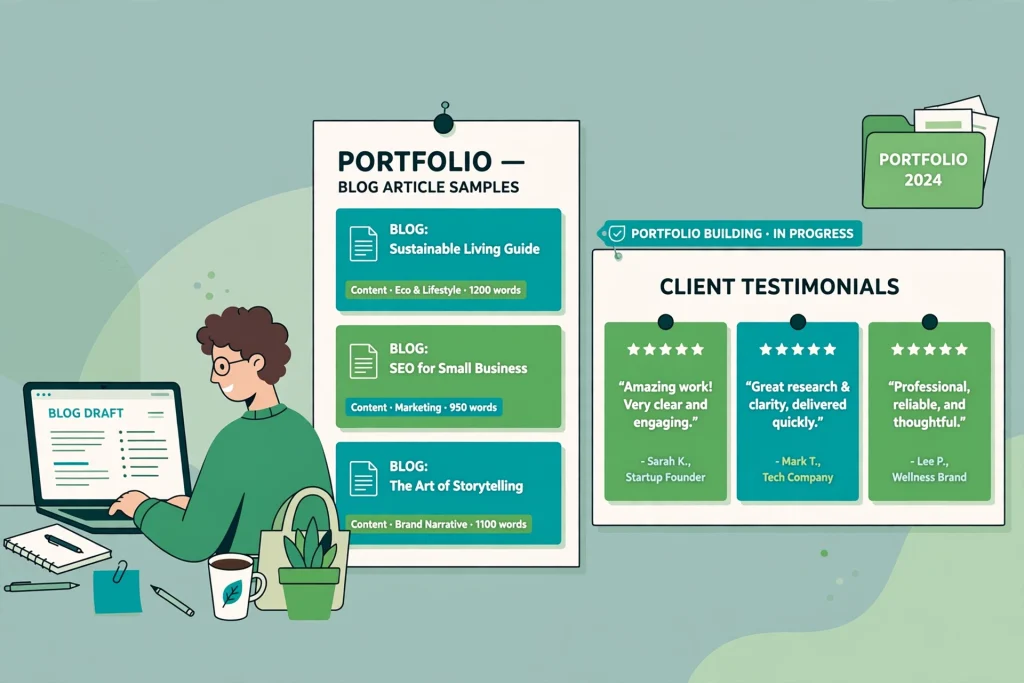
Weeks 5 and 6: Build a portfolio. Clients will not hire you without samples, and you do not need a client to create them. Write three to five strong pieces yourself: one 1,500 word blog post, one product description set, one listicle, and one how to guide. Publish them on Medium or your own WordPress blog, so you can share links instead of Word documents.
Weeks 7 and 8: Set up profiles and start applying. Create profiles on the platforms that suit you, which we compare below. Write a clear headline stating your niche, such as “SEO Content Writer for Indian Fintech Brands”. Add your samples, set your rates, and apply to jobs daily. At the same time, start direct outreach: list twenty Indian startups, agencies or blogs in your niche, find the founder or content manager on LinkedIn, and send a short message offering one useful idea for their blog. Direct outreach produces better clients than platforms.
Weeks 9 to 12: Win your first clients and deliver brilliantly. Your first clients are the hardest to win and the most important to keep. Price fairly, deliver early, and communicate clearly. Ask for a short testimonial after every project, and ask happy clients for referrals. One good client who gives you regular work is worth ten one off gigs. Track clients, rates, deadlines and payments in a simple sheet.
Freelance Content Writing Rates in India in 2026
The table below reflects typical market rates in India in 2026 for Indian clients. International clients usually pay two to three times these rates.
| Content Type | Beginner (0 to 6 months) | Intermediate (6 months to 2 years) | Experienced (2 years plus) |
|---|---|---|---|
| Blog post, per word | Rs 0.50 to Rs 1 | Rs 1 to Rs 2.50 | Rs 2.50 to Rs 6 |
| Blog post, 1,000 words | Rs 500 to Rs 1,000 | Rs 1,000 to Rs 2,500 | Rs 2,500 to Rs 6,000 |
| Website copy, per page | Rs 800 to Rs 1,500 | Rs 1,500 to Rs 4,000 | Rs 4,000 to Rs 10,000 |
| Product description, each | Rs 50 to Rs 150 | Rs 150 to Rs 400 | Rs 400 to Rs 1,000 |
| Social media captions (10) | Rs 300 to Rs 600 | Rs 600 to Rs 1,500 | Rs 1,500 to Rs 3,000 |
| Case study, 1,000 words | Rs 1,500 to Rs 3,000 | Rs 3,000 to Rs 6,000 | Rs 6,000 to Rs 15,000 |
| Email newsletter, each | Rs 500 to Rs 1,000 | Rs 1,000 to Rs 2,500 | Rs 2,500 to Rs 5,000 |
Raise your rates every three to six months as your portfolio grows. Tell existing clients in advance and offer the new rate from the next project. Good clients accept a 15 to 25 percent increase if your work has improved.
Avoid three pricing mistakes. Do not accept per word rates below Rs 0.50 for researched articles: a 1,000 word article then pays Rs 500 for three hours of work. Do not work for free “exposure” beyond one guest post. And do not quote a rate before you understand the scope: ask how many words, how much research, and how many revisions are included.
Best Platforms for Indian Freelance Writers Compared
| Platform | Fees | Competition | Best For |
|---|---|---|---|
| Upwork | 10 percent service fee | Very high | Serious long term freelancers, international clients |
| Fiverr | 20 percent fee, seller keeps 80 percent | Very high | Packaged services, quick gigs, beginners building reviews |
| Freelancer.com | 10 percent fee | Very high | Varied projects, often lower budgets |
| Internshala | Free for freelancers | Medium | Students and freshers finding Indian startups |
| Free to post and pitch | Medium | Direct clients, personal branding, high value work | |
| Direct outreach | No fee | Low per message | Best clients, no commission, full control |
| Indian platforms (WorknHire, Truelancer) | 5 to 15 percent | Medium | Indian clients paying in rupees |
Upwork is the largest marketplace and the best place to find international clients who pay in dollars. The 10 percent fee is fair. Competition is intense, and new profiles struggle for the first few jobs, so your profile needs strong samples and a niche headline. Apply to five jobs a day, and once you have ten good reviews, work comes easier.
Fiverr works differently: clients come to you based on your gig listings. Create specific gigs, such as “I will write a 1,000 word SEO blog post for Indian startups”. Price your basic package low to get initial orders and reviews, then raise it. Fiverr takes 20 percent.
Freelancer.com has plenty of listings but many low budget ones. Indian platforms like Truelancer and WorknHire are worth trying for your first clients in rupees.
LinkedIn and direct outreach are the highest value channels. Post useful writing tips, comment on founders’ posts in your niche, and send personalised connection requests. When you pitch, lead with value: suggest a specific article idea for their blog. A pitch that shows you read their website beats a generic proposal.
The 2026 Essentials: AI, SEO, Contracts and Payments
SEO writing is now mandatory. In 2026, a content writer who does not understand SEO is hard to hire. Learn how to use a focus keyword naturally, write meta descriptions, structure headings, and add internal links. Our guide on How to Write Blog Posts That Rank in India covers the full process. Deliver articles a client’s SEO team can publish without heavy editing.
Using AI tools honestly. Use AI for outlines, research summaries and grammar checks, but write the final article yourself and fact check everything. Clients reject fully AI generated content. Your value is in research, structure, original thinking, and a human voice.
Contracts and advance payments. Always work with a simple written agreement stating the scope, rate, deadline, revisions, and payment terms. Always take a 50 percent advance from new clients: this is standard practice and protects you from non payment. Clients who refuse an advance are a warning sign. For regular clients with a good payment history, you can move to payment on delivery or monthly billing.
GST and invoicing. If your annual freelance income crosses Rs 20 lakh, GST registration is mandatory in most states. Use a free invoicing tool, mention your PAN, and number your invoices sequentially. Set aside 10 to 20 percent of every payment for income tax, and consult a chartered accountant once your income is regular.
Getting paid. Indian clients usually pay by UPI or bank transfer, which is instant and free. International clients pay through PayPal or Payoneer, which work well in India but charge fees and take a few days. PayPal charges around 4 to 5 percent including currency conversion. Always confirm the payment method and who bears the fees before you start work.
Realistic Income Expectations
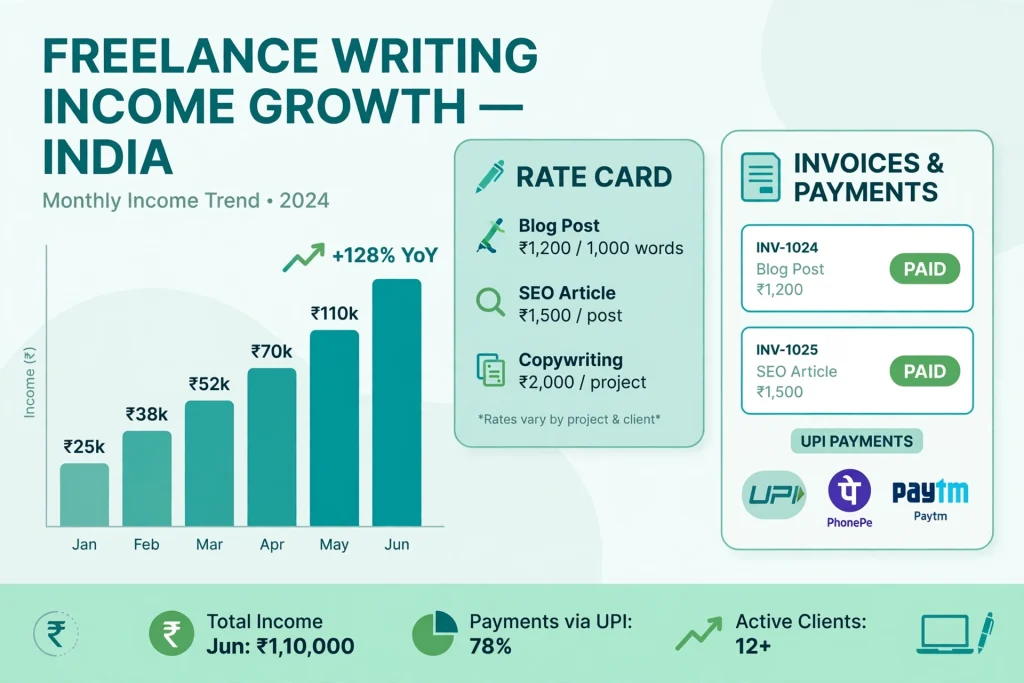
Be honest with yourself about income, because unrealistic expectations are the top reason beginners quit. In your first month, expect Rs 0 to Rs 5,000: you are building samples, applying for jobs, and learning. By three months, expect Rs 10,000 to Rs 25,000 a month from two or three clients. By six months, a focused writer with a niche and good reviews can earn Rs 25,000 to Rs 50,000 a month. Established writers with two years of experience earn Rs 50,000 to Rs 1,50,000 a month. Income is uneven, so keep an emergency fund equal to two months of expenses, and never depend on a single client for more than 40 percent of your income.
Common Reasons Freelance Writers Fail
Most beginners do not fail because they cannot write. They fail for practical reasons: they never pick a niche, so they compete with thousands of generalists on price; they undercharge, burn out, and quit; they stop applying after ten rejections, yet most writers win their first client after twenty to fifty applications; they miss deadlines, which destroys their reputation where reviews are permanent; and they never learn SEO. The fix is simple: pick a niche, charge fairly, apply daily, and deliver on time.
FAQ
How do I start freelance content writing in India with no experience?
Learn basic SEO, write three to five strong samples in one niche, and publish them on Medium or your own blog. Create profiles on Upwork, Fiverr and Internshala, and pitch Indian startups in your niche. Expect your first client in four to eight weeks.
How much can a beginner freelance content writer earn in India?
A beginner typically earns Rs 500 to Rs 1,000 per 1,000 word article. Monthly income in the first three months is usually Rs 5,000 to Rs 25,000, rising to Rs 25,000 to Rs 50,000 by six months with a niche.
Do I need GST registration for freelance writing in India?
GST registration becomes mandatory when annual turnover crosses Rs 20 lakh in most states. Save 10 to 20 percent of income for tax, and consult a chartered accountant once your income is regular.
Which platform is best for freelance content writers in India?
Upwork is best for international clients. Fiverr suits packaged gigs and beginners. Internshala and Truelancer are good for first clients in rupees. LinkedIn and direct outreach produce the highest value clients with no commission.
Should I use AI tools for freelance writing?
Yes, for outlines, research summaries and grammar checks, but write the final article yourself and fact check everything. Clients in 2026 reject fully AI generated content.
How do I get my first freelance writing client?
Apply to five jobs a day, and send five personalised pitches a week to businesses in your niche. Lead with a specific idea for their blog and offer a short paid trial article. Most writers win their first client after twenty to fifty applications.
Conclusion
Freelance content writing in India in 2026 is a real career, not a side hobby, but it rewards patience and professionalism. The writers who succeed pick a niche, build a strong portfolio, apply every day, deliver on time, and keep learning.
Your roadmap is clear: two weeks on skills, two weeks on your niche, two weeks on your portfolio, and two weeks on profiles and outreach. By week twelve, you should have your first clients. Charge fairly, take a 50 percent advance, keep your taxes in order, and raise your rates.
One more habit separates successful freelancers from the rest: they document their results. Turn every good project into a case study, because case studies win the next client. Our guide on How to Write a Case Study to Win Clients in India shows you exactly how to do it. Start this week: write your first sample.
