


A customer asks ChatGPT for the best accounting software for a small shop in Nagpur. Gemini is asked how much a website costs in India. Google’s AI Mode is asked which inverter lasts longest during power cuts. In each case, an AI reads dozens of pages and quotes a few. If your page is one of the quoted ones, you win attention without a click. If it is not, you are invisible.
Writing for AI search is not the same as writing for Google’s old ten blue links. The old game was ranking. The new game is being cited. This guide shows Indian writers, bloggers, and business owners how to write content that ChatGPT, Gemini, Perplexity, and Google AI Overviews actually quote, with an India-specific method, a before-and-after rewrite, and a weekly testing routine you can copy.
What AI Search Actually Reads
AI search engines do not read your page the way a human does. They break it into passages, understand the entities (your brand, your city, your product, your price), and pick the clearest passage that answers the question. The best writing for AI search follows six principles.
- Answer first. Put the direct answer at the top of the section, then explain it.
- Write extractable passages. Each section should work as a self-contained answer of 40 to 80 words that makes sense on its own.
- Name entities clearly. Write “Tally Prime costs around Rs 18,000 a year for a single user in India” instead of “It costs around eighteen thousand”.
- Be specific with numbers. Prices in rupees, dates, sizes, and timeframes are the details AI systems quote most.
- Structure everything. Headings, lists, and tables help AI systems understand your page and pull the right passage.
- Show real expertise. Original experience, test results, and Indian examples are the hardest content for AI to replace with a generic summary.
Different engines also behave differently. ChatGPT leans on Bing’s index, so being indexed in Bing matters more than most Indian writers realise. Google’s AI Mode fans out a question into many related searches, so a page that answers the main question and the follow-ups gets cited more. Perplexity prefers clear, sourced statements. Claude is pickier and favours well-written, authoritative pages.
The Answer-First Template
Use this template for every article you write for AI search. It works for blog posts, service pages, and product pages.
- Title: ask the question your reader asks, in their words.
- First paragraph: answer the question in one or two sentences, with the key number or fact included.
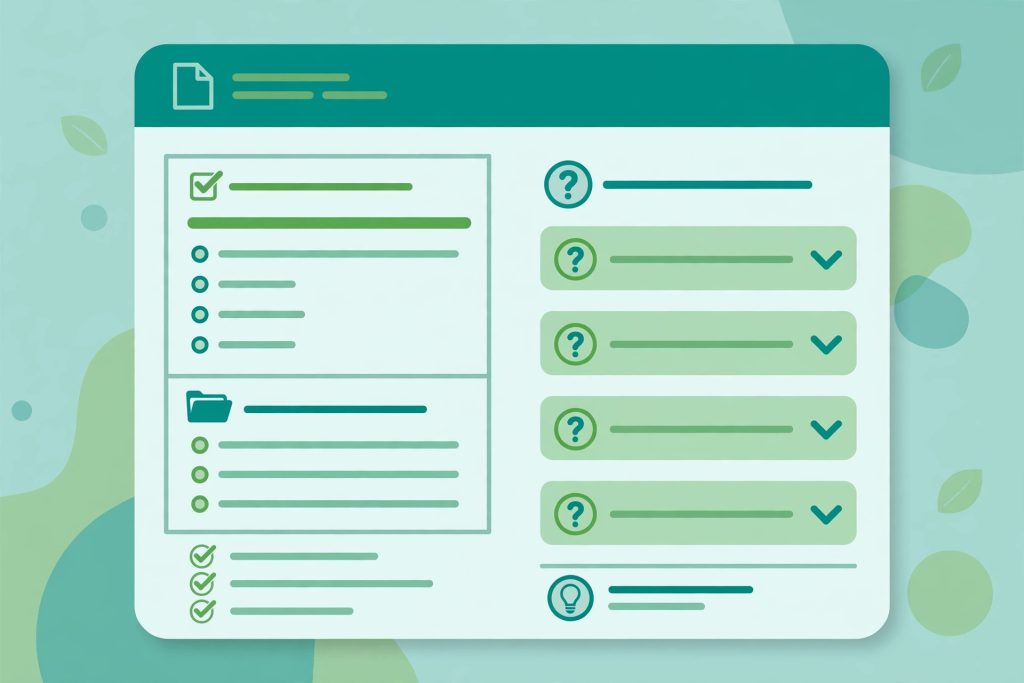
- Quick answer box: a short list or table that summarises the answer for readers in a hurry.
- H2 sections: one per sub-question, each starting with a direct answer of 40 to 80 words, then the detail.
- Examples with Indian context: prices in rupees, Indian cities, Indian brands, and Indian situations.
- FAQ section: each question as its own heading, with a short direct answer.
- Conclusion: a one-paragraph summary that restates the answer and the next step.
This structure serves human readers too. People skim, and an answer-first page respects their time. For the broader strategy behind this approach, see our guide to generative engine optimisation for Indian websites.
Before and After: Rewriting an Indian Business Page
Here is a real-style example. A cleaning service in Pune has a page titled “Our Services”. The original opening reads:
“We are a leading cleaning company in Pune. We offer the best cleaning services for homes and offices. Our team is professional and experienced. Contact us today for a free quote.”
An AI system can quote almost nothing from this. There is no fact, no price, and no answer to any question. Here is the rewritten version:
“Home deep cleaning in Pune costs Rs 2,500 to Rs 6,000 for a 2BHK flat, depending on size and condition. Our team cleans kitchens, bathrooms, and sofas in 3 to 4 hours, and we serve Baner, Wakad, Hinjewadi, and Kothrud. Book on WhatsApp and get a confirmed slot within 24 hours.”
The rewrite answers the question a customer actually asks, names a price range in rupees, names the areas served, and gives a time frame. An AI assistant asked “how much does home deep cleaning cost in Pune” can now quote this page directly. That is the whole difference between the old style and the new one.
Apply the same rewrite to every page on your site. Find the question each page should answer, and put the answer in the first paragraph with real numbers.
Writing for Indian Readers and Indian Queries
Indian users search differently from users in other countries, and your writing should reflect that.
- Cover Hinglish queries. Many Indians search in a mix of Hindi and English, such as “best inverter kaun sa hai” or “GST return kaise file kare”. Include these phrasings naturally in your headings and FAQs, because AI systems match the language of the question.
- Always give prices in rupees. A page that says “around Rs 5,000” is far more useful to an Indian reader, and far more likely to be cited, than one that says “affordable” or quotes dollars.
- Name Indian brands and platforms. Mention UPI, Razorpay, Tally, Jio, Flipkart, or Meesho where relevant, because these are the entities Indian users ask about.
- Use Indian examples. A delivery example from Surat beats a generic example from nowhere. A festival example for Diwali beats a generic holiday example.
- Remember Bing indexing. ChatGPT draws heavily on Bing, so submit your site to Bing Webmaster Tools and check that your pages are indexed there, not only in Google Search Console.
WordPress Implementation: Schema, llms.txt, and Search Console
Good writing needs good technical support. On WordPress, four steps make your content readable for AI systems.
1. Add FAQ schema
FAQ schema marks up your questions and answers so search engines understand them. Most SEO plugins, including Rank Math, add it automatically when you use a FAQ block. Check that your FAQ questions appear as their own headings with answers as separate paragraphs underneath, not merged into one block.
2. Add an llms.txt file
An llms.txt file is a simple text file at your site root that lists your most important pages and a short description of each. AI crawlers read it to understand what your site covers. You can create it by hand or with a plugin, and it takes less than an hour for a small site.
3. Check your robots.txt
Make sure your robots.txt does not block AI crawlers by accident. Some security plugins block them by default. If you want AI systems to cite you, their crawlers need to read your pages.
4. Watch the Search Console Generative AI report
Google Search Console now shows how your pages perform in AI features. Check it monthly. Look for pages that appear often in AI results, and improve the ones that get impressions but few citations. For general SEO writing technique, our guide to SEO content writing for Indian websites pairs well with this one.

The Weekly Citation Test
Writing for AI search is not a one-time task. Test your pages every week with a fixed routine.
- Pick 20 to 50 prompts your customers actually ask, including Hinglish versions.
- Ask the same prompts in ChatGPT, Gemini, Perplexity, and Google AI Mode.
- Record which of your pages get cited, and which competitor pages get cited instead.
- For every prompt where a competitor is cited and you are not, open their page and ask what it answers better than yours.
- Rewrite the weakest section of your page, publish the update, and test the same prompt again the following week.
This routine takes about an hour a week, and it is the fastest way to improve. You will learn which questions you already win, which ones you can win with a rewrite, and which ones need a new page entirely.
Common Mistakes to Avoid
- Writing a long introduction before answering the question. AI systems and readers both want the answer first.
- Using vague words instead of numbers. “Affordable”, “best”, and “leading” carry no information. Prices, dates, and sizes do.
- Copying competitors. AI systems prefer original content, and copied text rarely gets cited.
- Stuffing keywords. Write naturally, and use the question phrasing your readers actually use.
- Forgetting Indian context. A page about invoicing that never mentions GST is useless to an Indian reader, and AI systems know it.
- Publishing and never testing. If you never ask an AI the questions your page answers, you will never know whether it cites you.
A Copyable Checklist for Every Article
Before you publish, run through this list.
- Does the first paragraph answer the main question with a specific fact or number?
- Does every H2 start with a direct answer of 40 to 80 words?
- Are prices in rupees, with the year or date included?
- Are Indian brands, cities, and situations named?
- Is there a FAQ section with questions as headings and short direct answers?
- Is FAQ schema active on the page?
- Is the page indexed in both Google and Bing?
- Have you tested the main question in ChatGPT and Gemini to see if your page is cited?
If you can tick every box, the page is ready for AI search. For general blog writing craft, our guide on how to write blog posts that rank in India covers the foundations this guide builds on.
Frequently Asked Questions
What is AI search content writing?
It is writing that is designed to be quoted by AI search engines such as ChatGPT, Gemini, Perplexity, and Google AI Overviews. The content answers questions directly, uses clear structure, and includes specific facts and numbers that AI systems can cite.
How is writing for AI search different from normal SEO writing?
Normal SEO writing aims to rank on a results page. Writing for AI search aims to be cited inside the AI answer. That means answer-first structure, self-contained passages of 40 to 80 words, named entities, and original data matter more than keyword density.
Should I write separate content for AI search and Google?
No. Google itself says you do not need a separate version for AI. One well-structured, answer-first page serves both Google and AI search engines.
How long should an answer passage be for AI citation?
Aim for 40 to 80 words per passage: long enough to be complete, short enough to quote directly. Start each section with the answer, then add the detail underneath.
Does AI search work for Hindi and Hinglish content?
Yes. Indian users ask questions in Hindi, Hinglish, and English. Cover the phrasings your readers use, including Hinglish questions, and include prices in rupees and Indian examples.
How do I know if AI search is citing my website?
Test it weekly. Ask your target questions in ChatGPT, Gemini, Perplexity, and Google AI Mode, and record which pages get cited. Also check the Generative AI report in Google Search Console.
What is llms.txt and do I need it?
An llms.txt file is a simple text file at your site root that lists your important pages for AI crawlers. It helps AI systems understand your site. It takes less than an hour to create and is worth doing.
Conclusion
Writing for AI search is not a trick. It is good writing, done in a structure that machines can understand: answer first, be specific, name real numbers and real places, and organise everything clearly.
Indian writers have an advantage here. The web is full of generic English content, but there is far less good content that answers Indian questions with rupee prices, Indian brands, and Indian examples. If your pages do that, AI systems will quote them, and readers will trust them.
Start with one page. Rewrite its opening to answer the question directly, add a price in rupees, test it in ChatGPT and Gemini, and watch what changes. Then do the next page. Within a month, you will know exactly which questions you win, and your content will be working in the new search world instead of waiting for the old one to come back.
