

Introduction
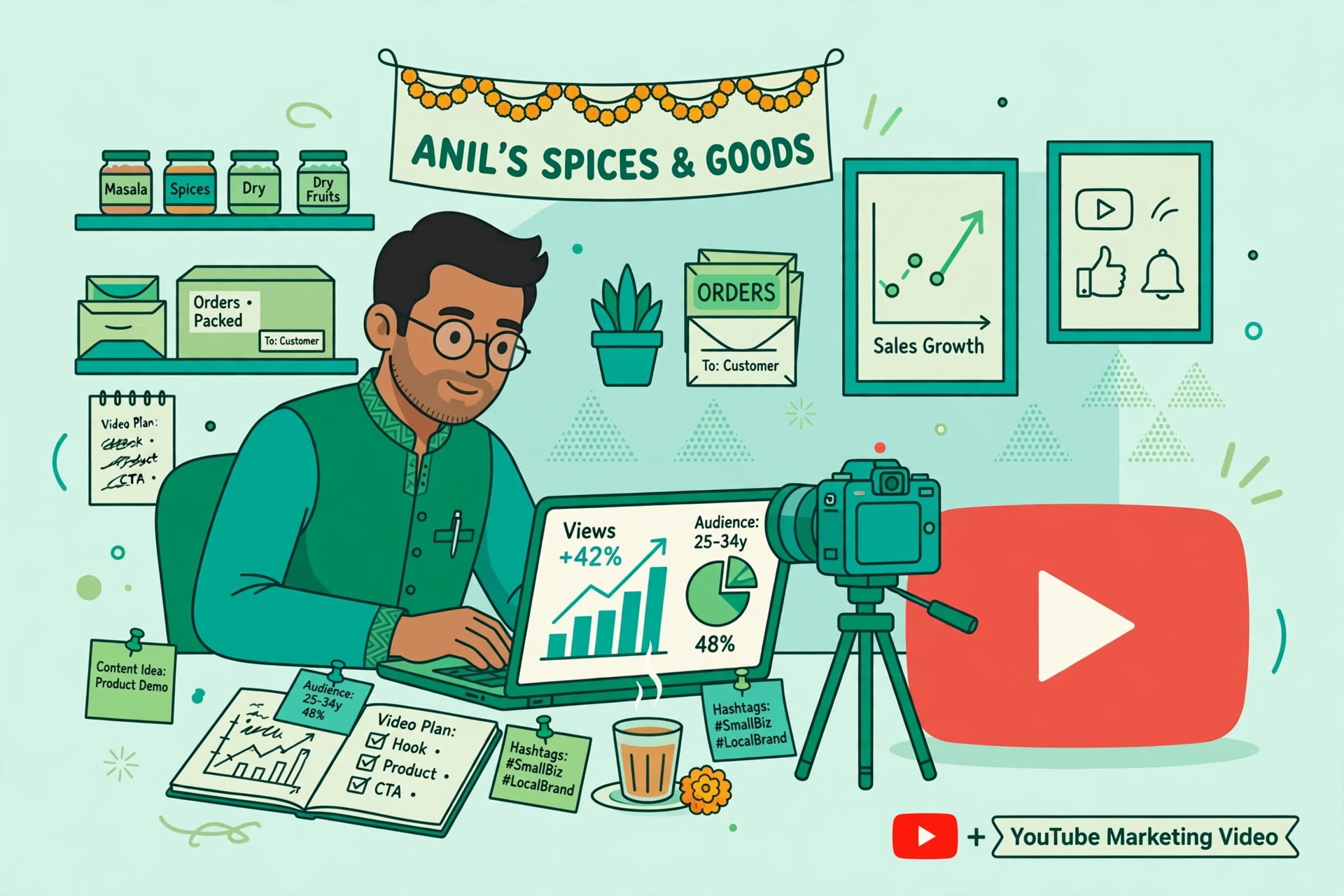
India has one of the largest YouTube audiences in the world, with over 490 million viewers every month. For a small business, those viewers search for reviews before buying, watch how-to videos before trying a service, and follow creators they trust. YouTube marketing in India has moved far beyond simply uploading a video and hoping people find it. In 2026, it combines search optimisation, short-form video, paid advertising, regional language content and analytics.
The good news is that a small business does not need a studio, a large team, or a huge budget to succeed. This guide covers channel setup, Shorts and long-form video, ad costs in rupees, regional language strategy, and a 30-day plan.
Why YouTube Works So Well for Indian Small Businesses
YouTube is the second largest search engine in the world, and in India it behaves like both a search engine and a social network. A customer searching for “best mixer grinder under 5000” is close to a purchase decision. Answer that search better than anyone else and you earn the click, the trust and often the sale.
Video builds trust faster than text: customers see your product, hear your voice and judge your expertise. For salons, coaching centres and repair shops, your face and knowledge become your brand. Finally, YouTube content keeps working: a well-optimised video can bring views and enquiries for years.
Setting Up a Channel That Converts Viewers Into Customers
Before you record anything, set up your channel properly. A careless channel page loses viewers before they watch a single video.
- Use your business name as the channel name so customers can find you by searching for your brand.
- Write a channel description stating what you do, who you serve and where.
- Link your website, WhatsApp number and Instagram profile so viewers can contact you.
- Create playlists such as product demos and how-to guides, because playlists keep viewers watching longer.
Shorts vs Long-Form Videos: Use Both, for Different Jobs
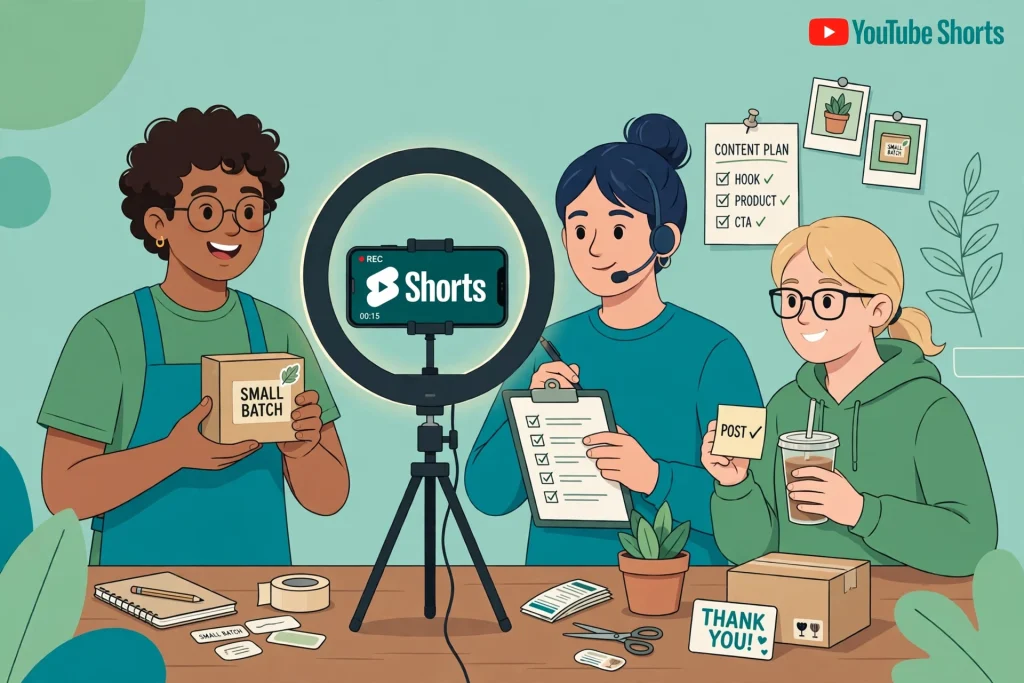
Shorts are vertical videos under 60 seconds, shown in the Shorts feed. They can reach thousands of new viewers quickly, even on a new channel. They suit quick tips, product teasers and before and after clips: Shorts build reach and subscribers fast, but they rarely produce deep trust on their own.
Long-form videos of 8 to 20 minutes do the deeper work. They answer full questions, demonstrate products properly and let viewers get to know you. A 12-minute video on choosing the right inverter for a home builds the authority that turns a viewer into a paying customer. Aim for two to three Shorts and one long-form video per week: Shorts attract new viewers, long-form videos convert them.
YouTube SEO: How Indians Actually Find Your Videos
YouTube SEO decides whether your video appears when someone searches. Search brings viewers who type a query; browse brings viewers YouTube recommends your video to. Optimise for both.
Start with keyword research: type your topic into YouTube and note the autocomplete suggestions, which are real searches by Indian viewers. Check volume and difficulty in vidIQ or TubeBuddy, and prefer keywords with clear Indian intent, such as “best budget laptop for students in India”. Then apply the keyword properly:
- Put the main keyword in the video title, ideally near the start.
- Repeat it naturally in the first two lines of the description.
- Say the keyword aloud in the first 30 seconds, because YouTube transcribes speech.
- Add the keyword as the first tag, plus related tags such as your city and niche terms.
- Name your video file with the keyword before uploading.
Thumbnails matter as much as titles for browse traffic. Use a clear face or product image, two or three words of large text, and high contrast colours. Test two thumbnail styles and keep the one with the higher click-through rate.
YouTube Ads in India: Formats and Rupee Budgets
Ads let a small business reach a precise audience quickly. In 2026, the main formats are skippable in-stream ads, Shorts ads, in-feed ads and six-second bumper ads. Skippable in-stream ads are the most common choice because you only pay when someone watches at least 30 seconds or clicks.
Cost per view for a skippable ad often falls between Rs. 0.50 and Rs. 3, and cost per thousand impressions usually ranges from Rs. 50 to Rs. 300. A local business can start with a daily budget of Rs. 300 to Rs. 500 and test one video against one audience before spending more.
Target by location first: your city, your state, or a radius around your shop. Then add interest and demographic layers such as age and customer interests. Retargeting works even better: show ads to people who already watched your videos or visited your website, since they already know your brand.
A simple starter plan is Rs. 10,000 in the first month: Rs. 6,000 on a city-targeted in-stream campaign and Rs. 4,000 on retargeting. Measure cost per lead or cost per WhatsApp enquiry, not just views. Compare paid social before splitting your budget with our guide to Meta Advantage Plus ads in India.
Monetisation: When Your Channel Starts Paying You
Treat YouTube as a marketing channel first: sales from your own products usually earn more than ad revenue. Still, monetisation through the YouTube Partner Programme is a useful extra income stream once you qualify. As of 2026, you need 1,000 subscribers and either 4,000 hours of watch time in the last 12 months or 10 million Shorts views in the last 90 days.
Once accepted, you earn a share of ad revenue shown on your videos. Indian channels typically earn between Rs. 30 and Rs. 150 per 1,000 views from ads, depending on the niche and the audience. Beyond ads, consider affiliate links, sponsored videos, selling a digital product such as a course, and channel memberships. Prioritise leads and sales first.
Regional Language Strategy: The Biggest Missed Opportunity
English-only content reaches only part of India. A large share of YouTube growth in India comes from Hindi, Tamil, Telugu, Bengali, Marathi and other regional languages. Viewers prefer learning in the language they think in, and competition in regional languages is usually lower.
You do not need to abandon English: choose one primary language based on where most of your customers live, and add subtitles in a second language. If your customers are spread across India, consider a second Hindi channel: fewer creators serve that audience, so a Hindi tutorial can outrank dozens of English videos. Use the language in titles and descriptions too, not only in the audio. Speak the language your customer speaks, and you remove the biggest barrier between your video and their trust.
Analytics That Actually Matter for a Small Business
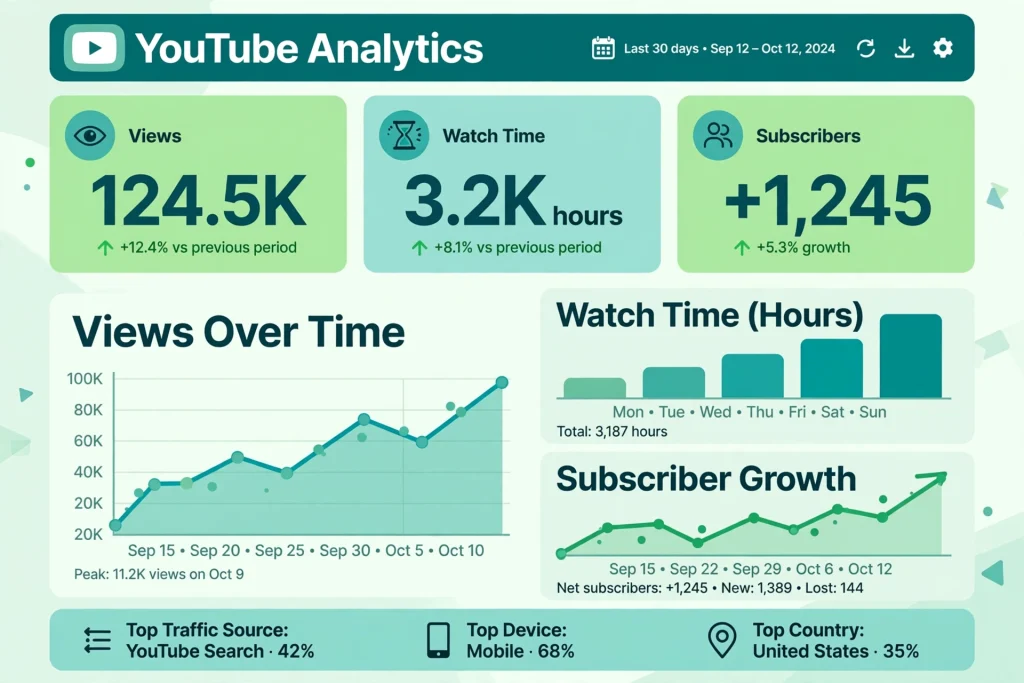
Watch these five metrics every week.
- Click-through rate (CTR): the share of people who click after seeing your thumbnail. Below 2 percent means the title or thumbnail needs work; aim for 4 percent or higher.
- Average view duration and audience retention: how long people stay. If most viewers leave in the first 30 seconds, open with the promise of the video, not a long greeting.
- Traffic sources: whether viewers come from search, browse, suggested videos or Shorts.
- Subscriber growth per video: which videos turn viewers into subscribers.
- Conversions: clicks on your website link, WhatsApp enquiries and sales that came from a video. Use UTM parameters or ask new customers how they found you.
A video with 2,000 views and 20 paying customers beats one with 100,000 views and none.
A 30-Day Starter Plan for Your First Month
Week 1: Foundation. Set up or clean up the channel, write the description, create the banner, and research 10 keywords with vidIQ or TubeBuddy. Record your first long-form video answering your customers’ most common question. Publish it, plus two Shorts cut from the same recording.
Week 2: Build the habit. Publish your second long-form video and three Shorts. Create playlists and add end screens pointing to your next video and WhatsApp link. Reply to every comment within 24 hours.
Week 3: Test paid reach. Put Rs. 300 per day behind your best performing video as a skippable in-stream ad targeted at your city. Publish your third long-form video and three more Shorts.
Week 4: Double down. Make your fourth long-form video on the topic that performed best in weeks 1 to 3. Publish a behind the scenes or customer story video, which builds trust. Review the month: views, subscribers, enquiries and ad spend per lead. Keep the formats that worked best and drop the ones that did not.
After 30 days you will have four long-form videos, around ten Shorts, real analytics and your first data on what your audience wants.
Tools and Common Mistakes
You do not need expensive software. vidIQ covers keyword research and competitor tracking, with a free plan that is enough to start. TubeBuddy adds bulk description tools and thumbnail testing. Canva makes quick thumbnails and channel art. CapCut is free mobile editing for Shorts, with captions and trending effects. Google Trends shows whether interest in your topic is rising in India. Record on a smartphone with good light near a window, edit in CapCut, design the thumbnail in Canva, and upload with a keyword rich title and description.
Many channels fail for avoidable reasons. Pick one niche and stay consistent for at least three months. State the benefit of the video in the first 30 seconds. Do not copy competitors: if the top videos on your keyword miss pricing or regional context, cover those gaps instead of repeating their script. Never buy subscribers or views: fake growth destroys engagement. Do not post only in English when your customers speak Hindi or a regional language. Always end with one clear call to action, such as visiting your website or messaging on WhatsApp. Share Shorts on Instagram Reels, embed videos in blog posts, and link your channel from your Google Business Profile. See our guide to Instagram marketing in India and our breakdown of Google Performance Max in India to build one connected plan.
FAQ
How much does YouTube marketing cost for a small business in India?
Organic YouTube marketing needs little beyond a ring light and microphone, usually under Rs. 5,000. For ads, Rs. 300 to Rs. 500 per day is enough to learn what works, and most small businesses spend Rs. 5,000 to Rs. 15,000 per month once a few videos perform well.
How long does it take to grow a YouTube channel in India?
Most small business channels see their first meaningful traction in 3 to 6 months of consistent uploads. Shorts can bring subscribers faster, sometimes within weeks, but building an audience that buys from you takes longer. Weekly uploads of one long-form video and two or three Shorts grow fastest.
Should a small business focus on Shorts or long-form videos?
Use both. Shorts bring fast reach and new subscribers; long-form videos build trust and drive enquiries and sales. Aim for two to three Shorts and one long-form video per week, with Shorts often cut from the same recording.
Do I need to make videos in Hindi or a regional language?
It depends on your customers. If most of them speak Hindi, Tamil, Telugu or another regional language, videos in that language will usually reach them better and face less competition. Start with your main language, add subtitles in a second language, or run a second Hindi channel.
How many subscribers do I need to earn money from YouTube in India?
To join the YouTube Partner Programme you need 1,000 subscribers and either 4,000 hours of public watch time in the last 12 months or 10 million public Shorts views in the last 90 days. Indian channels typically earn Rs. 30 to Rs. 150 per 1,000 ad views, but leads and sales are usually worth far more than ad revenue.
Conclusion
YouTube marketing in India in 2026 rewards small businesses that are consistent, helpful and honest. You do not need a big budget or a professional studio: just a channel that clearly explains what you do, videos that answer the questions your customers actually search for, a smart mix of Shorts and long-form content, and the discipline to publish every week.
Start with the 30-day plan: set up the channel, publish your first videos, test a small ad budget in your city, and speak your customers’ language. Measure what brings enquiries, not just views, and make more of what works. The businesses that win are rarely the ones with the most expensive equipment. They are the ones that kept showing up with useful videos while everyone else stopped after two uploads. Your first video does not need to be perfect. It needs to be published.
