


Introduction
Every video that holds your attention was written before it was filmed. The hook that stops your scroll, the story that keeps you watching, and the call to action that makes you subscribe all came from a script. Yet most Indian creators still film without one, then wonder why viewers leave after twenty seconds.
Learning how to write video scripts is the fastest way to improve your videos, whether you make YouTube videos, Instagram Reels, ads, tutorials, or corporate films. A good script saves shooting time, keeps your message clear, and makes editing far easier. This guide gives you a complete step-by-step process, the script formats professionals use, timing and word-count rules, templates, a worked example, and the mistakes to avoid. No experience needed, only a topic and a viewer in mind.
Why Scripting Matters More in India
Indian audiences watch video mostly on phones, often on the move, and often with the sound off. That makes scripting more important, not less. A script forces you to put the key point in the first seconds, to write for the ear as well as the eye, and to plan visuals and captions for viewers who never turn the sound on.
Scripting also saves money. A creator who scripts a video in one hour can shoot it in one hour and edit it in two. A creator who improvises often shoots for three hours, edits for six, and still ends up with a video that rambles. For brands, a script is also an approval tool: the client signs off the words before a single rupee is spent on shooting.
Step 1: Research Your Audience and Goal
Every script starts with two questions: who is watching, and what should they do after watching? A video for first-time home buyers in Pune needs different words from a video for college students learning video editing. Write down the viewer’s age, language, problem, and what success looks like for them.
Then define one goal for the video. One video can teach, entertain, sell, or build trust, but it cannot do all four well. A tutorial video should end with the viewer able to do something new. An ad should end with a click or a purchase. A brand story should end with the viewer remembering the brand. Write the goal at the top of your script and check every line against it. If a line does not serve the goal, cut it.
Step 2: Choose the Video Type and Structure
Different videos need different structures. Pick the type before you write a word.
- YouTube videos use a hook, an introduction that promises value, the main content in clear sections, and a call to action. Aim for a strong retention curve with a re-hook every two minutes.
- Tutorials use a problem, a quick result preview, step-by-step instructions, and a recap. Show the result first so viewers know the steps are worth following.
- Explainer videos use a simple problem, an everyday analogy, and a plain-language explanation. Explain it as you would to a bright 15-year-old.
- Ad scripts use a hook in the first 3 seconds, the pain point, the solution, proof, and one clear call to action. Keep them under 30 seconds unless the product needs more.
- Vlogs and storytelling videos use a scene, a conflict, and a resolution, told in the present tense with real details.
- Short-form Reels and Shorts use one idea, one hook, and one payoff, all inside 60 seconds.
Step 3: Outline Before You Write
Outline first, write second. A simple outline for a 10-minute YouTube video might be: hook (0 to 30 seconds), promise and agenda (30 seconds to 1 minute), point one with an example (1 to 4 minutes), point two with an example (4 to 7 minutes), point three with a mistake to avoid (7 to 9 minutes), and recap plus call to action (9 to 10 minutes).
Outlining stops the two biggest script problems: rambling and missing the point. It also lets you check the logic before you spend time on sentences. If the outline does not make sense, the script will not either. Spend 15 minutes on the outline for every hour you plan to spend writing.
Step 4: Write the Hook
The hook is the first 3 to 30 seconds, and it decides whether anyone watches the rest. YouTube data shows that most viewers decide in the first 30 seconds, and short-form viewers decide in the first 3. Write the hook last if that helps, but make it strong.
Good hooks come in a few proven types. A question hook asks the exact question the viewer typed into search. A problem hook states the pain in the viewer’s own words. A result hook shows the outcome first: “I grew a channel to 1,00,000 subscribers with these five scripts.” A curiosity hook opens a loop the viewer wants closed: “The third mistake is the one that kills most channels.” Pick one, write it in plain language, and test it by reading it aloud. If it sounds boring out loud, it will sound boring on camera.
Step 5: Write the Body for the Ear, Not the Eye
People listen to videos, so write the way people speak. Use short sentences, simple words, and contractions. Read every line aloud as you write it. If you stumble, rewrite it. If a sentence looks good on paper but sounds stiff when spoken, cut it.
Keep one idea per paragraph and use signposts so viewers can follow: “First”, “Next”, “Here is the part most people miss”. Use examples from Indian everyday life, because an analogy the viewer already understands beats a definition they have to learn. Explain compound interest as a snowball, an API as a waiter taking orders, or a sales funnel as a local market stall. Avoid jargon, or translate it the first time you use it.
Add visual and audio directions as you go. Note where to cut to B-roll, where to show a screenshot, where to add text on screen, and where to pause for effect. A script that only has spoken words is half a script. Our guide to Video SEO for Indian Creators and Businesses explains how the words you script also decide whether your video ranks in search.
Step 6: Write the Call to Action
End every video with one clear action, not five. Ask for the subscribe, the comment, the click, or the purchase, and say exactly what the viewer gets by doing it. “Subscribe for one practical video every Tuesday” works better than “please subscribe”. “Comment with your city and I will reply with a local tip” works better than “let me know in the comments”.
Place a soft call to action in the middle too, after you have delivered real value, because many viewers never reach the end. Never stack three asks in one sentence. One action, one reason, one moment.
Script Formats and a Fill-In Template
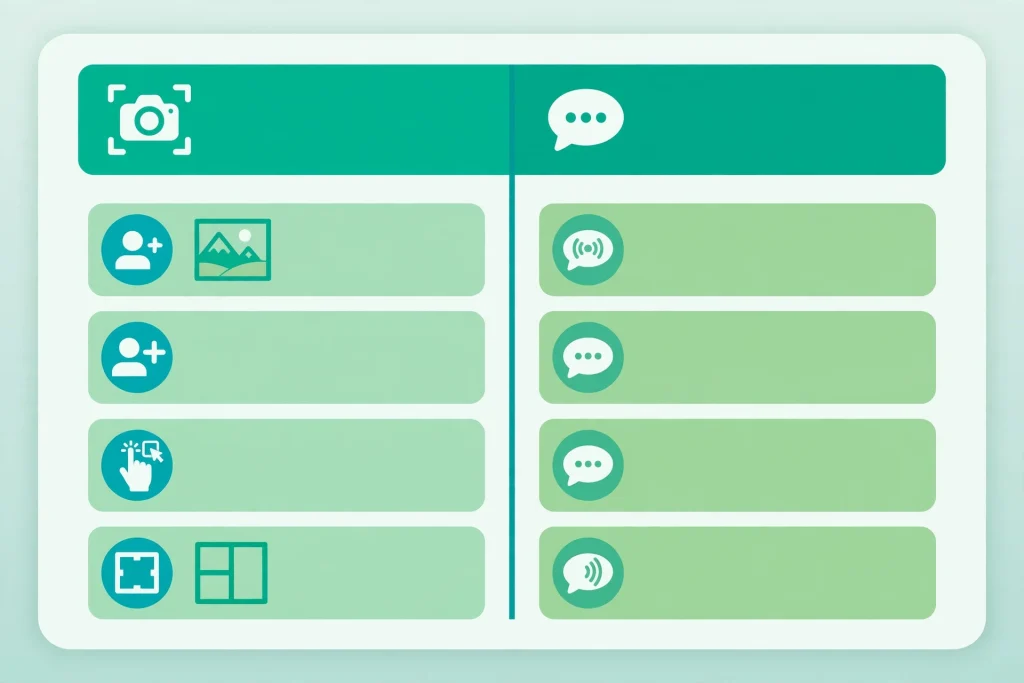
Two formats cover almost every video. The single-column format is a plain document with the spoken words in order, best for talking-head videos and vlogs. The two-column format puts visual directions in the left column and spoken words in the right column, best for ads, explainers, and corporate videos, because the editor can see what to show at every second.
Here is a fill-in template you can copy for any YouTube video:
- Hook (0 to 30 seconds): the question, problem, or result that stops the scroll.
- Promise (30 seconds to 1 minute): what the viewer will learn and why it matters.
- Section 1: the first point, with one example.
- Section 2: the second point, with one example.
- Section 3: the third point, with a common mistake to avoid.
- Re-hook: a reason to keep watching, placed halfway through.
- Recap: the three points in three sentences.
- Call to action: one action, one reason.
Timing and Word-Count Rules
Timing decides length, and length decides the script. Spoken English runs at about 130 to 150 words per minute, and Hindi and Hinglish are usually a little slower, around 120 to 140 words per minute. Use this table when you plan:
- 30-second ad: 65 to 75 words
- 60-second Reel or Short: 130 to 150 words
- 90-second explainer: 200 to 225 words
- 2-minute video: 260 to 300 words
- 5-minute video: 650 to 750 words
- 10-minute YouTube video: 1,300 to 1,500 words
Write to the table, not to a feeling. A script that is 500 words over target will be cut in editing, and the cuts will hurt the structure. Count words before you shoot.

A Worked Example: A 60-Second Script
Here is a complete 60-second script for an Indian audience, selling a budgeting app. Notice the structure: hook, pain, solution, proof, call to action.
Visual: a phone screen showing a bank balance falling. Spoken: “Your salary arrives on the first, and by the tenth, you are wondering where it went.” Visual: a simple pie chart of spending. Spoken: “Most of us do not overspend on big things. We lose money on small daily spending we never track.” Visual: the app opening and sorting expenses automatically. Spoken: “This app sorts every expense the moment you spend, and shows you the leaks in one screen.” Visual: a user smiling at a savings goal reached. Spoken: “Users save an average of Rs 3,000 a month in the first 90 days.” Visual: the app store button. Spoken: “Download it free today, link in the description.”
That is about 110 words, five visual directions, and one clear call to action. Copy the shape for your own videos.
Language Choice: English, Hindi or Hinglish
Language is a strategic choice for Indian creators. English reaches a premium, urban audience and ranks well in search. Hindi reaches a far larger audience and grows faster in Tier 2 and Tier 3 cities. Hinglish, the mix most Indians actually speak, often feels the most natural on camera and works well for Reels and YouTube.
Pick the language your viewer thinks in, not the language you think looks professional. Test one video in each language if you are unsure, and let the retention numbers decide. Add captions in the same language, because many viewers watch with the sound off on trains and in offices.
Tools, Teleprompters and Revision
You do not need expensive tools to script well. Google Docs or Notion work for most creators, and a simple teleprompter app on a phone or tablet keeps your delivery natural. AI tools can draft an outline or suggest hooks, but always rewrite the words in your own voice, because AI drafts sound generic and viewers notice. Our roundup of the Best AI Writing Tools for Indian Content Creators compares the free and paid options.
Revise in three passes. First, read the script aloud and fix anything you stumble over. Second, cut 10 percent of the words: the script will be tighter and the video will be shorter. Third, check the structure: does the hook promise something, does the body deliver it, and does the call to action follow naturally? If any answer is no, fix that section before you shoot. For the writing craft behind clear scripts, our guide to SEO Content Writing for Indian Websites covers structure and readability in depth.
Common Mistakes to Avoid
- No clear goal, so the video tries to do everything and does nothing well.
- A weak hook, so viewers leave in the first 30 seconds.
- Too much information, so the viewer remembers nothing.
- Writing for the eye, not the ear, so the script sounds stiff when spoken.
- Jargon with no translation, so beginners switch off.
- No visual column, so the editor has to guess what to show.
- A weak or missing call to action, so the video ends without a next step.
- Skipping the read-aloud test, so awkward lines reach the camera.
FAQ
How long should a video script be?
It depends on the video. A 30-second ad needs about 65 to 75 words, a 60-second Reel needs 130 to 150 words, and a 10-minute YouTube video needs 1,300 to 1,500 words. Spoken English runs at roughly 130 to 150 words per minute.
How many words per minute should I write for a video script?
About 130 to 150 words per minute for English, and about 120 to 140 words per minute for Hindi and Hinglish. Always read the script aloud and time it, because speaking speed varies by person.
How do I write a script for YouTube vs an ad?
A YouTube script uses a hook, a promise, sections with examples, and a call to action, and it can run 5 to 15 minutes. An ad script uses a hook in the first 3 seconds, the pain, the solution, proof, and one call to action, usually inside 30 seconds.
How do I start a video script?
Start with the viewer and the goal, then write the hook. Open with a question, a problem, or a result that matches what the viewer searched for. Write the hook last if you prefer, but never start filming without one.
Do beginners need a script for every video?
Yes, even a rough outline is better than no script. A script keeps you on topic, saves shooting and editing time, and makes your videos noticeably clearer. As you gain experience you can work from a detailed outline instead of a word-for-word script.
What is the best format for a video script?
Use a single-column script for talking-head videos and vlogs, and a two-column script with visual directions on the left and spoken words on the right for ads, explainers, and corporate videos. Both formats work, and the two-column format helps editors the most.
Conclusion
Writing a good video script is a learnable skill, not a talent. Define the viewer and the goal, pick the video type, outline before you write, open with a strong hook, write for the ear, add visual directions, and end with one clear call to action. Use the timing table to hit your length, test the language your audience thinks in, and always read the script aloud before you shoot. Start with the template in this guide and your next video, and you will see the difference in retention within a week.

1 Comment
Pingback: Google Flow AI: How to Create Videos in India (2026 Guide)