

Introduction
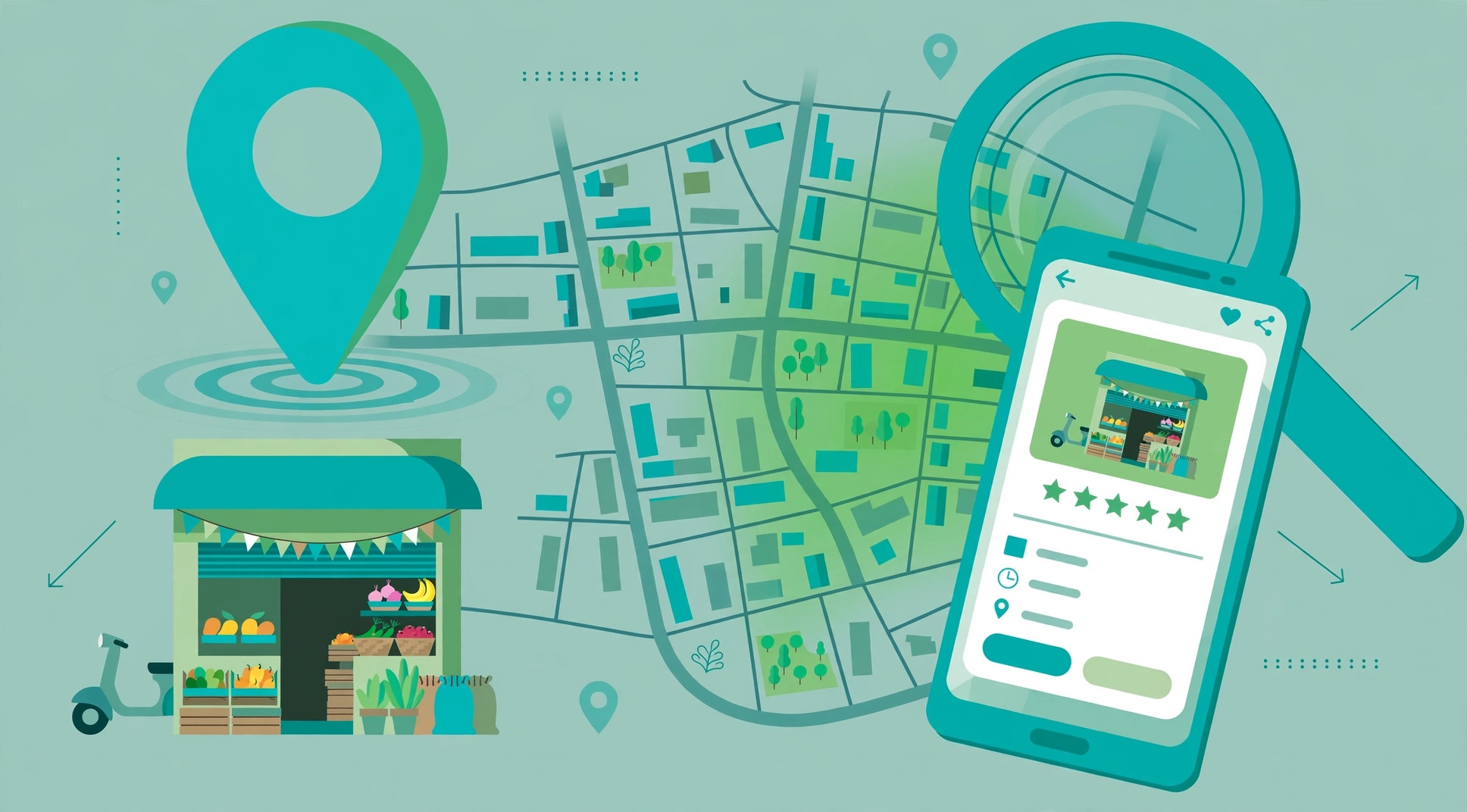
When someone in your city searches for a dentist near me, the best biryani in Hyderabad, or a plumber in Indore, Google shows a map with three businesses at the top. Those three get most of the calls, and the businesses below them get far less. That map is the whole game of local SEO for small business India, and the good news is that winning it costs almost nothing. You do not need a big advertising budget or a technical team. You need a complete Google Business Profile, consistent business details everywhere, a few honest reviews, and a website that mentions your city and services properly. This guide gives you seven steps in the order that saves the most time, based on what the top ranking guides for this keyword all agree on. Follow them in order, and a small shop, clinic, coaching centre or service business can start appearing in local results within weeks.
How Google Decides Which Local Businesses Appear
Google says three things decide which businesses appear in local results: relevance, distance, and prominence. Relevance is how well your profile matches the search: a dental clinic shows up for dentist searches, not for restaurant searches, and your primary category and services decide that. Distance is how far you are from the searcher or the area named in the search, and you cannot change it, so a business in one neighbourhood will not outrank a nearer business for a searcher standing next to that business. Prominence is how well known your business is, based on information from across the web, reviews, links and mentions, and this is where your work pays off. You can influence two of the three factors, relevance and prominence, and that is enough: a complete profile with good reviews and consistent listings beats an incomplete profile even when the incomplete one is slightly closer. Keep this in mind as you work through the seven steps, because every step below improves either relevance or prominence.
Step 1: Claim and Complete Your Google Business Profile
Your Google Business Profile is the single most important local SEO asset any Indian small business owns. It is free, it takes under an hour to set up, and it is what appears in Google Search and Maps when people search for your type of business nearby. Create it at business.google.com with the Google account you will use to manage it, then verify that you are the owner. Verification in 2026 is increasingly done by video, which requires you to walk through your business premises on camera. Google guidelines say a profile is only for a business that makes in-person contact with customers during its stated hours: a registered office you never use, a virtual office, or a P.O. box does not qualify, so read the guidelines in the Business Profile Help Centre before you start. Once verified, fill in every field honestly: the right primary category, because it is the single most important ranking signal in your profile, plus secondary categories, services, a description of up to 750 characters, opening hours including festival hours, and real photos of the shop, the team and the work. Businesses with photos receive 42 percent more requests for directions and 35 percent more website clicks than businesses without them.
Step 2: Make Your Name, Address and Phone Match Everywhere
Local SEO guides call this NAP consistency: your Name, Address and Phone number should read exactly the same on your Google profile, your website, your Facebook and Instagram pages, online directories, and any marketplace listings. Use exactly the same business name, address, PIN code and phone number on all of them, and the same spelling on your signboard, your invoices and your WhatsApp profile. Inconsistent details confuse customers and search engines alike: if Google sees three different spellings of your business name or two different phone numbers, it trusts your listing less, and customers who call a wrong number simply go to a competitor. This step costs nothing and takes about an hour: search for your business name online, open every listing you find, and fix every mismatch. Then do the same check once a quarter, because directories sometimes change your details without telling you.
Step 3: List Your Business in Trusted Indian Directories
A citation is any online mention of your business name, address and phone number, and citations on reputable directories are a confirmed local ranking signal. Each consistent listing is another place customers and search engines can find and confirm your details. The most valuable citation sources for Indian small businesses are Justdial, the highest traffic Indian business directory and essential for local visibility, Sulekha, which is strong in service categories and especially home services, and IndiaMART for product sellers. Add your business to these directories with the same NAP details as your Google profile, plus your city, state, PIN code, opening hours, photos and services. If you are GST registered, add your GSTIN where the directory supports it. Listings can appear within days of verification, but rankings build over weeks. Avoid paid listing packs that promise hundreds of citations at once: a few accurate listings on directories Indians actually use beat a hundred listings on sites nobody visits.
Step 4: Ask for Reviews the Honest Way
Google reviews are the second most important local ranking factor after your Business Profile completeness, and asking for them is a habit, not a campaign. Ask every happy customer for a review, at the moment they are happiest: right after a good meal, a finished repair, or a successful appointment. Make it easy by sharing your Google review link on a QR code at the counter, on your bill, and in your WhatsApp thank you message. One guide names five reviews as the minimum threshold to start seeing ranking impact, but the real goal is a steady flow, not a magic number, so aim for a few new reviews every month. Never buy reviews, never post fake ones, and never offer a discount, gift or other reward for a review: Google removes fake reviews and can restrict your profile. Reply to every review, good or bad, because replies show future customers that you care, and a calm, helpful reply to a bad review often wins more trust than the review itself costs.
Step 5: Give Each Location and Service a Real Page on Your Website
Your website supports your map ranking, and a single generic homepage is not enough. Give each location a real page and each main service a real page, with the city and neighbourhood named naturally in the title, the headings and the text. A dental clinic in Lucknow should have a page that says it serves patients in Lucknow, names the areas it covers, and describes the treatments it offers. A coaching institute with two branches needs a page per branch, each with its own address, hours and phone number. This is also where keyword research for Indian websites matters: find the phrases people in your city actually type, such as dentist in Aliganj Lucknow rather than just dentist, and build one page per phrase with real content. Add your business name, address and phone number in the footer of every page, embed a Google Map on your contact page, and mark up your opening hours. These local pages do not need to be long, but they must be real: copied text with only the city name changed is thin content, and Google increasingly rewards businesses that show genuine, verifiable local relevance.
Step 6: Use WhatsApp Business for Enquiries and Repeat Customers
WhatsApp is where your customers already are, and the free WhatsApp Business app turns it into a local SEO asset. Set up a business profile with your name, address, hours and catalogue, add your products and services with photos and prices, and use quick replies and greeting messages to answer common questions fast. Link to your WhatsApp number from every listing: your Google profile, your website, your directory listings and your social media pages, so a customer who finds you on Maps can message you in one tap. A customer who messages you on WhatsApp is already warm, and the conversation that follows converts far better than a website form. Keep the catalogue current, answer quickly during business hours, and use broadcast lists only for customers who agreed to hear from you.
Step 7: Publish Local Content and Track What Works
The last step is the one that keeps working for years: publish content about your city and your services, and measure what it brings. Write about the topics your customers ask about: a clinic can write about monsoon health tips for its city, a hardware shop can write about preparing a home for the rainy season, and a coaching institute can write about exam dates and preparation plans. Include regional language where your customers use it: most local SEO content in India is in English, but a significant share of local searches, especially in Tier 2 and Tier 3 cities, happens in Hindi, Marathi, Tamil, Telugu, Kannada and Bengali, and that is the most underserved local SEO opportunity in India. Then measure the results: check your Google Business Profile insights for map views, direction requests and phone calls, and use our Google Analytics 4 guide for Indian businesses to track what visitors do after they reach your site. If a page brings calls, write more like it. If a service gets no searches, stop writing about it and fix your profile instead. Our SEO audit checklist for Indian websites gives you a full order to work through when you review your site each quarter.
How Long Does Local SEO for Small Business India Take to Work
Local SEO is not instant, but it is durable, and the timelines the ranking guides give form a range rather than a promise. A complete Google Business Profile can appear in the map pack within 2 to 4 weeks of setup and first reviews coming in. In Tier 2 and Tier 3 cities, where competition is lower, a business can reach the top three on Google Maps within 60 to 90 days with basic, consistent effort. On page optimisation usually shows noticeable ranking improvements within 4 to 8 weeks for low competition local terms, while broader gains from website pages, citations and reviews usually build over two to six months. A well optimised local presence built over six months will keep generating free inbound traffic for years, which is why local SEO is the single highest leverage digital investment most Indian small businesses can make. Do not expect results in a week, and do not stop after a month: the businesses that win local search are the ones that keep their profile, reviews and listings current for a year.
5 Local SEO Mistakes Indian Businesses Commonly Make
First, an incomplete profile: a profile with no photos, no services and no hours is the most common mistake, and it loses to every complete profile nearby. Second, keyword stuffing the business name: adding extra keywords to your business name on Google violates the guidelines and can get your profile suspended, so use your real business name only. Third, inconsistent details: a different phone number on Justdial and a different address on your website confuses Google and loses customers. Fourth, ignoring reviews: a business that never replies to reviews looks closed, while a business that answers every review looks alive. Fifth, buying reviews or paying for fake listings: Google removes fake reviews and can restrict your profile, and the damage lasts longer than the brief ranking boost. Avoid these five mistakes and you are already ahead of most small businesses in your city, because six in ten small businesses still do not use the internet for their business at all, which means the ones that do have a real advantage.
FAQ
How much does local SEO cost for a small business in India?
Almost nothing to start. Your Google Business Profile costs nothing, most Indian citation sites are free to list on, and WhatsApp Business is free. The real cost is your time: about two hours a week to keep your profile current, ask for reviews, answer messages and publish one local page a month. Paid help only makes sense when you have more locations than you can manage yourself.
How long does local SEO take to show results in India?
A complete profile can appear in the map pack within 2 to 4 weeks, and in Tier 2 and Tier 3 cities a business can reach the top three on Google Maps within 60 to 90 days with consistent effort. Broader gains from website pages, citations and reviews usually build over two to six months. Local SEO is not instant, but the traffic it brings is free and it keeps coming for years.
Do I need a website for local SEO?
A website helps a lot, but your Google Business Profile matters more at the start. A business with a complete profile and good reviews can appear on Maps with no website at all. A website becomes important when you want location and service pages that support your map ranking, and when you want to track what visitors do after they find you.
Can I do local SEO myself without an agency?
Yes. The seven steps in this guide are designed for a business owner, not an agency: claim your profile, keep your details consistent, list your business in directories, ask for honest reviews, build local pages, use WhatsApp Business, and publish local content. An agency only earns its fee when you have many locations, many services, or a competitive city where the basics are not enough.
Do Google reviews really affect my local ranking?
Yes. Reviews are the second most important local ranking factor after your Business Profile completeness, and they also affect whether customers choose you once they see you. Ask every happy customer, reply to every review, and never buy fake reviews, because Google removes them and can restrict your profile. A steady flow of genuine reviews beats a sudden burst of suspicious ones.
Conclusion
Local SEO for small business India comes down to seven steps done well and kept up: a complete Google Business Profile, consistent name, address and phone details everywhere, listings on trusted Indian directories, a steady flow of honest reviews, real location and service pages on your website, WhatsApp Business for enquiries, and local content that you measure. Start with step one this week, because your profile is the base of everything, and add one step each week until all seven are running. The businesses that win local search are not the ones with the biggest budgets, they are the ones that show up correctly on Maps, answer their customers, and stay consistent month after month. Do that, and when someone nearby searches for what you offer, your business will be one of the three they see first.

1 Comment
Pingback: Zero Click Searches in India: How to Still Win Traffic and Leads in 2026