

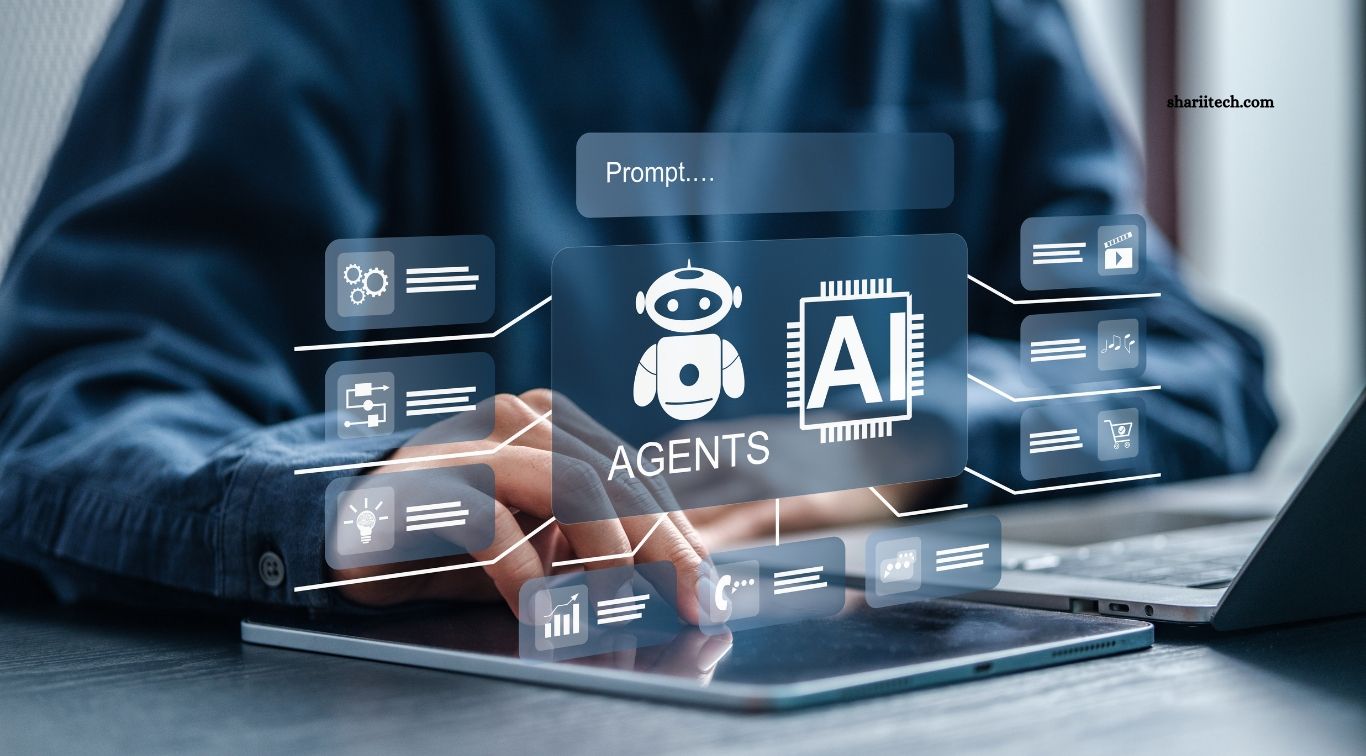
AI agents are changing how businesses manage daily tasks, communicate with customers, organize information, and make operational decisions. Unlike traditional automation tools, AI agents can understand instructions, analyze information, complete multi-step tasks, and adapt their actions based on changing requirements. These capabilities help companies reduce repetitive work while allowing employees to focus on more valuable activities.
Businesses of different sizes are exploring AI agents to improve productivity, manage workflows, and deliver better customer experiences. From handling customer inquiries to preparing reports and coordinating projects, AI agents can support several departments. Understanding how these systems work and where they provide the most value can help organizations introduce automation without making everyday operations unnecessarily complicated.
Read More: Best Business Software Features to Look for in 2026
What Are AI Agents?
AI agents are software systems designed to understand goals, process information, and perform tasks with a certain level of independence. They use artificial intelligence technologies, including language models, data analysis, and connected software tools, to respond to instructions and complete specific activities. Depending on their design, an AI agent can answer questions, retrieve information, update records, schedule tasks, or coordinate multiple steps within a business workflow.
Unlike basic chatbots that mainly respond to user messages, AI agents can often take action through connected applications. For example, an agent might receive a customer request, check an order database, identify the relevant information, and prepare a response. Human approval may still be required for sensitive decisions, financial transactions, or actions that could significantly affect customers or business operations.
Automating Repetitive Administrative Tasks
Administrative work often consumes valuable time across different departments. Employees regularly handle activities such as organizing documents, updating spreadsheets, sorting emails, entering information, and preparing routine reports. AI agents can assist with these responsibilities by processing incoming information, identifying relevant details, and completing predefined steps through connected business applications.
This automation can reduce manual effort and help teams maintain more consistent workflows. For example, an AI agent could organize incoming invoices, extract important details, and send them to the appropriate employee for approval. Businesses should still establish clear review procedures because incorrect information, unusual documents, or incomplete instructions may require human attention.
Improving Customer Support and Communication
Customer support teams receive questions about products, orders, payments, delivery schedules, and technical problems throughout the day. AI agents can help manage common inquiries by accessing approved knowledge bases and customer information to provide relevant answers. They can also categorize support requests, collect necessary details, and direct complicated issues to the appropriate department.
These capabilities can improve response times and make customer service available outside normal business hours. However, businesses should provide an easy way for customers to reach human representatives when an issue requires judgment, empathy, or specialized assistance. Regularly reviewing agent responses also helps organizations identify inaccurate answers and improve the overall customer experience.
Streamlining Sales and Lead Management
Sales teams often spend significant time identifying potential customers, organizing contact information, following up on inquiries, and updating customer relationship management systems. AI agents can support these activities by reviewing incoming leads, organizing prospect details, drafting personalized follow-up messages, and reminding sales representatives about important opportunities.
An AI agent can also help sales employees prepare for meetings by summarizing previous conversations and highlighting relevant customer requirements. This allows representatives to spend more time building relationships and understanding customer needs. Businesses should establish communication rules and approval processes to ensure automated messages remain accurate, relevant, and consistent with their brand.
Managing Emails, Meetings, and Scheduling
Email communication and meeting coordination can create unnecessary interruptions during the working day. AI agents can help organize inboxes, identify urgent messages, summarize long email conversations, and draft responses based on business instructions. Some connected systems can also assist with checking calendar availability and suggesting suitable meeting times.
These features can make communication easier for managers, employees, and remote teams. Instead of manually reviewing every message, employees can use AI-generated summaries to identify important information and decide which tasks require attention. Before allowing an agent to send messages or change calendar events automatically, businesses should define access permissions and require approval for important communications.
Supporting Data Analysis and Business Reporting
Businesses collect information from sales systems, customer platforms, financial records, websites, and internal applications. Reviewing this information manually can take considerable time, particularly when managers need regular updates about performance. AI agents can help gather approved data, identify patterns, summarize important changes, and prepare reports that make business information easier to understand.
For example, an agent could summarize weekly sales figures, highlight changes in customer demand, and identify products with declining performance. These insights can help managers decide where further investigation is needed. However, AI-generated analysis should not replace accurate financial records or professional judgment. Businesses must verify data sources, calculations, and important conclusions before using reports to make significant decisions.
Simplifying Inventory and Supply Chain Management
Inventory management requires businesses to monitor stock levels, track incoming orders, coordinate suppliers, and avoid shortages or excess products. AI agents can support these processes by reviewing inventory records, identifying products approaching their reorder levels, and notifying employees when action may be necessary. When connected to suitable systems, they can also help prepare purchase requests and update order information.
Supply chain teams can use AI agents to organize supplier communications, summarize delivery updates, and identify potential delays. These capabilities can improve visibility and help employees respond to changing conditions more quickly. Nevertheless, purchasing decisions should follow approved budgets, supplier agreements, and authorization procedures, especially when automated actions involve significant financial commitments.
Improving Project Management and Team Productivity
Managing projects involves assigning responsibilities, tracking deadlines, monitoring progress, and keeping employees informed. AI agents can help teams organize project information, summarize discussions, identify overdue tasks, and send reminders about upcoming deadlines. They can also convert meeting notes into task lists and help employees understand their responsibilities.
These features are particularly useful for businesses managing multiple projects or distributed teams. Managers can spend less time collecting routine updates and more time resolving problems, supporting employees, and planning future work. Clear task ownership remains essential because AI agents can organize information and suggest actions, but employees still need to make important decisions and remain accountable for project outcomes.
How Small Businesses Can Benefit From AI Agents
Small businesses often operate with limited budgets and smaller teams, making efficient resource management especially important. AI agents can help owners handle routine customer inquiries, organize appointments, prepare marketing drafts, manage basic administrative activities, and monitor business information. These capabilities can provide useful support without requiring a company to hire additional employees for every repetitive responsibility.
Starting with a few well-defined tasks is usually more practical than automating an entire business at once. Owners can identify activities that consume considerable time, choose suitable AI tools, and evaluate whether automation improves productivity. Comparing subscription costs, integration requirements, data protection policies, and expected benefits helps small businesses avoid investing in systems that do not solve meaningful problems.
Choosing the Right AI Agent for Your Business
Selecting an AI agent requires understanding the tasks it will perform and the systems it needs to access. Some agents specialize in customer service, while others focus on sales, data analysis, scheduling, or workflow automation. Businesses should compare available features, integration options, reliability, customization, security controls, and pricing before selecting a solution.
It is also important to test an AI agent with a limited workflow before expanding its responsibilities. Employees should understand how the system operates, which information it can access, and when human approval is required. A successful implementation depends on reliable technology, clear instructions, appropriate permissions, and regular performance reviews rather than automation alone.
Challenges and Risks of Using AI Agents
Although AI agents offer useful capabilities, they can make mistakes, misunderstand instructions, or produce inaccurate information. Their performance depends on the quality of available data, system design, and the instructions they receive. Poorly configured agents may also repeat incorrect information, perform unsuitable actions, or create confusion when connected to multiple business applications.
Data privacy and security require particular attention when agents handle customer details, financial records, or confidential company information. Businesses should apply access controls, monitor automated activities, protect sensitive data, and maintain human oversight for high-impact decisions. Establishing clear limits and testing workflows regularly can reduce risks while allowing organizations to benefit from automation.
The Future of AI Agents in Business Operations
AI agents are expected to become more capable as artificial intelligence models, business software integrations, and automation platforms continue to develop. Future systems may coordinate activities across several departments, helping businesses connect customer service, sales, finance, inventory, and project management workflows. This could reduce information gaps and make routine operations more efficient.
However, successful adoption will depend on responsible implementation and measurable business value. Companies will need employees who understand how to supervise AI systems, review their outputs, and manage situations requiring human judgment. Businesses that combine useful automation with employee expertise will be better positioned to improve productivity while maintaining trust and accountability.
Frequently Asked Questions
What is an AI agent in business?
An AI agent is software that can understand instructions, process information, and perform business tasks with a certain level of independence.
How can AI agents improve business productivity?
They reduce repetitive work, organize information, support communication, and help employees complete routine tasks more efficiently.
Can small businesses use AI agents?
Yes. Small businesses can use AI agents for customer support, scheduling, administration, marketing assistance, and basic workflow automation.
Are AI agents better than traditional automation?
AI agents can handle more flexible, multi-step tasks, while traditional automation is often better for predictable processes with fixed rules.
Do AI agents replace human employees?
They can automate selected responsibilities, but human employees remain important for decision-making, customer relationships, supervision, and complex problem-solving.
Are AI agents safe for business use?
They can be used responsibly with proper security controls, limited permissions, data protection measures, regular testing, and human oversight.
Conclusion
AI agents can simplify everyday business operations by automating repetitive tasks, improving customer communication, supporting sales teams, organizing projects, and making business information easier to understand. Their ability to work across connected applications gives organizations new opportunities to improve productivity and manage routine responsibilities more efficiently. However, successful adoption requires careful planning, reliable tools, data protection, and human supervision.
