

Introduction
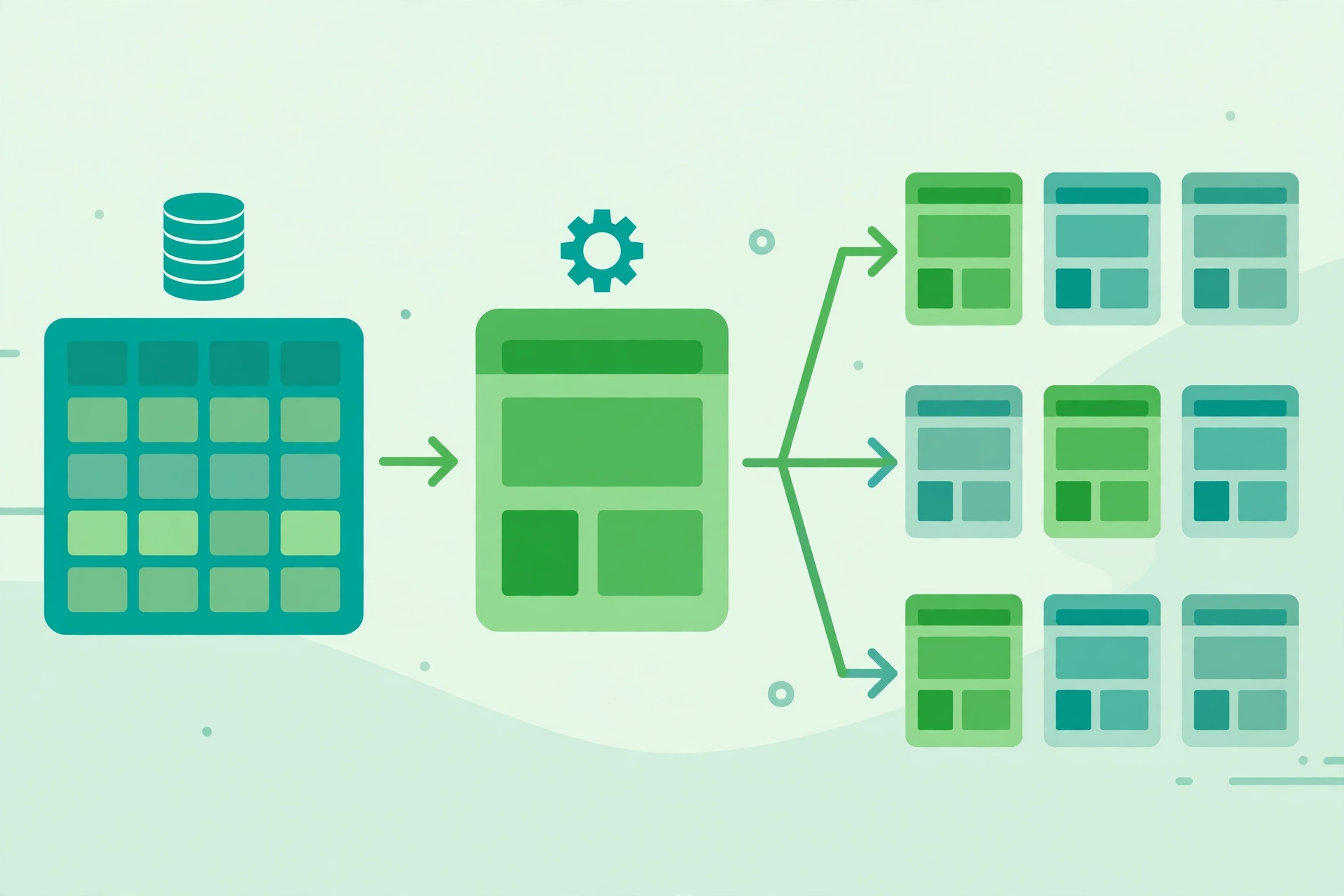
Most SEO advice tells you to write one great article at a time. That works, but it is slow. If your business serves 50 cities, sells 200 product variations, or answers the same question for 30 industries, writing each page by hand could take years. Programmatic SEO is the method that solves this: you build one excellent page template, feed it structured data, and generate hundreds or thousands of pages that are each targeted at a specific search query.
Used well, programmatic SEO is behind some of the largest organic traffic wins on the internet: travel sites with a page for every route, property portals with a page for every locality, and job boards with a page for every role and city. Used badly, it produces thousands of thin, near identical pages that Google ignores or penalises. The difference is entirely in the method.
This guide explains programmatic SEO for Indian websites in practical terms: when it makes sense, when it does not, how to build it on WordPress, what a good template looks like, and how to measure and prune your pages so the programme keeps working.
What Programmatic SEO Is, and What It Is Not
Programmatic SEO means creating landing pages at scale from a template plus a dataset. The template defines the structure: title pattern, headings, sections, and calls to action. The dataset supplies the variables: city names, prices, features, ratings, availability, or any other real data. Each generated page combines the template with one row of data, producing a unique page for a specific keyword pattern.
Common patterns include:
- Service plus city: “plumber in Indore”, “wedding photographer in Jaipur”, “CA services in Surat”.
- Product plus attribute: “5 seater sofa under Rs. 30,000”, “laptop under Rs. 50,000 for students”.
- Comparison: “X vs Y”, for tools, courses, or service providers.
- Location guides: “things to do in Udaipur”, “best schools in Bhopal”.
- Data driven pages: pin code lists, exam cut offs, salary data, or market prices.
What programmatic SEO is not: it is not auto generated spam. Pages that only swap one word in an otherwise identical template, with no unique data and no real value, are exactly what Google’s helpful content and spam systems target. A programme that survives is one where every page genuinely helps the person who searched for that specific query.
When Programmatic SEO Makes Sense, and When It Does Not
Programmatic SEO is worth building when three conditions are true at the same time:
- Search demand exists at scale: there are hundreds or thousands of related searches with real volume, following a repeatable pattern. Keyword research tools can confirm this before you build anything.
- You have real data: prices, locations, features, availability, or original information that makes each page different. Scraped or invented data will not survive scrutiny, and it can damage your brand.
- The pages can be genuinely useful: each page answers the query better than a generic page would, because it is specific to that city, product, or combination.
Do not build a programme when:
- Demand is small: if only 30 pages are needed, write them by hand. They will be better, and the programme is not worth the engineering.
- Data is thin: if every page would say the same thing with only the city name changed, you are building doorway pages, and Google may treat them as spam.
- The topic is YMYL: health, finance, and legal advice pages need expertise and review. Generating them at scale without experts is risky for rankings and for readers.
- You cannot maintain the pages: prices change, businesses close, and data goes stale. A programme nobody maintains becomes a liability within a year.
A useful rule: if you would be embarrassed to show a random generated page to a customer, do not publish the programme.
Finding Keyword Patterns Worth Building
Before any code or template, find the pattern. Start with a seed: a service, product, or topic you already rank for or serve. Then expand it systematically:
- Add modifiers: city names, “near me”, price ranges, “best”, “top 10”, and use cases. Indian searches often include city and locality names, which creates natural patterns.
- Check volume and intent: use a keyword research tool to confirm that the pattern has real monthly searches, not just a few curious queries. Our guide to the best keyword research tools for Indian SEO professionals compares free and paid options for this step.
- Map the pattern to your data: for each keyword variation, ask what unique data your site can show. If the answer is “nothing, just the keyword”, the pattern is not ready.
- Estimate the page count honestly: a programme of 50 to 500 pages is a realistic start for a small or mid sized Indian business. Programmes of millions of pages belong to large platforms, not to a first attempt.
Example: a home services business in Maharashtra might find a pattern of “service plus city” across 40 cities and 8 services, giving 320 potential pages. That is a programme worth building, provided each page carries real local data: service areas, local pricing, reviews from that city, and contact details.
Building Programmatic SEO on WordPress, Step by Step
WordPress is a practical platform for a first programme, because custom post types and templates handle scale well.
- Step 1: prepare the dataset. Build a spreadsheet with one row per page and one column per variable: city, service, price range, rating, service areas, phone number, and any other field the template will use. Clean the data ruthlessly: wrong prices or closed businesses on live pages destroy trust.
- Step 2: create a custom post type. For a service plus city programme, this might be called “Service Cities”. Each row of your dataset becomes one post in this type, with the variables stored as custom fields.
- Step 3: design the template. Build one page template with fixed sections and variable fields: an introduction naming the city and service, a pricing section, a why choose us section with local proof, an FAQ section with city specific answers, and a contact section. Every section must include at least one field that genuinely differs per page.
- Step 4: write unique content blocks. This is the step most programmes skip, and it is the step that decides success. Write several content variations for key sections, add local details, and include original data such as local service areas, real reviews, or local FAQs. Pure template text with only the city swapped will not rank well.
- Step 5: set up internal linking rules. Link each generated page to its parent service page, to nearby city pages, and to relevant blog posts. Internal linking distributes authority and helps Google discover the pages. Our internal linking strategy guide for Indian websites explains the structure in detail.
- Step 6: control indexation. Launch in batches, perhaps 50 pages at a time, and monitor indexing in Search Console before scaling. Use sitemaps that include only the programme pages, and noindex pages that are not ready or have no data.
- Step 7: run quality checks before launch. Check a random sample of pages for broken fields, missing data, duplicated text, slow load times, and mobile display. Fix the template, not individual pages, when a problem repeats.
Template Anatomy: A Worked Example
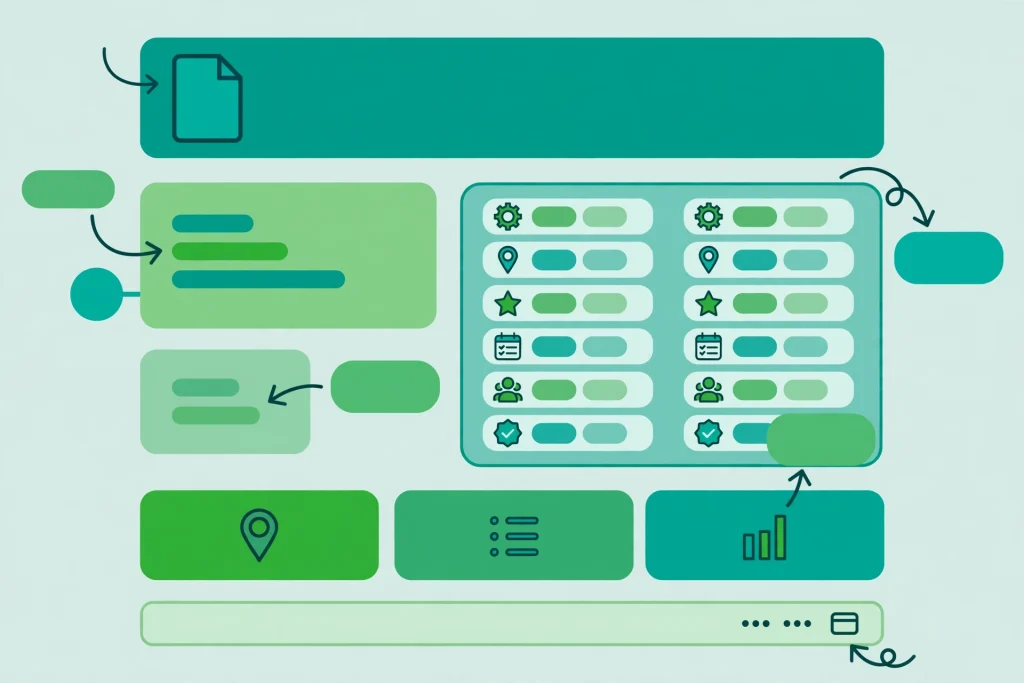
Take the pattern “home cleaning services in [city]”. A strong template page includes:
- Title: “Home Cleaning Services in [City]: Prices, Services and Booking in 2026”.
- Introduction: two paragraphs naming the city, the neighbourhoods served, and the specific services offered there.
- Pricing table: real price ranges for 1BHK, 2BHK, and 3BHK cleaning in that city, with what is included.
- Services section: the services available in that city, with any local differences, such as water tank cleaning in areas with hard water.
- Local proof: reviews from customers in that city, service areas listed by locality, and response times.
- FAQ: city specific questions, such as availability on Sundays, or charges for outskirts areas.
- Call to action: a booking form and phone number for that city’s team.
- Schema markup: LocalBusiness and FAQ schema so search engines understand the page. Our complete guide to schema markup for Indian websites shows how to implement this correctly.
Notice how much of this page is unique per city: prices, areas, reviews, FAQs, and contact details. A page with only the city name swapped would have none of that, and would deserve to rank nowhere.
Measurement and Pruning: The Work After Launch
A programme is not finished at launch. It needs ongoing measurement and pruning.
- Track aggregate and per page performance separately. Aggregate traffic shows whether the programme is growing. Per page data shows which pages earn their place.
- Watch indexing in Search Console. If a large share of pages is crawled but not indexed, the pages are probably too thin or too similar. Improve the template or reduce the programme.
- Set a review cycle, quarterly for most programmes. For each page, decide: keep, improve, noindex, or delete. Pages with no traffic, no links, and no conversions after six months should be improved with more unique content, or removed from the index.
- Track conversions, not just traffic. A programme that brings 10,000 visits and no enquiries is a content project, not a growth channel. Connect pages to forms, calls, and sales where possible.
- Refresh data on a schedule. Prices, availability, and local details change. Stale data turns a useful page into a misleading one, and returning visitors notice.
Programmes that are pruned regularly outperform programmes that only grow. Removing weak pages concentrates authority on the pages that deserve to rank.

Risks and How to Avoid Them
- Thin content penalties: avoided by unique data, local proof, and varied content blocks on every page.
- Doorway page treatment: avoided by making each page a real destination with its own value, not a redirect funnel to one contact page.
- Crawl budget waste: avoided by launching in batches, using clean sitemaps, and noindexing weak pages.
- Data errors: avoided by validating the dataset before launch and refreshing it on a schedule.
- Over automation: AI can help draft template variations, but every template and a sample of pages should be reviewed by a human before launch. Fully automated programmes with no review are the ones that fail publicly.
Frequently Asked Questions
What is programmatic SEO?
Programmatic SEO is the practice of creating many targeted landing pages from one template combined with structured data, so each page serves a specific search query such as a service in a particular city. It works when every page carries unique, useful data, and fails when pages are near identical copies.
How many pages should a programmatic SEO programme have?
For a small or mid sized Indian business, 50 to 500 pages is a realistic start. The right number depends on real search demand and real data. A programme should grow only as fast as its data quality and indexing allow.
Can programmatic SEO work on WordPress?
Yes. Custom post types, custom fields, and page templates make WordPress a practical platform for programmatic SEO, especially for service plus city, product plus attribute, and location guide patterns.
Does Google penalise programmatic SEO?
Google does not penalise the method itself. It penalises thin, duplicate, or doorway pages that offer no value. Programmes with unique data, original content sections, and genuine usefulness rank well and keep ranking.
How long does programmatic SEO take to show results?
Indexing and early rankings typically appear within one to three months for a well built programme launched in batches. Meaningful traffic usually builds over three to six months as pages are indexed, linked internally, and improved based on Search Console data.
Conclusion
Programmatic SEO is one of the most powerful ways for an Indian website to grow organic traffic, because it matches how Indians actually search: by city, by price, by comparison, and by specific need. But its power comes with a condition. Every page must earn its place with real data, local detail, and genuine usefulness. Build the dataset first, design the template around what makes each page different, launch in batches, and prune ruthlessly. Done that way, a programme of a few hundred pages can outperform years of one by one blogging. Done carelessly, it produces thousands of pages nobody wants, including Google.

1 Comment
Pingback: Generative Engine Optimization for Indian Websites: Get Cited in AI Answers in 2026