


Introduction
Most Indian websites do not fail because their content is bad. They fail because they target the wrong keywords. A business in Pune writes a careful article on a keyword ten large sites already dominate, and it never reaches page one. A blogger in Lucknow publishes post after post on topics nobody searches for, and traffic stays flat. The problem is not effort. It is keyword research, or the lack of it. Keyword research means finding the exact words Indian users type into Google, understanding what they want, and choosing keywords you can realistically rank for with the site you have today. Done well, it turns guesswork into a plan. This guide gives you a complete workflow for Indian websites in 2026, plus a worked example.

Why Keyword Research Is Different in India
India has over 900 million internet users, most on mobile phones, searching in English, Hinglish, and regional languages, often in the same session. A user in Delhi may search “best laptop under 40000”, one in Mumbai “laptop price in India”, and one in Indore a mix of Hindi and English. All three want the same thing, but a site targeting only formal English misses two of them. Price shapes Indian searches more than almost any other factor. Users add price, under, cheapest, best, offer, and near me far more often than users elsewhere. They search by city and budget, compare before buying, and look for reviews before trusting a brand. Competition is uneven too: a new site can rank quickly for “best accounting software for textile shops in Surat” while “accounting software” alone would take years. Demand also changes fast with festivals, exams, cricket, and product launches, so research is a monthly habit, not a one time task.
Seeds, Tools, and Search Intent
Start with 10 to 20 seed keywords: short phrases describing what your business does, in your customers’ words, not jargon. A web design agency might start with web design, website development, and SEO services. Add Indian modifiers: best, price, cost, near me, under a budget, review, and how to. “Web design” becomes “web design cost in India” and “best web design company in Ahmedabad”. Talk to customers too: they say “mujhe online dukaan chahiye”, not “I need a responsive ecommerce solution”, and those exact phrases are often excellent long tail keywords. Expand seeds with tools. Google Keyword Planner gives India volume ranges, Search Console shows keywords you already rank for, and Google Trends shows rising and falling interest by state. Semrush and Ahrefs give better difficulty scores and competitor data, typically for a few thousand rupees per month. Always set the location filter to India first, and check two tools, because a global volume figure can be ten times the India volume. Then match search intent. Informational searches want guides, commercial searches want comparisons, transactional searches want product or pricing pages, and navigational searches want a specific site. Search the keyword, look at the top ten results, and make your page the same type, then better. Question keywords deserve special attention in India, because users ask full questions, often by voice: “which is the best phone under 20000 in India”.
Difficulty, Clusters, and Long Tail Keywords
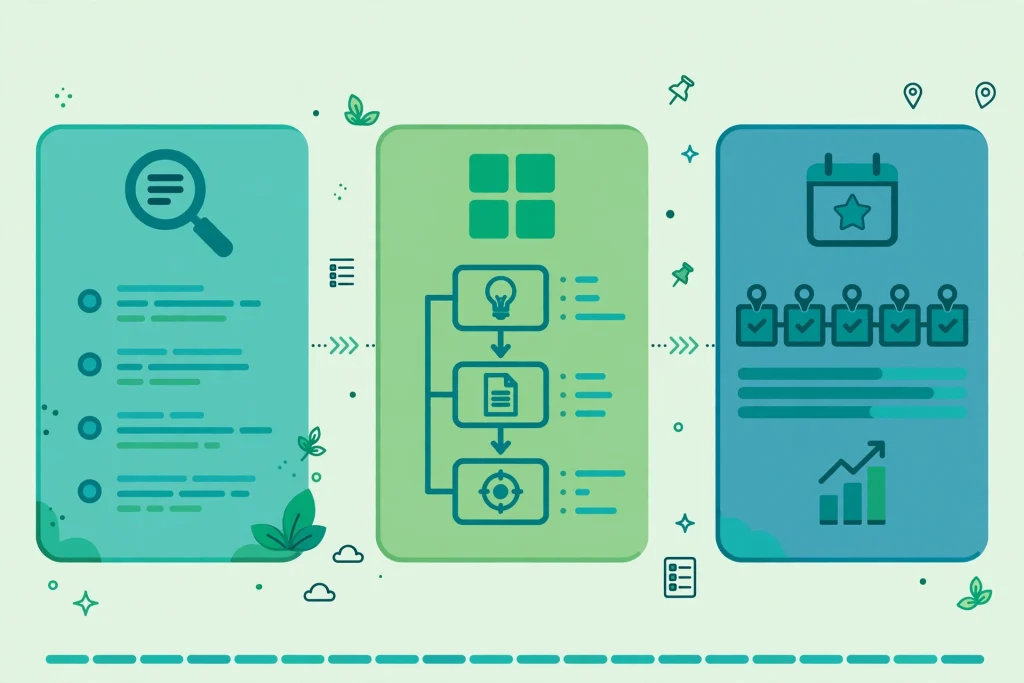
Keyword difficulty, or KD, scores from 0 to 100 how hard ranking will be. For a new Indian site, target KD below 20 for the first six months, then move to KD 20 to 40 as you earn backlinks. Keywords above 50 are usually dominated by large sites. Never trust KD alone: open the top ten results and check whether they are from large domains or small sites like yours, and whether they are old, thin, or poorly written. A keyword with 100 searches a month and KD 5 is often better than one with 5,000 searches and KD 70, because the first can bring visitors within weeks while the second may bring nothing for a year. Build keyword clusters instead of chasing single keywords. A cluster is a group of related keywords for one topic, with one pillar page covering it broadly and supporting pages covering subtopics in depth, all linked together. Manage clusters in a spreadsheet with keyword, India volume, KD, intent, cluster, and target page. Before adding a keyword, check your existing posts: if a post already covers it, update it instead of publishing a near duplicate. Long tail keywords are where most early wins are. “Best running shoes for flat feet under 3000 in India” gets a few hundred searches a month, has far less competition than “shoes”, and the searcher is much closer to buying. Use Google’s People Also Ask box to find exact questions Indian users ask, then answer them directly near the top of your page.
Hinglish, Cities, and AI Overviews
Many Indian users search in Hinglish, Hindi written in Roman letters, or a mix of English and a regional language. Common patterns include “sasta”, “best kaunsa hai”, “kaise kare”, and “price kya hai”. These keywords often have lower competition, because most professional sites target only formal English. Check Hinglish versions of your main keywords in Google: if top results are forum posts or thin pages, that signals an opportunity. Use the Hinglish phrase naturally in your title, a heading, or your introduction. Regional language searches are growing fast for government schemes, education, jobs, and local services, so check keywords in the language of the state you serve, with a native speaker verifying phrasing. City intent is the most practical local research. Users constantly add their city: “web designer in Indore” or “best dentist in Nagpur”. A city keyword with 100 searches a month can be worth more than a national keyword with 5,000, because the searcher can actually visit or call you. AI Overviews change the picture further. In 2026 Google shows an AI answer at the top of many informational results, so simple questions get fewer clicks. Prefer keywords the overview cannot fully answer, such as comparisons, processes, local information, and pricing, and write a concise answer near the top so Google may cite your page in the overview itself.
Worked Example and Content Calendar
Imagine you run a small web design agency in Indore. Seeds: web design Indore, website development Indore, ecommerce website Indore, website cost India, and logo design Indore. In Keyword Planner set to India, “website development Indore” shows 100 to 1,000 searches a month, and “web design cost in India” 1,000 to 10,000. In Semrush, “web design cost in India” has KD 35, while “website development Indore” has KD 12. Local keywords are far easier. Top pages for website cost are from 2023 with outdated prices, a clear gap for a 2026 guide with current rupee prices. Top pages for “website development Indore” are thin agency pages, so a detailed service page with case studies, pricing, and FAQs can rank well. Build three clusters: website cost in India, web design Indore, and ecommerce websites. Publish the cost pillar, the Indore service page, and two long tail local posts in month one, then the ecommerce cluster in month two. Turn the list into a calendar by sorting for high intent and low difficulty first, assigning each keyword a page type and a date, and adding its title, meta description, and internal links before writing. Our On-Page SEO Checklist for Indian Websites covers titles, headings, and meta in one place. Review the calendar monthly in Search Console, update pages close to ranking, and audit new pages with our SEO Audit Checklist for Indian Websites in 2026 so nothing duplicates an existing post. Remember image search too: optimise file names and alt text, as our guide to Image SEO for Indian Websites explains.
FAQ
What is keyword research for Indian websites?
Finding the words Indian users type into Google, checking their volume in India, understanding what the searcher wants, and choosing keywords your site can realistically rank for. It includes English, Hinglish, and regional searches, price words, city intent, and questions.
How do I find low competition keywords in India?
Start with long tail keywords of three or more words, add a city, budget, or specific problem, and check difficulty in Semrush or Ubersuggest. A keyword with KD below 20 and weak top results is a good target for a new site.
What are the best free keyword research tools for India?
Google Keyword Planner, Google Search Console, and Google Trends, because they use real Google data and filter by India. AnswerThePublic helps with question keywords, and Ubersuggest free tier gives basic difficulty scores. Combine at least two tools.
How many keywords should I target per page?
One primary keyword per page, plus 5 to 10 closely related secondary keywords from the same cluster. Use the primary keyword in the title, first paragraph, and one or two headings, then write naturally. Never target two very different keywords with one page.
Do Hinglish keywords work for SEO in India?
Yes, especially for government schemes, phones, jobs, and how-to guides. They often have lower competition, because fewer professional sites target them. Use the Hinglish phrase naturally in your title, a heading, or your introduction.
How often should I do keyword research?
At least once a month, and check Google Trends weekly for rising topics. Demand in India changes with festivals, exams, launches, and government announcements. Review Search Console monthly for page two keywords, your quickest wins.
Conclusion
Keyword research is the foundation of SEO for Indian websites, and any business owner can learn it. Start with seeds from your customers, expand them with tools set to India, understand intent, judge difficulty from real search results, and build clusters rather than chasing single keywords. Target long tail and question keywords first, include Hinglish and city intent, and plan for AI Overviews by writing content that goes beyond a short answer. Do not wait for a perfect tool or list. Start with ten seeds this week, expand them with Keyword Planner and Search Console, and publish your first cluster of three pages. Measure what happens, update what is close to ranking, and repeat next month. Over six months, that habit builds a site ranking for keywords real Indian users search for, attracting visitors ready to act, and growing steadily, one winnable keyword at a time.

5 Comments
Pingback: Video SEO for Indian Creators and Businesses in 2026
Pingback: SEO Content Writing for Indian Websites in 2026
Pingback: SEO Tools for Small Business India: 10 Free and Paid Picks
Pingback: Local SEO for Small Business India: 7 Steps for 2026
Pingback: Keyword Research for Beginners India: 7 Step Guide