

Introduction
Most Indian websites do not lose rankings because of a secret algorithm trick they missed. They lose rankings because the basics on the page are wrong: a missing title, a meta description copied from another page, three H1 tags, images with no alt text, or a page that takes six seconds to load on a 4G phone.
On page SEO is everything you control directly on a page: the title, the description, the headings, the words themselves, the images, the links and the structured data behind them. Get those right and Google can understand the page, readers can use it, and AI answer engines can quote it.
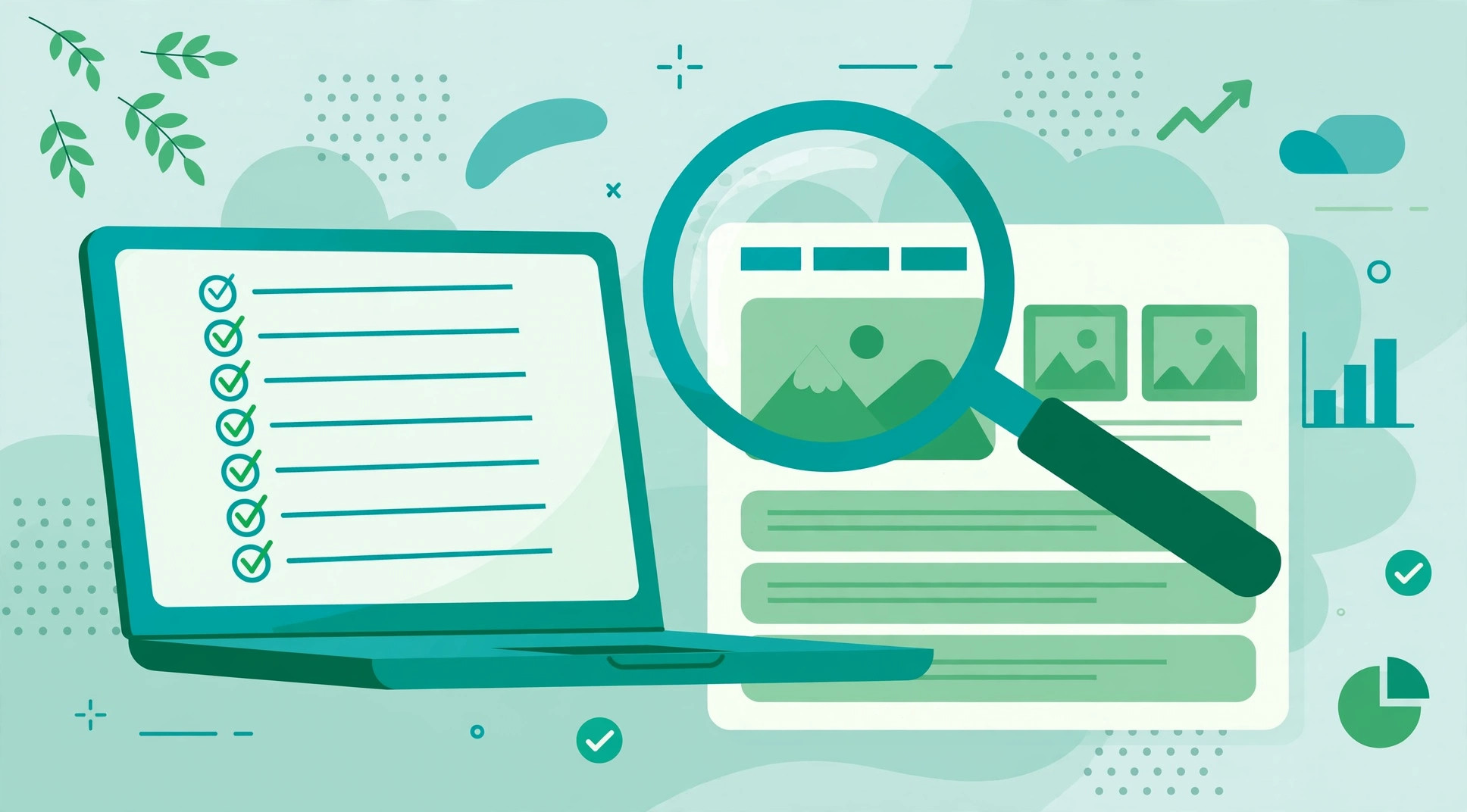
This on page SEO checklist India guide gives you 20 checks in a fixed order. Work through them one page at a time, starting with your most important pages: the home page, the main service pages and the blog posts that already bring traffic.
Why On Page SEO Matters More in India in 2026
India is a mobile first search market. StatCounter figures quoted by Indian SEO practitioners put Google at about 96.63 percent of searches in India, with about 77.3 percent of web traffic coming from mobile phones as of September 2026. Your page is usually judged on a mid range Android phone over mobile data, not on a fast office desktop.
Indian search behaviour adds a second layer. People search in English, Hindi, Hinglish and regional languages, often in the same session. They ask full questions instead of typing two word keywords, and they add a city, a price or "near me". A page that answers the question directly, in the first two sentences under each heading, matches how people actually search here.
A third reason is AI search. Google AI Overviews and tools such as ChatGPT, Perplexity and Gemini now quote pages directly, and they prefer pages with clear answers, question shaped headings and specific facts.
How to Use This On Page SEO Checklist India
Do not try to fix your whole website in one sitting. Pick one page, open this on page SEO checklist India guide beside it, and work from Check 1 to Check 20. Tick each item as you fix it. A service page usually takes 30 to 60 minutes, and a blog post takes less, because most technical checks are already handled by your theme.
Start with the pages that make money or bring traffic: the home page, the top three service pages and your five best blog posts.
One warning before you start: do not stuff the keyword into every sentence. Repeating your focus phrase twenty times makes the page worse for readers and can be treated as spam. Use the exact phrase in the title, the introduction, one heading and the conclusion, and let related words appear naturally everywhere else.
Checks 1 to 3: Titles and Meta Descriptions
Check 1: Every page has a unique title tag of 50 to 60 characters, with the main keyword near the start. The title tag is the blue headline in search results and one of the strongest on page signals. Put the main topic first, then a qualifier that wins the click, such as the year, the city or the price. Never reuse the same title on two pages
Check 2: Every page has a unique meta description of 140 to 160 characters that summarises the answer and gives a reason to click. Meta descriptions are not a direct ranking factor, but they influence clicks and are sometimes shown in search and AI results. Say what the reader gets, who it is for and anything specific, such as a price or a location.
Check 3: The title and meta description match the page, with no clickbait. If the title promises a price guide and the page hides prices behind a form, visitors bounce and Google notices. This matters for Indian service pages, where many businesses hide prices to force a phone call. Searchers and AI systems both prefer pages that give at least a range, such as "Local moves within Chennai typically cost Rs. 6,000 to Rs. 25,000 depending on volume, floor and distance".
Checks 4 to 8: Headings and Content
Check 4: Exactly one H1 per page, containing the main keyword. The H1 is the headline a visitor sees on the page. It should state the topic clearly and match or closely echo the title tag. Two H1 tags confuse search engines about what the page is about, and zero H1 tags leave the job undone.
Check 5: H2 headings read like the questions people ask. "What documents are needed for GST registration?" is better than "Documents". Question headings match how people search and how they talk to AI assistants, and they make the page easy to scan.
Check 6: The direct answer appears in the first one or two sentences under each heading. This is the single highest value habit in this whole checklist. Answer first, then explain.
Check 7: The content is specific, with real figures, names, places and steps. Specifics are what get ranked and cited. Rupee figures, timelines, named tools, city examples and step by step instructions beat vague advice every time. Add first hand experience where you can: what you have actually seen working with clients, original photos or your own data.
Check 8: The page covers the subtopics a searcher needs, without padding. Read the top five results for your keyword and note what they cover that you do not. Then cover those subtopics better, in your own words, with Indian examples. Do not add long introductions or repeated points to hit a word count.
Checks 9 and 10: Images
Check 9: Every image has a descriptive file name and alt text that says what the image shows. Name files descriptively before upload, such as gst-registration-documents-checklist.jpg, not IMG_2034.jpg. Write alt text that describes the image for someone who cannot see it, and do not stuff keywords into it.
Check 10: Images are compressed, sized to the display width and served in a modern format. Oversized images are the most common reason Indian websites load slowly. Compress every image, serve WebP or AVIF where your site supports it, size the image to the width it is actually displayed at, and set width and height attributes so the layout does not jump while the page loads.

Checks 11 to 13: Links and URLs
Check 11: The page links to related pages with descriptive anchor text. A page should link to its topic hub, two to five related pages and the relevant service or contact page. Use anchor text that says what the reader will find, such as "SEO audit checklist for Indian websites", not "click here". Our internal linking strategy for Indian websites explains how to build these connections across a whole site.
Check 12: The URL is short, readable, lowercase and contains the main keyword. A clean URL such as /on-page-seo-checklist-india-2026/ tells both readers and search engines what the page is about. Avoid numbers that mean nothing, such as post IDs, avoid underscores, and avoid long strings of stop words.
Check 13: No important page is more than three clicks from the home page, and older pages link to the new one. A new page with no links pointing to it is hard for Google to find and hard for readers to reach. After publishing, add a link to it from the relevant hub page and from one or two older posts on the same topic.
Checks 14 to 16: Structured Data and Technical Basics
Check 14: The right schema markup is present and valid. Add Article or BlogPosting schema to guides, FAQPage schema where real FAQs are shown, and LocalBusiness or Service schema to service pages. Product pages need Product schema with Offer, and only use AggregateRating where the reviews are real. Validate the markup in Google’s Rich Results Test and fix any errors.
Check 15: The page is served over HTTPS with a canonical tag and is not blocked by robots.txt or a noindex tag. Pages have gone live with a noindex tag left over from staging, or with a robots.txt rule blocking the whole blog. Verify the site in Google Search Console, submit the XML sitemap, and check the coverage report for pages Google cannot index.
Check 16: The keyword is mapped before writing, not after. Before you write a page, decide its one main keyword and the search intent behind it, and check what the top ranking pages cover. Our keyword research for Indian websites guide shows how to find keywords that actually rank. A page written without a keyword decision usually ends up targeting nothing.
Checks 17 and 18: Mobile and Speed
Check 17: The mobile version contains the same content and links as the desktop version. Google indexes the mobile version of your site first. If your mobile theme hides content, links or images that appear on desktop, Google may never see them. Open the page on a phone and compare it with the desktop version.
Check 18: Core Web Vitals are in the good range on mobile. The three numbers to watch are Largest Contentful Paint, which should load in under 2.5 seconds, Interaction to Next Paint, which should respond quickly to taps, and Cumulative Layout Shift, which should stay low so the page does not jump while loading. Measure with PageSpeed Insights on a mobile connection and fix the largest problem first, which is usually image weight or a slow server.
Checks 19 and 20: AI Search Readiness
Check 19: Each section is written so it can be quoted on its own. AI Overviews and chatbots lift short, complete answers from pages. Write in short paragraphs that each make one point, use complete sentences that make sense when quoted alone, define terms the first time you use them, and put numbers, dates and names in text rather than only inside images.
Check 20: Business facts are consistent everywhere on the page and across the site. Keep one consistent name for your business and services, one phone number, one address and one set of opening hours across every page. Inconsistent details confuse both Google and AI systems, and they cost local rankings.
The Pre-Publish Routine
Run this five minute routine before any page goes live. Read the title and H1 aloud and confirm they state the topic clearly. Read the first paragraph and confirm it answers the main question directly. Scan the headings and confirm they read like real questions in a logical order. Confirm the links point to the hub, related pages and an action page. Confirm images are compressed with alt text and dimensions set. Open the page on a real phone, then validate the schema in the Rich Results Test.
Careers Ninza’s classroom example shows why this routine pays. After rewriting titles on 20 service pages following rules like the ones above, their sample site’s average click through rate rose from 2.1 percent to 3.4 percent over six weeks. That was a teaching example, not a guaranteed outcome.
Common Mistakes This Checklist Prevents
The most common mistake is keyword stuffing, which is repeating the main phrase until the page reads like a robot wrote it. The second is duplicate titles and meta descriptions, usually caused by a theme or plugin filling them in automatically. The third is publishing without checking mobile, which is where most Indian visitors will see the page. The fourth is forgetting internal links, so a good new page sits alone with no path to it. The fifth is adding schema and never validating it, so errors sit unnoticed for months.
Your 30 Day Plan
Week one, fix the home page and the top three service pages using all 20 checks. Week two, fix the five blog posts that already bring the most traffic. Week three, fix the next ten most important pages and add internal links from older posts to the pages you fixed in weeks one and two. Week four, measure in Search Console: which pages gained impressions, which gained clicks, and which still have errors. Then repeat the cycle on the next batch of pages.
Frequently Asked Questions
What is on page SEO?
On page SEO covers everything on a page that helps it rank and earn clicks: the title tag, meta description, headings, content quality and structure, images, internal links and structured data. It is the part of SEO you control directly
How long should a title tag be?
Around 50 to 60 characters is a good guide so it is not cut off in search results. Put the main topic first and add a qualifier such as the year, location or price. Google may rewrite titles it considers unclear.
Are meta descriptions a ranking factor?
No, but they affect click through rate and may appear in search results. Write a 140 to 160 character summary of what the reader gets and why they should click.
How many internal links should a page have?
Enough to help readers: usually a link to the hub page of the topic, two to five related pages and the relevant service or product page
How do I write content that AI search will cite?
Answer the question directly in the first sentences under each heading, use question shaped headings, include specific facts and figures
How often should I run this checklist?
Run it on every new page before publishing, and re run it on important pages every six months
Conclusion
On page SEO is not complicated, but it is easy to skip under deadline pressure. This on page SEO checklist India guide gives you the 20 checks that matter: clear titles and descriptions, one H1 with question shaped headings, direct answers and specific content, optimised images, useful internal links and clean URLs, valid schema and indexable pages, a fast mobile experience, and sections written so AI systems can quote them.
Pick one page today and work through the list, starting with the home page and the pages that already bring traffic. A month of steady work with this checklist will leave your site clearer to Google, easier for readers and ready for AI search. That is what ranking in India in 2026 actually takes.
