

Introduction
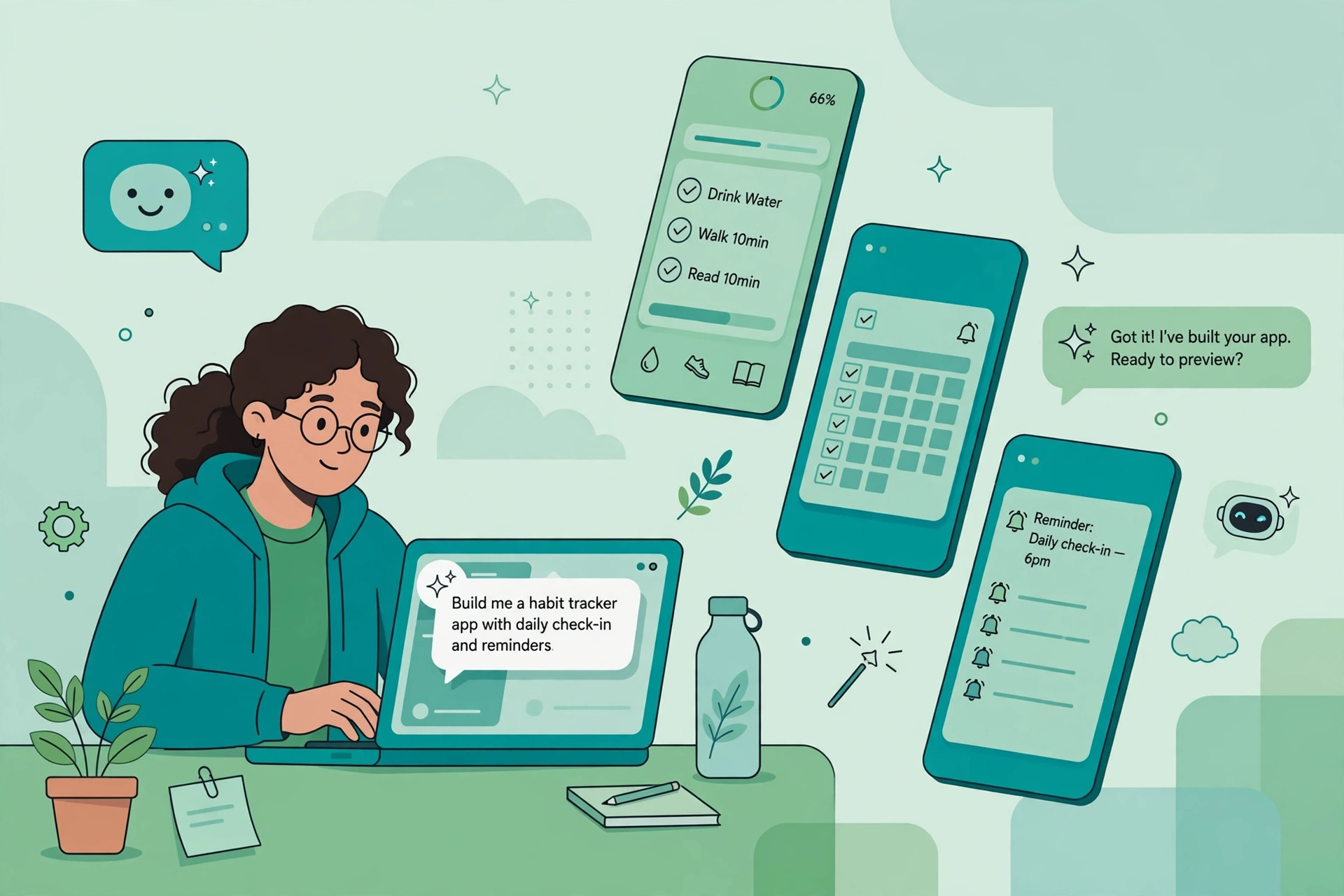
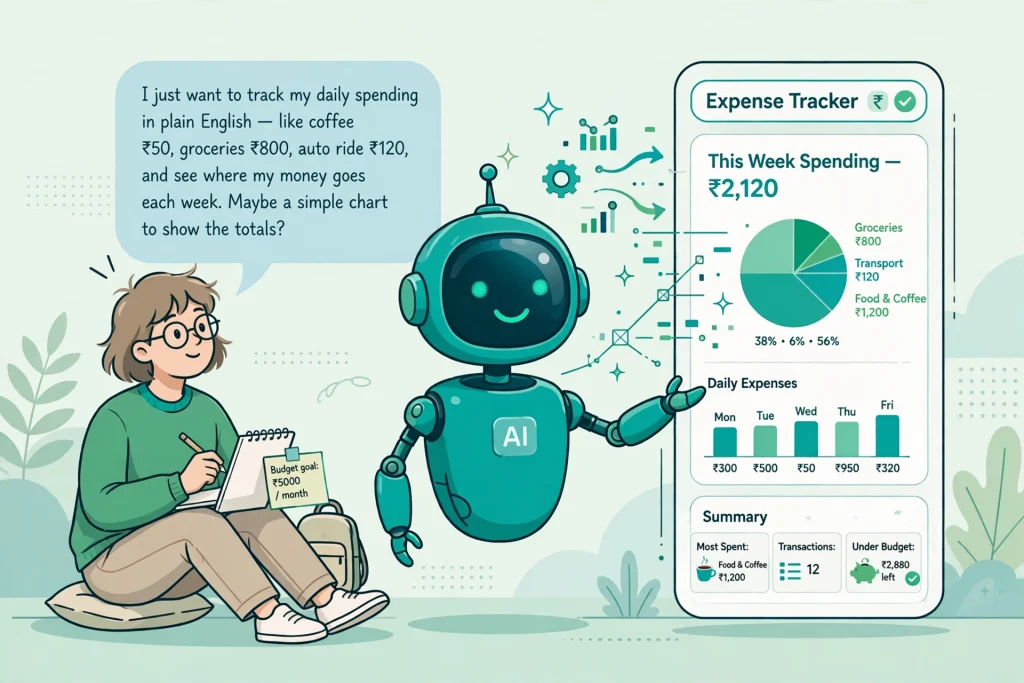
Imagine telling your phone, “Build me an app that tracks my daily expenses in rupees and shows a monthly chart,” and watching a working app appear minutes later. That is vibe coding, and in November 2026 it is one of the most talked about ideas in India.
Vibe coding means describing what you want in plain English, then letting an AI tool write the code. Collins Dictionary named “vibe coding” its Word of the Year for 2025, and AI search interest in India is up about 50% year on year.
What Is Vibe Coding, in Simple Words
Vibe coding is building software by conversation. You describe the outcome you want in natural language. The AI generates the code, screens, buttons and basic logic. You test the result, describe what to fix, and the AI updates it.
For example, you write, “Create a to-do app with a green theme and a button to mark tasks as done.” The AI builds a first version. You reply, “Add a due date to each task,” and it updates the app. You steer by feel and outcome, not by code. That makes it appealing to non-coders, but care is needed: if you cannot read the code, you cannot easily tell if it is secure. It works best for small, clear projects such as landing pages, personal tools, dashboards and MVPs.
Why Vibe Coding Is Exploding in India in 2026
India has a huge base of creators, students, freelancers and small business owners with ideas but no coding background. They can now test an app idea in an afternoon, without hiring a team.
The cost of trying has fallen too. Many tools offer a free tier, and a typical paid tier costs around Rs 1,680 plus GST per tool per month, far less than hiring a developer for a week.
Indian platforms are promoting the trend. On 7 November 2026, YourStory launched VibeCode30, spotlighting 30 AI-built Indian products selected from 207 applications. On 10 November 2026, Appy Pie launched a vibe coding app builder for non-technical founders. India also has specific needs vibe coding serves well: rupees, UPI payments, GST invoices, +91 numbers and regional language content.
How Vibe Coding Works, Step by Step
- Describe the goal. Say who the app is for, what problem it solves, and what users should do.
- Let the AI build a first version. It writes the front end and basic logic. A preview usually appears within minutes.
- Test it like a real user. Click every button. Try wrong inputs and empty fields.
- Ask for fixes plainly. “When I add an expense without a category, show an error in red,” beats, “Fix the form.”
- Repeat in small steps. Change one thing at a time. Vague requests such as, “Make it better,” often make the app worse.
- Publish or export. Most tools let you publish to a link or export code for a developer to review.
Clear prompts produce clear apps. Vague prompts produce vague apps.
Vibe Coding vs Traditional Coding vs AI-Assisted Coding
The three approaches are related, but they suit different people.
| Approach | Who writes the code | Best for | Speed | Control |
|---|---|---|---|---|
| Vibe coding | The AI, from prompts | Non-coders, MVPs, personal tools | Hours to days | Low |
| Traditional coding | A developer, line by line | Payments, large systems | Days to months | High |
| AI-assisted coding | A developer, with AI help | Professional developers | Days to weeks | High |
For a beginner testing an idea, vibe coding is the fastest start. For money, health data or thousands of users, traditional coding, or a developer review, is safer. See also our guide on AI website builder vs web developer in India 2026.
Best Vibe Coding Tools in India 2026
Each tool has a different strength. Prices change often, so treat rupee figures as typical, approximate values.
| Tool | Best for | Free tier | Typical paid tier | Ease |
|---|---|---|---|---|
| Lovable | Web apps, MVPs | Yes, limited credits | Around Rs 1,680 plus GST/month | Very easy |
| Bolt.new | Web apps, prototypes | Yes, limited credits | Around Rs 1,680 plus GST/month | Very easy |
| v0 | Landing pages, interfaces | Yes, limited credits | Around Rs 1,680 plus GST/month | Easy |
| Cursor | AI-assisted coding | Yes, limited plan | Around Rs 1,680 plus GST/month | Medium |
| Replit Agent | Build, host, share | Yes, limited credits | Around Rs 1,680 plus GST/month | Easy |
| Claude Code | Developers, Claude terminal | Limited trial | Around Rs 1,680 plus GST/month | Hard |
| Bubble | Complex apps, databases | Yes, free plan | Typically above Rs 1,680 plus GST/month | Medium |
| Glide | Apps from spreadsheets | Yes, free plan | Around Rs 1,680 plus GST/month | Very easy |
| Appy Pie | Mobile, business apps | Yes, limited trial | Around Rs 1,680 plus GST/month | Very easy |
Lovable and Bolt.new are the best starting points for beginners. v0 is excellent when design matters. Cursor and Claude Code assume you can read code, so use them as a second step. Replit Agent includes hosting. Bubble and Glide suit apps needing a database and logins. Appy Pie suits mobile apps. Test two or three free tiers before paying.
Build Your First App: A Step-by-Step Walkthrough
Build a simple expense tracker in rupees with Lovable or Bolt.new. It should take one to two hours.
Step 1: Set a clear goal. Write one sentence: “A simple expense tracker for one person, in rupees, with categories, a monthly total, and recent expenses.”
Step 2: Write your first prompt. Copy and adapt this:
“Build an expense tracker for India, in rupees (Rs). Add a form for amount, category, date and note. List recent expenses with a delete button. Show this month’s total and a bar chart by category. Use a green and white design, make it mobile friendly, and save data in the browser.”
Step 3: Test it. Add five expenses, including rent and a Rs 20 chai. Check totals, categories and the delete button.
Step 4: Improve it, one fix at a time. Try: “Add a monthly budget of Rs 20,000, with a progress bar that turns red above 90%.” Test after each change.
Step 5: Add India-specific details. Ask for an optional UPI transaction ID, a payment method selector (Cash, UPI, Card, Net Banking), CSV export, DD/MM/YYYY dates, and Indian amounts such as Rs 1,00,000. For shop billing, add GSTIN and GST rate, and ask an accountant to check the tax logic.
Step 6: Publish and share it. Share the link with two or three friends and ask them to try to break it. To grow it further, read our guide on how to build an ecommerce website in India 2026.
How Indian Freelancers and Bloggers Can Earn With Vibe Coding
Sell the outcome, not the method.
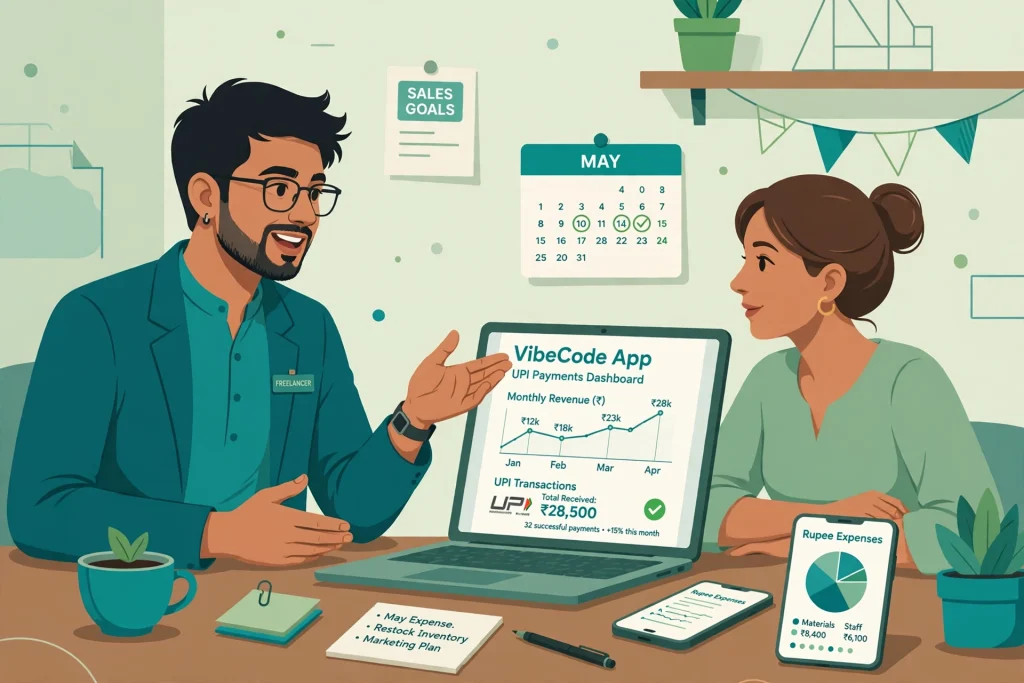
- Build client MVPs quickly. Small businesses want a booking page, menu app or lead capture page. Build a demo in a day and charge for the finished version and training.
- Create internal tools. A clinic needs an appointment list, a coaching centre needs a fee tracker, and a boutique needs an order log. Charge a fixed fee plus monthly support.
- Offer a package, not hours. For example: “One simple web app, delivered in 7 days, with training and one month of fixes included.”
- Build tools for your blog. A SIP calculator, wedding budget planner or invoice generator can attract search traffic. If you run a tech blog, see our guide on how to start a tech blog in India 2026. Reuse templates across clients, so each version gets faster.
Charge for the result, testing, training and support. Never promise a payment-ready app built only with vibe coding unless a developer has reviewed it.
Risks and Mistakes You Must Avoid
- Security holes. AI code can look complete yet miss basic protections. A Veracode finding reported that AI models chose an insecure option 45% of the time in its tests. Never store passwords in plain text or expose API keys in the front end.
- The “doom loop”. The AI fails to fix a bug, tries another wrong fix, and the app gets worse. Stop, undo to the last working version, simplify the request, or ask a developer.
- Hidden credit costs. Many tools charge by credits or AI usage. Long debugging can burn credits fast, so set a budget and check usage.
- Scaling limits. An app that works for five friends may break with 500 users. Plan a rebuild or developer review before promoting it widely.
- Personal data and the law. If your app collects names, phone numbers, addresses or payment details from Indian users, the Digital Personal Data Protection Act, known as the DPDP Act, applies. You need a clear purpose, consent where required, safeguards, and a way for users to ask for correction or deletion.
Who Should Use Vibe Coding, and Who Should Not
Vibe coding suits beginners and students learning by building, bloggers and marketers needing a calculator or landing page, freelancers wanting a quick client demo, founders validating an idea, and small business owners needing a simple internal tool.
It is not right, on its own, for apps that process payments, store sensitive health or financial data, or serve large numbers of users; systems needing strict compliance; or projects where a bug could cause real financial loss.
Use a hybrid approach: vibe code to prove the idea, then hand the prototype to a developer to harden it. If your app handles real payments through UPI or Razorpay, stores customer data at scale, or supports your income, bring in a developer then.
Frequently Asked Questions
What is vibe coding in simple words?
It is building an app by describing what you want in plain English, while an AI tool writes the code.
Can a non-coder really build an app with vibe coding?
Yes, for a simple app such as an expense tracker or landing page. Start small, write clear prompts, and test carefully. Complex apps still need a developer review.
Which vibe coding tool is best for beginners in India?
Lovable and Bolt.new are the best starting points, because they are easy to use and offer a free tier. Glide suits spreadsheet-based apps, and Appy Pie is worth trying for a mobile app.
How much does vibe coding cost in India?
You can start free on most tools, with limited credits or a free plan. A typical paid tier costs around Rs 1,680 plus GST per tool per month, though prices vary.
Is vibe coding safe for apps that handle payments or personal data?
Not on its own. A Veracode finding reported that AI models chose an insecure option 45% of the time in its tests. Get a developer to review the code, use trusted providers such as Razorpay or UPI, and follow the DPDP Act.
Can I earn money with vibe coding in India?
Yes. Freelancers earn by building MVPs and internal tools for small businesses, and bloggers earn by creating calculators and tools for their audience.
Conclusion
Vibe coding in India in 2026 is no longer a novelty. VibeCode30 showcased 30 Indian AI-built products from 207 applications, Appy Pie launched a vibe coding app builder, and AI search interest is up about 50% year on year. For a beginner, it is the fastest way to turn an idea into something you can use, test and share.
The tools are affordable and the first project can be as simple as an expense tracker in rupees. But security gaps are real, the doom loop wastes time, and the DPDP Act still applies to personal data. Start small this week: pick one tool, build the expense tracker above, and share it with a friend. You will learn the core skill, describing clearly, testing honestly, and improving step by step.
