


If you have ever asked three different developers for a website quote and received three wildly different numbers, you are not alone. One freelancer quotes Rs. 8,000, an agency quotes Rs. 1,50,000, and you are left wondering which one is telling the truth. The honest answer is that both prices can be legitimate, because “a website” can mean very different things.
This guide breaks down website development cost in India in 2026 in plain terms: realistic price ranges in INR for each website type, what drives the price up or down, WordPress versus custom development, the hidden costs nobody mentions in the quote, and practical advice on choosing the right developer. By the end, you will be able to read any quote like a professional.
Why Website Prices Vary So Much in India
A website is not a fixed product like a packet of biscuits. It is closer to building a shop: a small kiosk and a full shopping mall are both “shops,” but nobody expects them to cost the same. The same logic applies online. A five-page brochure site for a local clinic and a 500-product e-commerce store with payment gateways, shipping integrations and customer accounts are both “websites,” but the work involved differs by an order of magnitude.
The Indian market adds its own flavour to this variation. India has one of the most competitive freelance and agency markets in the world, which keeps entry-level prices genuinely low. A basic site from a freelancer in a tier-2 city can cost less than a good smartphone. At the same time, top-tier Indian agencies deliver enterprise-grade work at prices still far below Western rates. This wide spectrum is good for buyers, but it means you must understand what you are comparing before you compare prices.
Website Development Cost in India: Price Ranges by Type
The table below gives realistic 2026 price bands based on typical quotes from Indian freelancers and agencies. Treat these as starting points. Your exact quote will depend on the factors explained later.
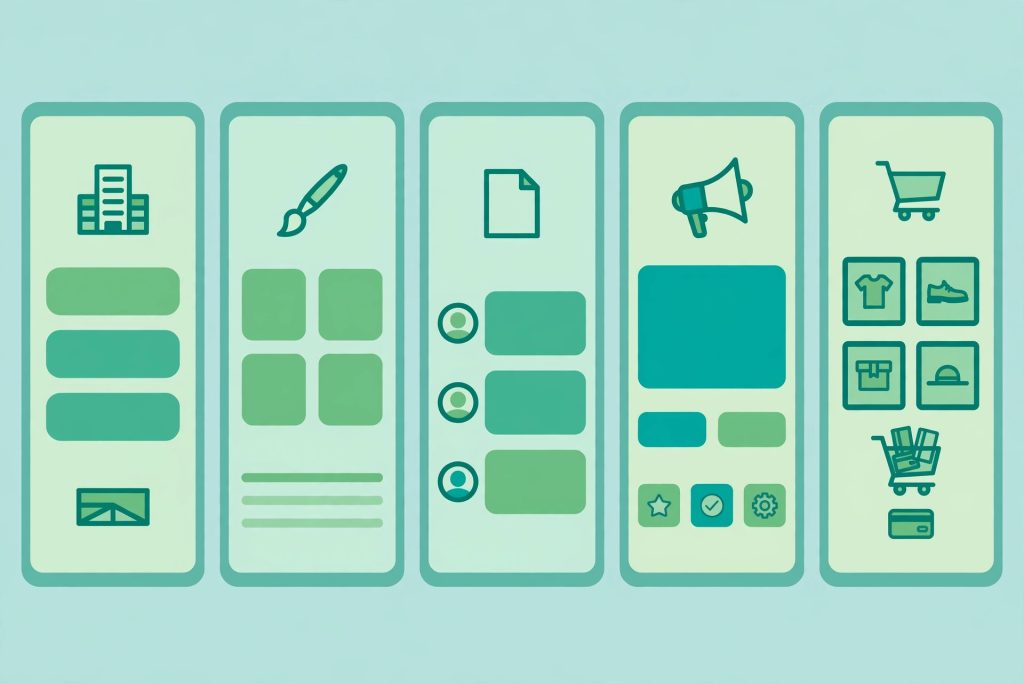
Brochure or portfolio website (5 to 10 pages): Rs. 8,000 to Rs. 35,000. This is the classic small-business website: home, about, services, gallery or portfolio, contact page, maybe a blog. Usually built on WordPress with a premium theme, it is perfect for professionals, consultants, restaurants, clinics and local services that mainly need an online presence and a way for customers to find and contact them.
Small business website (10 to 25 pages, custom design): Rs. 25,000 to Rs. 80,000. When you need a more polished, custom-looking design, extra pages, enquiry forms with CRM integration, WhatsApp chat, Google Maps, testimonials and basic on-page SEO, you move into this band. Many established local businesses, schools, real estate dealers and clinics land here.
E-commerce website (up to 100 to 200 products): Rs. 40,000 to Rs. 1,50,000. A functional online store with product catalogues, cart and checkout, payment gateway integration (Razorpay, Cashfree, CCAvenue), order management, discount coupons and shipping setup. Most stores in this range run on WooCommerce or Shopify. Strong product copy matters as much as the platform, so see how strong product descriptions increase sales for Indian e-commerce stores.
Large e-commerce or marketplace (thousands of products, multi-vendor): Rs. 1,50,000 to Rs. 5,00,000+. Multi-vendor marketplaces, sites with advanced filtering, subscription products, multi-language support or heavy customisation fall here. These projects take months and usually involve a team.
Custom web application or SaaS product: Rs. 2,00,000 to Rs. 15,00,000+. Booking platforms, learning management systems, dashboards, job portals and startup MVPs built with React, Laravel or similar frameworks. There is effectively no ceiling for complex products.
What Actually Drives the Cost Up or Down
Understanding these factors lets you see exactly why two quotes differ, and lets you trim costs intelligently instead of cutting corners blindly.
Design approach. A pre-built theme with your logo and colours is fast and cheap. A fully custom design created from scratch can add Rs. 20,000 to Rs. 1,00,000 or more. Most small businesses do well with a well-customised premium theme; custom design pays off when brand differentiation matters, such as for D2C brands and startups.
Number of pages and content volume. Each page needs design attention, content formatting, images and SEO basics. A 50-page site costs more than a 5-page site even when the design is identical. If the developer has to write your content too, expect to pay for copywriting separately.
Features and functionality. Contact forms are cheap; custom calculators, booking systems with calendar sync, membership areas and AI chatbots are not. Every interactive feature adds development and testing time. List your must-have features before asking for quotes so every vendor prices the same scope.
Integrations. Payment gateways, shipping partners (Shiprocket, Delhivery), SMS services, email marketing tools, CRMs and accounting software each need setup and testing. Simple plugin-based integrations are quick; custom API work is billed by the hour.
Content and images. Professional copywriting typically costs Rs. 2,000 to Rs. 10,000 per page in India, and stock photos or custom graphics add more.
WordPress vs Custom Development: Cost Comparison
This is the single biggest fork in the road, and it affects both the upfront price and the long-term cost of ownership. If you want the full picture, read our detailed comparison of WordPress versus custom website development for Indian businesses.
WordPress development typically costs 40 to 60 percent less upfront than custom development for the same visible result. A business site that costs Rs. 50,000 on WordPress might cost Rs. 1,20,000 or more as a custom build. WordPress wins on speed (weeks, not months), on the huge ecosystem of plugins that add features cheaply, and on ease of use: your staff can update content without calling the developer. The trade-off is ongoing maintenance (updates, backups, security) and some performance overhead, which a good developer manages with caching.
Custom development (Laravel, React, Next.js, Django and similar) makes sense when WordPress cannot do what you need: complex booking logic, a SaaS product, heavy traffic with strict performance budgets, or highly specific workflows. You pay more upfront and you stay dependent on developers for changes, but you get exactly the system you imagined, with no plugin conflicts or bloat.
A practical rule of thumb: if your site is mainly about presenting information, generating leads or selling products in a standard way, WordPress or Shopify will serve you well at a fraction of the cost. Choose custom development only when you have requirements that off-the-shelf platforms genuinely cannot meet.
The Hidden Costs Nobody Puts in the Quote
The development quote is rarely the total cost of owning a website. Budget for these recurring and one-time expenses:
- Domain name: Rs. 800 to Rs. 1,500 per year for a .in or .com domain.
- Web hosting: Rs. 3,000 to Rs. 15,000 per year for shared or cloud hosting suitable for a small business site; Rs. 20,000 to Rs. 60,000+ per year for VPS or managed hosting for busy stores. SSL is usually free with good hosting.
- Premium theme and plugin licences: Rs. 4,000 to Rs. 15,000 per year if your site depends on paid themes or plugins.
- Maintenance and updates: Rs. 12,000 to Rs. 60,000 per year for an annual maintenance contract covering updates, backups, security monitoring and small fixes.
- Content updates: Either your time or Rs. 2,000 to Rs. 10,000 per month for someone to keep the site fresh.
Ask every vendor to state clearly which of these are included and which are extra. A quote that looks cheap often becomes expensive once hosting, licences and maintenance are added.
Freelancer vs Agency Pricing in India
Freelancers typically charge Rs. 8,000 to Rs. 60,000 for small business sites and Rs. 500 to Rs. 2,500 per hour for ongoing work. You get direct communication with the person doing the work and lower overhead, which means lower prices. The risks are availability (one person can get busy or disappear) and narrower skill sets. Freelancers are a great fit for simple sites with clear requirements.
Agencies typically charge Rs. 40,000 to Rs. 3,00,000+ for business sites, with hourly rates of Rs. 1,500 to Rs. 5,000. You pay for a team: designers, developers, testers and a project manager, plus processes, contracts and reliable after-launch support. Agencies cost more because they carry more overhead, but for e-commerce stores and anything business-critical, that overhead buys you continuity and accountability. Always check an agency’s portfolio for sites similar to yours and ask for client references you can actually call.
A middle path exists too: small studios and senior freelancers with a few collaborators often deliver agency-quality work at freelancer-adjacent prices. These are worth seeking out through referrals.
How to Choose the Right Developer (and Red Flags in Quotes)
Price matters, but the cheapest quote is often the most expensive mistake. A badly built site costs you twice: once to build, once to rebuild. Here is how to choose well.
Start by checking the portfolio for real, live websites, not just screenshots. Open them on your phone, because most of your customers will too. A developer whose own portfolio sites are slow or broken on mobile is telling you everything you need to know. Confirm the quote explicitly includes responsive, mobile-first design; in 2026 this is non-negotiable, and our guide on why Indian businesses need a fast, mobile-first website explains exactly why it affects your revenue.

Ask for a written scope of work before paying anything: pages included, features, design rounds, timeline, what happens if deadlines slip, and who owns the domain, hosting account and code. Insist that all accounts be registered in your name and email, not the developer’s. This single step prevents the most common trap in the industry, where a business cannot move its own website because the developer controls everything.
Watch for these red flags in quotes:
- A quote with no breakdown, just one lump-sum number and vague promises.
- Prices far below market (a Rs. 5,000 e-commerce site) which signal copied templates, nulled plugins or abandoned projects.
- Demands for 100 percent payment upfront; the standard is 30 to 50 percent advance with the balance on milestones.
- No mention of mobile responsiveness, basic SEO setup or security.
- Reluctance to put the scope, timeline and ownership terms in writing.
Finally, talk to past clients. One five-minute call with a reference tells you more than ten portfolio screenshots.
FAQ
How much does a basic 5-page website cost in India in 2026?
A basic 5-page brochure website in India typically costs between Rs. 8,000 and Rs. 35,000 in 2026, depending on whether you hire a freelancer or an agency and how customised the design is. This usually covers a WordPress site with a premium theme, contact form, Google Maps, WhatsApp integration and basic SEO setup. Domain and hosting are generally extra, adding roughly Rs. 4,000 to Rs. 15,000 per year.
Is it cheaper to build a website with WordPress or custom code?
WordPress is significantly cheaper, typically 40 to 60 percent less than a custom-coded site with similar visible features. It is also faster to launch and easier for non-technical staff to update. Custom development is worth the premium only when you need unique functionality, such as a SaaS product or complex booking logic.
What are the yearly costs of maintaining a website in India?
Expect Rs. 15,000 to Rs. 60,000 per year for a typical small business website, covering domain renewal, hosting, SSL, premium plugin licences and a basic maintenance plan for updates, backups and security. E-commerce sites with higher traffic can cost Rs. 50,000 to Rs. 1,50,000 per year including payment gateway transaction fees.
Should I hire a freelancer or an agency for my website?
Hire a freelancer for simple brochure or portfolio sites with clear requirements, where budgets of Rs. 8,000 to Rs. 60,000 are typical. Choose an agency for e-commerce stores, custom functionality or anything business-critical, where a team’s design, development, testing and support processes justify the higher price. For either option, check live portfolio sites, demand a written scope, and speak to past clients before paying.
Why do website quotes in India vary from Rs. 8,000 to Rs. 2,00,000?
Quotes vary because the scope varies: design approach (template versus custom), number of pages, features, integrations, content writing and the vendor’s overhead all change the price. Always compare itemised scopes, not just the final number.
Conclusion
Website development cost in India in 2026 spans a wide range, from under Rs. 10,000 for a simple freelancer-built brochure site to several lakhs for custom e-commerce stores and web applications. The right budget for you depends on your website type, the features you genuinely need, and whether WordPress or custom development fits your goals. Remember to budget beyond the build itself: domain, hosting, licences and maintenance are real yearly costs that keep your site secure and running.

5 Comments
Pingback: Ecommerce Website Development India: Platforms & Cost 2026
Pingback: Progressive Web Apps for Indian Businesses: When a PWA Beats a Native App
Pingback: AI Website Builder vs Web Developer in India: 2026 Guide
Pingback: How to Choose a Web Development Company in India: A Practical 2026 Guide
Pingback: Website Migration Checklist for Indian Businesses: A Complete 2026 Guide