

Introduction
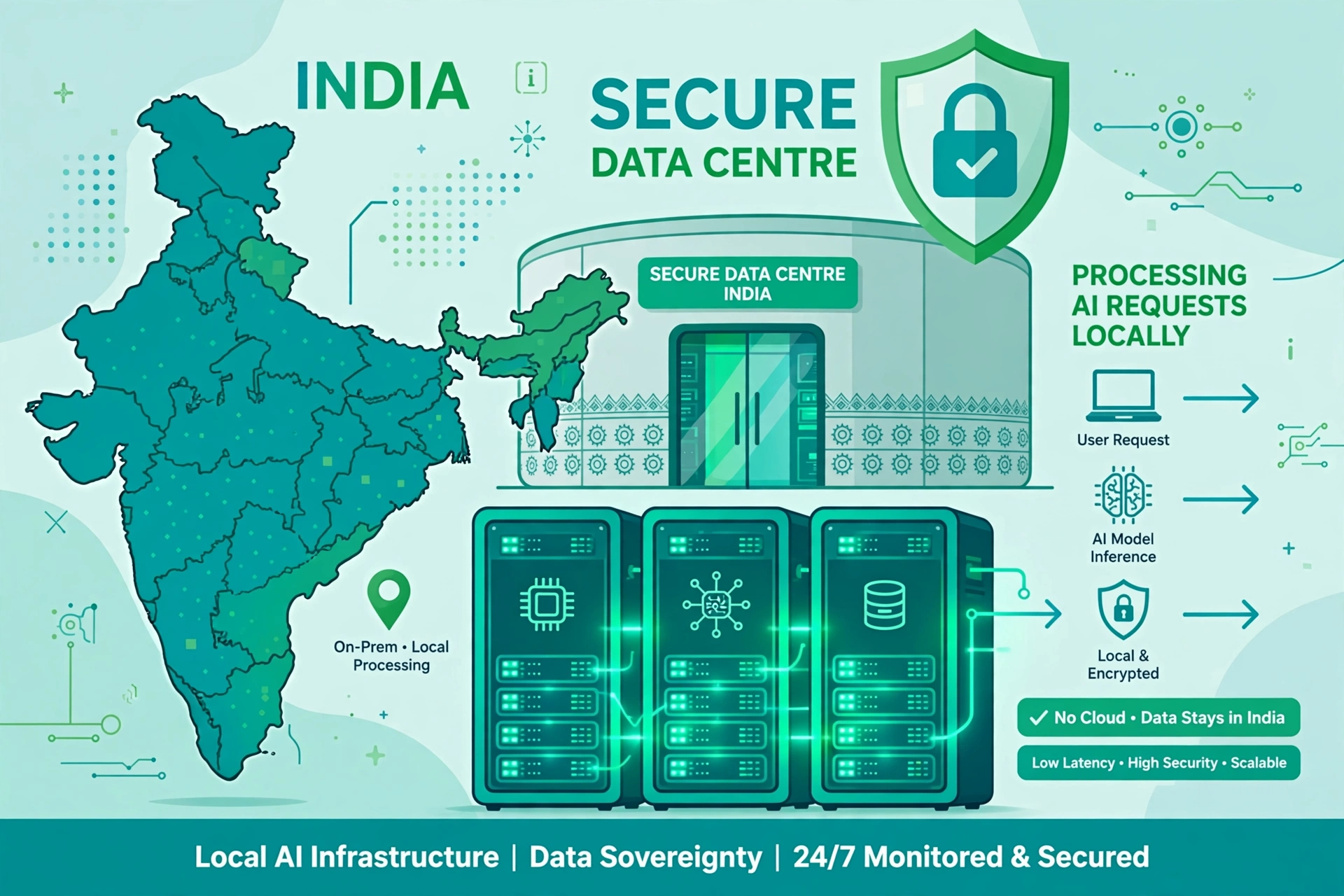
On 12 November 2026, OpenAI announced that it would process some API requests inside India for the first time. For many Indian businesses, that single change removes the biggest obstacle that has held back serious AI adoption. Until now, a company using OpenAI models through the API had to accept that its prompts and documents would be processed on servers outside India. For a startup building a chatbot, that was rarely a problem. For a bank, insurer, hospital or government supplier, it often was.
OpenAI API data residency India changes that conversation. It does not solve every compliance question, and it does not cover every OpenAI product, but it gives eligible Indian businesses a way to keep the core processing of certain API requests inside the country. India has now overtaken the United States as the largest market for ChatGPT by weekly active users.
What OpenAI Announced on 12 November 2026
On 12 November 2026, OpenAI announced local API processing in India, described in the industry as inference residency. Eligible customers can now have certain API requests processed inside India rather than on servers in another country. The announcement was part of the wider OpenAI for India initiative, with news of a Tata Group data centre partnership supporting the local infrastructure. Nitin Bawankule, Head of Enterprise India at OpenAI, spoke about the opportunity it creates for Indian organisations. Be precise, though: OpenAI did not announce that all of its services now run in India, only limited local processing for one model, through two APIs, for a defined group of customers.
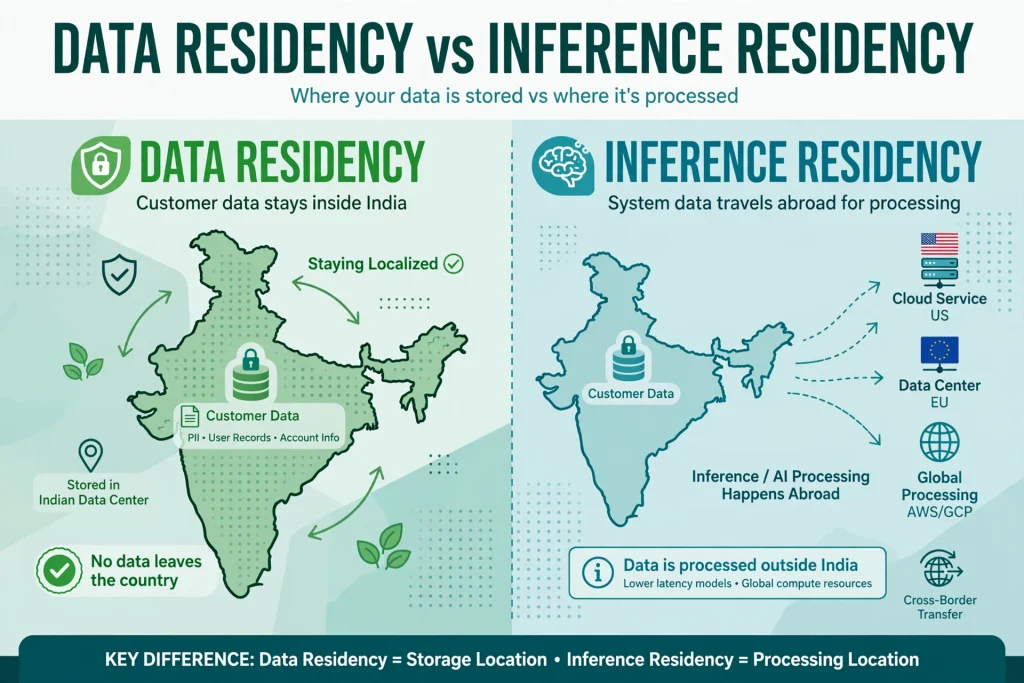
Data Residency vs Inference Residency, Explained Simply
Data residency and inference residency sound similar, but they mean different things. Data residency usually means that data is stored in a particular country, on servers located there. Inference residency is different: inference is the moment when an AI model reads your prompt and produces an answer, so inference residency means that this step happens inside a particular country, and the customer content in that request stays in India while the model processes it. OpenAI API data residency India is best understood as inference residency. System data may still leave India, and other parts of your workflow, such as logging and storage, may still involve servers outside India. For many regulated businesses, the processing location of the prompt itself was the main blocker, so removing it is a real step forward, but not the whole compliance journey.
What Exactly Runs in India: Model, APIs and Scope
The scope is narrow, and it pays to learn it exactly. Only one model is covered: GPT-6 Luna. No other OpenAI model is included, so if your application depends on a different model, local processing is not available for it. Only two APIs are covered: the Responses API and the Chat Completions API, the two main ways developers send prompts to OpenAI models and receive answers. Text input and image input are covered, and text output is covered, a combination that suits document summarisation, drafting, question answering and analysis. Hosted tools are NOT available with regional processing, so a workflow that relies on a hosted tool cannot use it in its current form. Customer content stays in India for the covered request, but system data may still leave India.
Who Can Use It: The Eligibility Checklist
Not every OpenAI API customer can switch on local processing in India. Check each item before you start planning.
- Approved active Zero Data Retention (ZDR): You must have an approved and active ZDR agreement, meaning OpenAI does not retain your API data beyond the processing needed to serve the request. Without it, you do not qualify.
- Standard pay-as-you-go only: Regional processing is available only on standard pay-as-you-go billing.
- GPT-6 Luna only: Your use case must run on GPT-6 Luna, through the Responses API or the Chat Completions API, with text and image input and text output.
- A new regional API project: You must create a new regional API project and select India for storage and processing. Existing projects cannot simply be switched over.
- A business case that fits the limits: You must accept the 10% premium, the absence of hosted tools, and the fact that system data may still leave India.
Meet every item before you invest time in a migration.
How to Set Up OpenAI API Processing in India, Step by Step
Setting up local processing is a deliberate process, not a toggle on an existing project. First, confirm your Zero Data Retention status, and if you have no approved active ZDR agreement, apply for it and wait for approval before you build anything. Second, confirm that your API account uses standard pay-as-you-go billing. Third, create a new regional API project in the OpenAI platform and select India for storage and processing during its creation. Record that selection so it can be audited later. Fourth, generate new API credentials for the regional project, store them securely, and rotate them on a schedule your security team agrees.
Fifth, point your application at the new project in a test environment, test with realistic but non-sensitive data, and check output quality before you move any real customer data. Finally, update your internal records and monitor usage, costs and errors after launch. This guide deliberately does not print any regional API endpoint hostname: no endpoint URL was verified, and one published source printed a hostname that looks like a misprint. Use the OpenAI platform and its official documentation instead.
What It Costs: Pricing and the 10% Premium
GPT-6 Luna regional processing carries a 10% premium over the standard price for the same model, so the same usage processed in India costs 10% more than on the standard global service. That premium is worth paying for the right business, because the cost of compliance, legal review and delayed projects is often far higher than a 10% uplift on API spend. It is not worth paying for every business: if your data is not sensitive, or your use case does not involve regulated data, the standard global service may be the better choice. Before you commit, estimate your monthly usage, apply the 10% premium, and add the cost of setting up a new project and moving workloads.
Which Indian Businesses Benefit Most
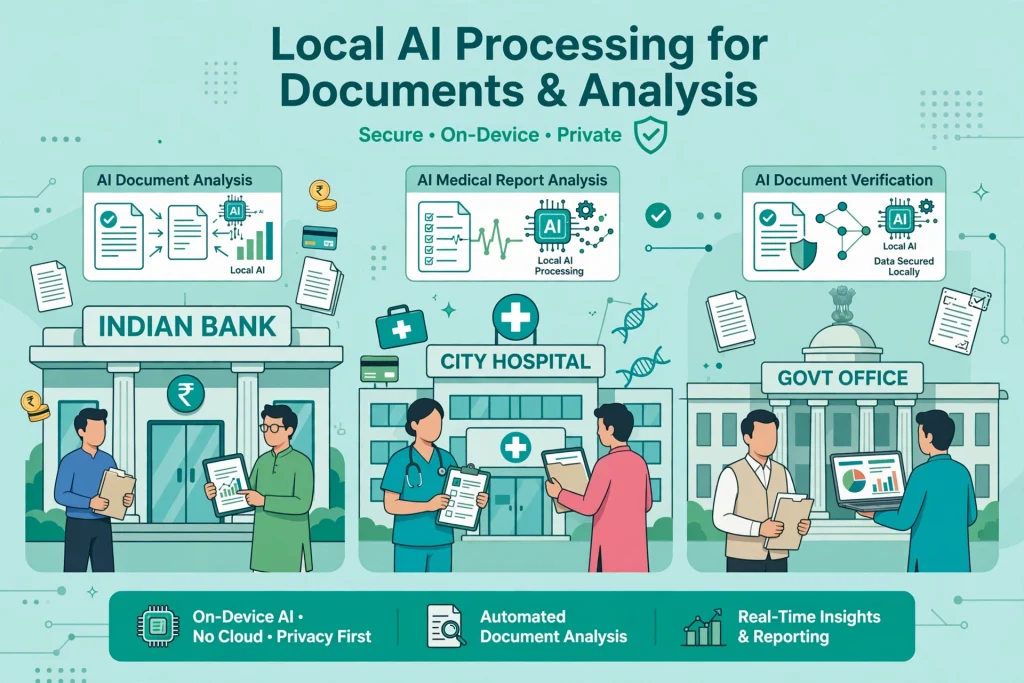
The biggest winners are organisations that handle sensitive Indian customer data and have been blocked by processing location concerns. Banks and financial services firms are an obvious example: they process loan applications, account documents and customer complaints that contain personal and financial information, and local processing helps them show regulators that the core AI step happens in India. Insurers are in a similar position, with claims documents and policy wording. Healthcare providers are another strong fit, since hospitals deal with patient records and insurance paperwork, and summarising those documents with processing inside India makes AI projects easier to approve. Government suppliers also benefit, because they often work under contracts that require Indian data to stay in India. Beyond regulated sectors, any business that processes large volumes of documents will find value here, including summarisation and contract drafting. Some businesses should wait: if you rely heavily on hosted tools, need another model, or hold no sensitive data, local processing may not be worth the premium yet. For a broader view, read our guide on how smart IT infrastructure improves business efficiency.
What It Does Not Cover: Limitations and Honest Warnings
ChatGPT is not covered. The announcement concerns the API, not the ChatGPT consumer or business chat product, so do not tell staff or customers that ChatGPT is now processed in India. Other models are not covered either: only GPT-6 Luna is included, so if your application uses another model, even for a small part of the workflow, that part is not covered. Hosted tools are not available with regional processing, so workflows that depend on them will need to be redesigned or stay on the global service. System data may still leave India, because the promise that customer content stays in India for the covered request does not extend to every data flow, so get a written answer from OpenAI if your compliance requirement covers system data. Full-workflow compliance also remains your responsibility: your storage, logging, backups and staff access all remain your responsibility, under the DPDP Act, sector rules and your own internal policies.
India Compliance: DPDP Act and Data Localisation in Plain English
The Digital Personal Data Protection Act, known as the DPDP Act 2023, sets rules for how organisations collect, use, store and share personal data in India. It requires consent, purpose limitation, data minimisation and reasonable security safeguards. Data localisation is a related but separate idea: rules or expectations that certain data must be stored or processed inside India. The Reserve Bank of India, for example, expects payment and financial data to be stored in India.
OpenAI API data residency India helps with the processing part of that picture for one model and two APIs. It does not, on its own, make a business compliant with the DPDP Act, because compliance also depends on consent, purpose, retention, security and breach reporting, plus the rest of your workflow, including where you store prompts, logs and outputs. Before you move regulated data to any AI service, ask your legal team to review the DPDP Act duties and the contract terms, and ask for the processing location in writing. For businesses reviewing their wider security posture, our guide on cybersecurity solutions every modern business should consider is a useful starting point.
Alternatives Worth Comparing
OpenAI is not the only option for Indian businesses that want local AI processing. AWS Bedrock India inference is a strong alternative for teams already using Amazon Web Services: it offers a range of foundation models through a managed service, with inference options in India. Microsoft Azure also offers AI services with Indian regions and a long history of working with regulated Indian customers, and it may fit naturally if your organisation already uses Microsoft 365. On-premise Indian models are a third path: the IndiaAI Mission released three indigenous foundation models, EKA-1, Dhir 2B and Dhir 5B, on 3 November 2026. Running a model on infrastructure inside India that you control gives you the greatest control over where data goes, but it also brings responsibility for hosting, scaling and securing the model. Use the same checklist for each option: which models are available, where data is processed and stored, what happens to system data, what the price is, and how easy it is to audit. Cloud choices also affect cost and scale, so our guide on cloud computing solutions for growing businesses can help you think through the wider decision.
Frequently Asked Questions
What is OpenAI API data residency in India?
It means eligible customers can have certain API requests processed inside India, so customer content in a covered request stays in India. It applies to GPT-6 Luna through the Responses and Chat Completions APIs.
Which OpenAI model supports local processing in India?
Only GPT-6 Luna supports local processing in India under the announcement of 12 November 2026. If your application needs a different model, it is not available.
Do I need Zero Data Retention to use OpenAI processing in India?
Yes. You must have an approved active Zero Data Retention agreement, usually called ZDR, use standard pay-as-you-go billing, and create a new regional API project with India selected for storage and processing.
Does OpenAI data residency in India cover ChatGPT?
No. The announcement covers the OpenAI API, not ChatGPT, so ChatGPT usage is not processed locally under it.
How much extra does GPT-6 Luna processing in India cost?
GPT-6 Luna regional processing in India carries a 10% premium over the standard price for the same model, so estimate your monthly usage and apply the 10% uplift before you decide.
Is OpenAI API data residency enough for DPDP Act compliance?
No, not on its own. Local processing helps with where a covered API request is processed, but DPDP Act compliance covers much more, including consent, purpose, retention, security and breach reporting.
Conclusion
The announcement of 12 November 2026 is a genuine step forward for Indian businesses that want to use OpenAI models without sending every API request abroad. OpenAI API data residency India gives eligible customers a way to process GPT-6 Luna requests inside the country, through the Responses and Chat Completions APIs, with text and image input and text output. For banks, insurers, healthcare providers and government suppliers, that is meaningful change. It is also a limited step: only GPT-6 Luna is covered, hosted tools are not available, you need an approved active Zero Data Retention agreement and pay-as-you-go billing, and there is a 10% premium. System data may still leave India, ChatGPT is not covered, and full-workflow compliance remains your responsibility. If your use case fits the scope and the premium is worth paying, local processing can unblock a project that has waited too long. If it does not fit, waiting is the wiser choice.
