

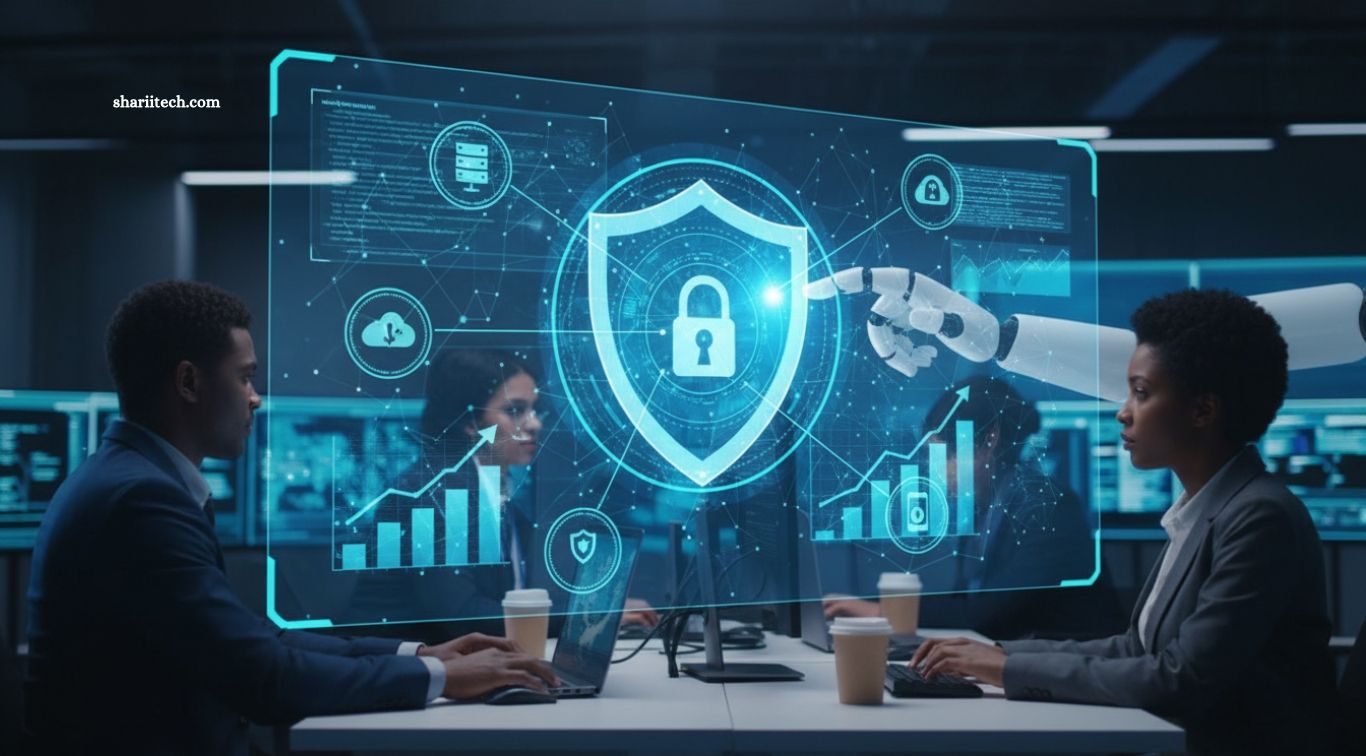
Cybersecurity has become a critical priority for businesses of every size. Companies depend on digital systems to manage customer information, process payments, communicate with employees, and store important documents. Without effective protection, a single cyberattack can cause financial losses, disrupt operations, damage customer trust, and expose confidential information. Modern businesses need practical cybersecurity solutions that reduce risks while supporting daily activities.
Cyber threats continue to evolve as criminals use phishing, ransomware, stolen passwords, and other techniques to target organizations. A strong security strategy combines reliable technology, employee awareness, clear policies, and regular monitoring. By choosing suitable cybersecurity solutions, businesses can protect valuable assets, strengthen customer confidence, and prepare for potential security incidents.
Read More: Cloud Computing Solutions for Growing Small Businesses
Endpoint Protection and Antivirus Software
Endpoint protection helps secure devices connected to a business network, including laptops, desktop computers, servers, and mobile devices. Traditional antivirus software identifies known malicious files, while modern endpoint protection platforms can detect suspicious behavior, block harmful activity, and help security teams investigate potential attacks. These tools are especially important for organizations whose employees access company information from different locations.
Businesses should choose endpoint security based on their number of devices, operating systems, risk level, and technical resources. Centralized management makes it easier to apply security policies, review alerts, and maintain consistent protection across the organization. However, endpoint software should not be treated as a complete security strategy. Regular updates, restricted user permissions, reliable backups, and employee training remain essential.
Multi-Factor Authentication and Strong Password Security
Stolen or weak passwords remain a common way for attackers to access business accounts. Multi-factor authentication (MFA) adds another verification step beyond a password, such as an authenticator application, security key, or approved device confirmation. Even when a criminal obtains login credentials, an additional authentication requirement can make unauthorized access more difficult.
Companies should enable MFA for email accounts, cloud platforms, remote access systems, financial applications, and administrator accounts. Password managers can also help employees create and store unique passwords without reusing the same credentials across multiple services. Where possible, organizations should consider phishing-resistant authentication methods, such as passkeys or hardware security keys, especially for accounts with access to sensitive information.
Firewall and Network Security Solutions
Firewalls help control network traffic by allowing or blocking connections according to defined security rules. Modern network security solutions may also include intrusion detection, intrusion prevention, web filtering, and tools that identify suspicious communication. These protections help businesses reduce exposure to unauthorized connections and potentially harmful network activity.
A firewall must be configured and maintained correctly to provide meaningful protection. Businesses should remove unnecessary services, restrict access to internal systems, separate sensitive devices from general office networks, and review security rules regularly. Remote workers and branch offices also need appropriate protection. Combining network controls with endpoint security, secure configurations, and continuous monitoring creates a stronger defense than relying on a firewall alone.
Cloud Security and Data Protection
Cloud services allow businesses to store files, run applications, collaborate with teams, and access information from different locations. However, cloud environments can become vulnerable when permissions are too broad, accounts are poorly protected, or storage settings expose confidential data. Cloud security solutions help organizations manage access, monitor activity, protect stored information, and identify risky configurations.
Businesses should understand which security responsibilities belong to the cloud provider and which remain their own. Appropriate access controls, encryption, activity logging, secure configuration, and regular reviews of user permissions can reduce common risks. Organizations should also examine how cloud vendors handle data, respond to incidents, and maintain service availability. Sensitive information should only be shared with authorized people and approved applications.
Data Backup and Disaster Recovery
Reliable backups are essential because ransomware, accidental deletion, hardware failures, and natural disasters can make business data unavailable. A well-designed backup strategy helps organizations restore important files and resume operations after an incident. Backups should cover essential information such as financial records, customer databases, employee documents, application settings, and other business-critical systems.
Companies should maintain protected backup copies that attackers cannot easily modify or delete. One useful approach is to follow the 3-2-1 backup principle: keep three copies of important data, use two different storage types, and store one copy off-site. Businesses should also test restoration procedures regularly because a backup is only useful when the data can be recovered successfully. A disaster recovery plan should identify responsibilities, recovery priorities, and acceptable downtime.
Employee Cybersecurity Awareness Training
Employees can become targets of phishing messages, fake invoices, fraudulent login pages, and social engineering attacks. Cybersecurity awareness training teaches staff how to recognize suspicious communications, protect account credentials, verify unexpected requests, and report potential incidents. Regular training is often more effective than a single annual presentation because attackers continually change their tactics.
Businesses should provide practical examples that reflect the threats employees are likely to encounter. Staff should know how to verify payment changes, confirm unusual requests from executives, and report suspicious attachments without fear of blame. Simulated phishing exercises can help organizations identify areas where additional support is needed. Training should encourage prompt reporting rather than expecting employees to recognize every threat perfectly.
Email Security and Anti-Phishing Tools
Email remains an important communication channel for most businesses, making it a frequent target for cybercriminals. Attackers may send messages that imitate suppliers, customers, banks, or senior employees to steal credentials or persuade staff to transfer money. Email security tools can filter spam, detect malicious attachments, inspect suspicious links, and block certain impersonation attempts before messages reach employees.
Organizations should also configure email authentication standards such as SPF, DKIM, and DMARC to help reduce domain spoofing. These measures improve the ability of receiving systems to verify whether messages claiming to come from a business domain are authorized. However, email controls cannot stop every fraudulent message. Employees should verify unexpected payment instructions or sensitive requests through a separate trusted communication channel.
Identity and Access Management
Identity and access management (IAM) helps businesses control who can access particular systems, applications, and information. Rather than granting every employee broad permissions, organizations can assign access according to job responsibilities. This approach follows the principle of least privilege, which limits users to the access necessary for their work and reduces the potential impact of compromised accounts.
Businesses should review permissions when employees change roles or leave the organization. Administrative accounts deserve additional protection because they can provide extensive control over company systems. Centralized identity management can simplify account provisioning, authentication, and access reviews across multiple applications. Companies should also remove inactive accounts, monitor unusual login activity, and separate everyday user accounts from privileged administrator accounts.
Security Information and Event Management
Security information and event management (SIEM) solutions collect and analyze security logs from sources such as servers, applications, endpoints, firewalls, and cloud platforms. By bringing this information together, SIEM tools can help security teams identify unusual patterns, connect related alerts, and investigate possible attacks. They can be particularly valuable for businesses that operate many systems or need stronger visibility into their digital environments.
However, collecting large amounts of data does not automatically improve security. Organizations need suitable alert rules, clear investigation procedures, and staff who can respond to important warnings. Smaller companies may consider managed security monitoring if maintaining an internal security team is too expensive. The goal is to identify meaningful threats promptly and respond effectively, rather than generating alerts that nobody has time to review.
Vulnerability Management and Software Updates
Software vulnerabilities can provide attackers with opportunities to access systems, steal information, or disrupt operations. Vulnerability management helps businesses identify weaknesses in operating systems, applications, network equipment, and other technology. Regular patching closes known security gaps, while vulnerability scans and configuration reviews help organizations understand which systems require attention first.
Companies should maintain an inventory of their hardware and software, so they know which assets need updates and support. Critical vulnerabilities affecting internet-facing systems or widely used applications may require urgent action. Businesses should test important updates when necessary, but avoid delaying security patches indefinitely. Replacing unsupported software and removing unnecessary applications can also reduce the number of weaknesses attackers might exploit.
Zero Trust Security Architecture
Zero trust is a security approach based on the principle that access should not be automatically trusted simply because a user or device is inside a company network. Instead, access decisions consider identity, device condition, requested resources, and other relevant signals. Permissions should be limited to what is necessary, with verification applied consistently across local and cloud environments.
This approach can be particularly useful for businesses with remote employees, contractors, multiple offices, and cloud-based applications. Zero trust is not a single product that can be installed overnight. It involves improving identity management, segmenting networks, monitoring activity, protecting devices, and reviewing access policies. Organizations can adopt these practices gradually, beginning with critical applications and high-risk accounts.
Incident Response Planning and Cyber Insurance
Even well-protected businesses may experience security incidents. An incident response plan explains how an organization will identify a threat, contain affected systems, investigate what happened, restore operations, and communicate with relevant parties. Assigning responsibilities in advance can reduce confusion and help teams make faster decisions during a stressful event.
Companies should test their plans through tabletop exercises and realistic recovery scenarios. They should also understand when to contact external cybersecurity specialists, legal advisers, regulators, customers, or law enforcement, depending on the incident and applicable requirements. Cyber insurance may help cover certain costs associated with eligible incidents, but policies have exclusions and conditions. Businesses should review coverage carefully and never treat insurance as a substitute for prevention and recovery planning.
How to Choose the Right Cybersecurity Solutions
The best cybersecurity strategy depends on the business’s size, industry, budget, regulatory obligations, and the type of information it handles. A small company may begin with MFA, endpoint protection, secure backups, email filtering, and employee training. A larger organization with complex systems may also require centralized monitoring, vulnerability management, network segmentation, and dedicated incident response capabilities.
Businesses should prioritize solutions according to risk rather than purchasing every available security product. Start by identifying valuable data, critical systems, likely threats, and weaknesses that could cause serious disruption. Review vendor reliability, integration requirements, support services, and total ownership costs before committing. Test and review security controls regularly as the business grows and its technology changes.
Frequently Asked Questions
What cybersecurity solutions should every business consider?
Start with MFA, endpoint protection, firewalls, secure backups, email security, employee training, and regular software updates.
Why is multi-factor authentication important?
MFA adds another verification step to help prevent unauthorized access when a password is stolen or exposed.
How often should businesses back up their data?
Backup frequency depends on how much data a business can afford to lose. Critical systems may need continuous or daily backups.
What is zero trust security?
Zero trust requires verifying access based on identity, device, and context instead of automatically trusting users inside a network.
Can small businesses afford cybersecurity?
Yes. Small businesses can begin with affordable essential controls, reputable cloud security features, employee training, and carefully managed backups.
Does cyber insurance replace cybersecurity protection?
No. Insurance may cover certain eligible losses, but prevention, incident response, and recovery planning remain necessary.
Conclusion
Cybersecurity solutions help modern businesses protect sensitive information, maintain customer trust, and keep essential operations running. Endpoint protection, MFA, network security, cloud controls, reliable backups, employee training, and identity management form a strong foundation. Larger or higher-risk organizations may also benefit from SIEM tools, zero trust practices, vulnerability management, and formal incident response planning. By assessing risks, prioritizing essential safeguards, and reviewing security practices regularly, businesses can build a more resilient defense against evolving cyber threats.

2 Comments
Pingback: How Smart IT Infrastructure Improves Business Efficiency - Sharii Tech
Pingback: OpenAI API Data Residency in India 2026: What Local GPT-6 Luna Processing Means for Indian Businesses