


Introduction
LinkedIn is the most important social platform for Indian B2B brands, and also the most misunderstood. Many companies treat it as a noticeboard: festival greetings, hiring announcements, and occasional product posts from the company page. That activity produces likes from employees and almost no pipeline.
Real LinkedIn marketing for B2B is different. It is a system for building trust with a defined set of buyers, staying visible to them over months, and converting that visibility into conversations, demos and deals. It combines personal profiles, a credible company page, useful content, and, where appropriate, targeted ads.
This guide explains that system for Indian B2B brands: manufacturers, IT services firms, consultants, agencies, and industrial suppliers. It covers what to post, who should post it, how to budget for ads in rupees, and how to measure whether LinkedIn is actually producing pipeline, not just engagement.
Why LinkedIn Works Differently for Indian B2B
In Indian B2B, deals are still won on relationships. A purchase manager in Pune buys from a supplier they trust. A plant head in Vapi recommends a consultant whose name they have heard at industry meets. LinkedIn has not changed that logic. It has moved a large part of trust-building online, where a founder, a sales head or an engineer can now be visible to hundreds of potential buyers every week.
That is why personal profiles matter more than company pages on LinkedIn. A founder’s post about a lesson learned from a difficult export order will almost always travel further than the same story on a company page, because people connect with people, not logos. A company page still matters, as a credibility check: when a buyer sees an interesting post, they will visit the page to confirm the company is real, established, and active. But the page alone rarely starts the conversation.
LinkedIn also suits the long Indian B2B sales cycle. A buyer may follow you for six months before they have a requirement. Consistent, useful content keeps you in their mind during that period, so that when the requirement appears, your name is already familiar. That is pipeline building, even though it does not show up as an immediate lead form submission.
Step 1: Define Your Buyer and Your Content Pillars
Before posting anything, define the buyer precisely. “Indian businesses” is not a buyer. “Operations heads at auto component manufacturers in Pune, Chennai and Gurugram with 100 to 500 employees” is a buyer. The narrower the definition, the easier it is to write content that buyer recognises as being for them.
Then choose three or four content pillars that match that buyer’s concerns. For a typical Indian B2B brand, useful pillars include:
- Customer problems and how they are solved, told as short stories without naming clients who have not given permission.
- Industry insight: what is changing in the buyer’s sector, and what it means for them.
- Behind the scenes: how your team works, what quality checks you run, what a site visit looks like.
- Practical how-to content: checklists, comparisons, and decision guides the buyer can use immediately.
Avoid a fifth pillar that is only self-promotion. A good rule is that at most one post in five should be directly promotional. The rest should be useful, interesting, or both. Buyers follow people who help them think, not people who only sell to them.
Step 2: Fix Profiles Before Posting More Content
Content sent to a weak profile is wasted, because the buyer who clicks through finds nothing convincing. Fix the essentials first.
For a founder or sales leader profile: a clear headshot, a headline that says who you help and how (not just a job title), a banner that shows the work, an About section written in the first person, and a Featured section with your best case study, guide or video. Add experience entries that describe outcomes, not only responsibilities.
For the company page: a complete description, website link, industry, company size, headquarters city, and a consistent logo and banner. Pin a post that explains what you do and who you serve. Post at least once a week from the page, even if personal profiles carry most of the reach, because an empty page undermines trust when a buyer checks it.
For employee profiles: encourage, but do not force, team members to share their own work in their own words. A short reshare with a personal comment from an engineer or delivery head often outperforms a polished corporate post, because it looks and reads like a real person.
Step 3: Choose Formats That Actually Reach Buyers
LinkedIn rewards content that keeps people on the platform and starts conversations. In practice, for Indian B2B, these formats work best:
- Short text posts, 150 to 300 words, that open with a specific observation or a buyer problem, then explain one idea clearly. End with a question that invites a real answer, not “agree?”.
- Document carousels, such as a five-page checklist or comparison, which buyers save and share. Carousels work well for checklists, frameworks and before -after guides.
- Native video, 60 to 90 seconds, where a founder or engineer explains one idea to camera. Video builds trust faster than text, because the buyer can see and hear the person they might hire.
- Polls, used sparingly, to learn what buyers care about. A poll about a real decision, such as “what matters most when you choose a supplier,” gives you both engagement and market insight.
- Articles, 800 to 1,200 words, for deeper topics that a post cannot cover, such as a full buying guide or a sector analysis.
Avoid link posts as your default format. Posts that send readers away from LinkedIn immediately tend to get less reach. Instead, write the value in the post itself, and put the link in a comment or in the Featured section where interested readers can find it.
Step 4: Build a Sustainable Posting Rhythm
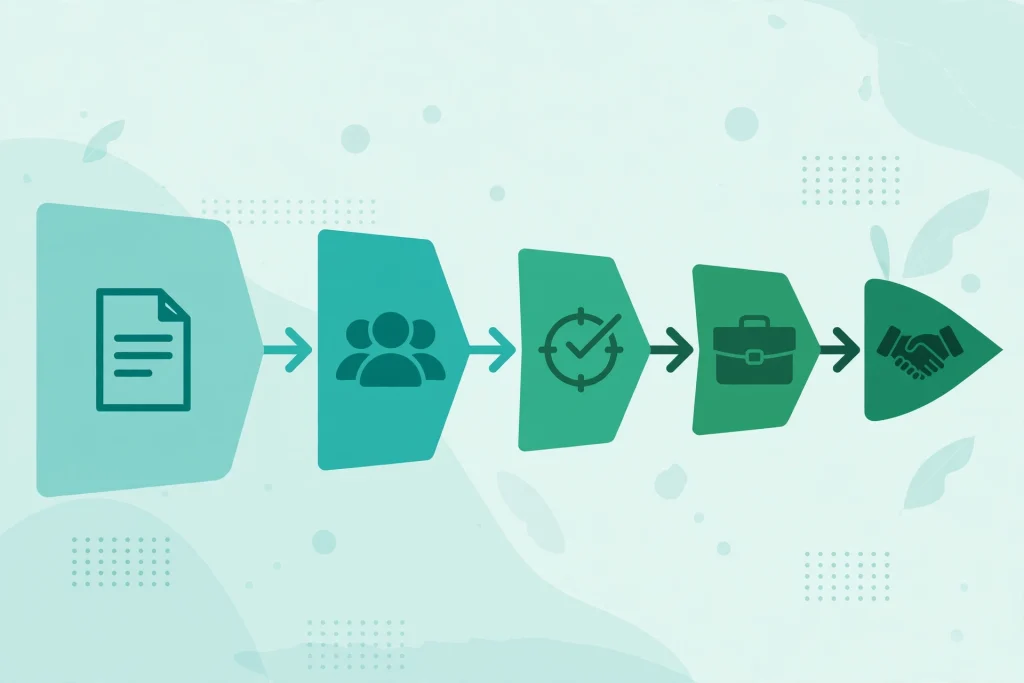
Consistency over months matters more than a burst of daily posts for two weeks followed by silence. A sustainable rhythm for most Indian B2B teams is:
- Founder or lead voice: two to three posts per week.
- Company page: one to two posts per week.
- Key team members: one post or thoughtful comment per week each.
That is enough to stay visible without exhausting the team. Create content in batches: spend two hours once a month drafting eight to twelve posts, then schedule them and use the freed time for commenting and conversation. Commenting thoughtfully on buyers’ posts and industry discussions is often more valuable than posting more of your own content, because it puts your name in front of buyers who never visit your page.
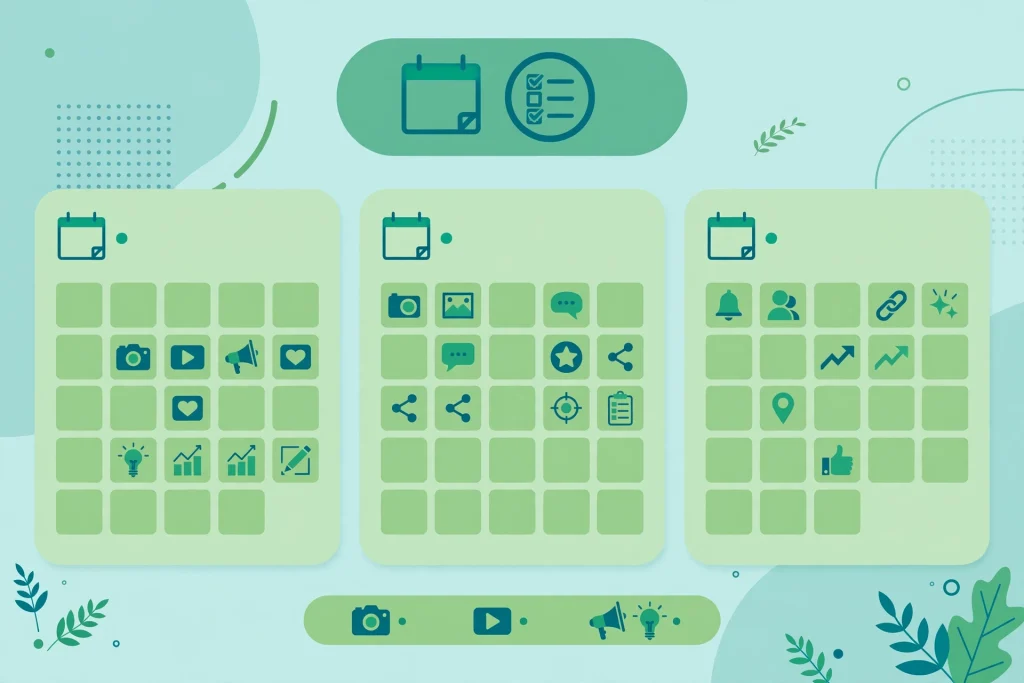
A simple weekly pattern helps: Monday, a customer problem story; Wednesday, a practical how-to or checklist; Friday, an industry observation or a behind-the-scenes post. Adjust the pattern to your audience, but keep the rhythm. Buyers trust brands that show up reliably.
Step 5: Turn Content Into Conversations, Then Pipeline
Content alone does not create pipeline. Conversations do. When someone comments thoughtfully, reply with a real answer, not a generic thank you. When a buyer from a target account views your profile or engages repeatedly, a short, personal connection request is appropriate: mention the specific post or topic, and do not pitch in the first message.
For target account marketing, build a list of 50 to 100 ideal accounts, and make sure your team engages with people at those accounts regularly: comments, shares with a personal note, and invitations to webinars or events that are genuinely relevant to them. This is slower than buying a list, but it produces conversations with people who already recognise your name.
Measure the funnel, not just likes:
- Reach and engagement: are the right job titles and industries seeing and interacting with your content?
- Profile visits and connection requests: are target buyers finding you?
- Conversations started: how many meaningful LinkedIn conversations did content start this month?
- Meetings booked and pipeline created: how many of those conversations became a call, a demo, or a proposal?
If engagement is high but meetings are zero, the content is entertaining the wrong audience, or the call to action is missing. Fix the audience or the offer, not the posting frequency.
Step 6: LinkedIn Ads on an Indian Budget
Organic content builds trust, but ads can accelerate it, especially for a webinar, a case study, or a lead form aimed at a defined audience. LinkedIn ads are more expensive per click than Google or Meta ads in India, so they must be used precisely.
Start small: Rs 15,000 to Rs 30,000 per month for a first test, aimed at one audience and one offer. Target by job title, industry, company size and geography, for example operations heads in manufacturing in Maharashtra, Gujarat and Tamil Nadu. Use a lead form or a landing page with a single, clear offer, such as a downloadable buying guide or a webinar registration.
Test one variable at a time: the audience, the creative, or the offer. Measure cost per qualified lead, not cost per click. A campaign that produces cheap clicks from students is worse than a campaign that produces fewer, more expensive clicks from purchase managers. If a campaign cannot produce qualified conversations at a cost your business can afford, pause it and improve the organic content and the offer first. Ads amplify a working message. They do not fix a weak one.
For a broader view of how LinkedIn fits alongside other channels, see our guide to social media marketing in India, and for creator partnerships that can extend reach, our influencer marketing guide for Indian brands.
A 90-Day Plan for Indian B2B Brands
Days 1 to 30: Foundations. Fix founder, team and company page profiles. Define your buyer and content pillars. Publish two to three founder posts per week and one company page post per week. Start commenting daily on ten buyer or industry posts.
Days 31 to 60: System. Batch-create content monthly. Add one carousel and one video per month. Build your target account list and start deliberate engagement with those accounts. Launch a small ads test only if you have a proven offer and a landing page that converts.
Days 61 to 90: Convert. Review which posts started conversations and which topics buyers asked about. Turn the best-performing topic into a deeper guide or webinar. Invite engaged buyers to a call with a specific, useful reason, such as a free audit or a sector benchmark. Report pipeline created, not just reach, to leadership.
Common Mistakes Indian B2B Brands Make
Posting only festival greetings and hiring news is the most common mistake. It signals that the company page is maintained, but it gives buyers no reason to follow or to buy.
Buying followers or using engagement pods is another mistake. It inflates numbers while destroying reach, because LinkedIn can detect inauthentic engagement, and because a follower base full of irrelevant accounts teaches the algorithm to show your content to the wrong people.
Pitching in the first connection message is a third mistake. A buyer who has just accepted your request does not want a brochure. They want a reason to trust you. Give them useful content first, and let the conversation develop.
Finally, do not judge LinkedIn by last-click leads alone. A buyer may read your posts for months, then search for your company directly or call a number from your website. Ask new enquirers how they first heard of you, and record LinkedIn as an influence even when it was not the final click. Our guide to Google Business Profile optimisation in India covers a related credibility check buyers make before contacting you.
Frequently Asked Questions
How often should an Indian B2B founder post on LinkedIn?
Two to three quality posts per week is sustainable for most founders, and consistency over months matters more than daily posting for a short burst. Add daily commenting on buyer and industry posts, which often produces more conversations than extra posts of your own.
Should we post in English, Hindi, or a regional language?
English works best for most national B2B audiences on LinkedIn, especially for buyers across states and for export customers. An occasional Hindi or regional-language line can add warmth for a local audience, but keep the core message in English unless your buyers are concentrated in one language region.
Are LinkedIn ads worth it for small Indian B2B firms?
They can be, for a specific offer and a tightly defined audience, starting with Rs 15,000 to Rs 30,000 per month as a test. Measure cost per qualified lead, not cost per click, and pause a campaign that cannot produce real conversations at an affordable cost.
How long does LinkedIn marketing take to produce pipeline?
Expect meaningful conversations after two to three months of consistent posting and engagement, and a reliable pipeline contribution after six months. LinkedIn suits the long B2B sales cycle, so judge it on conversations and meetings, not on immediate form fills alone.
Should the company page or personal profiles lead our LinkedIn effort?
Personal profiles should lead, because they earn far more reach and trust than company pages. The company page should support them as a credibility check, with complete information and regular posts, but it should not be the only voice of the brand.
Conclusion
LinkedIn marketing for Indian B2B brands is not about viral posts or follower counts. It is about being consistently useful to a defined set of buyers, in a voice they trust, until they are ready to talk.
Fix your profiles, choose content pillars your buyers care about, post at a rhythm you can sustain, turn comments into conversations, and measure meetings and pipeline, not just likes. Do that for 90 days, and LinkedIn stops being a noticeboard and starts being a sales asset.

1 Comment
Pingback: How to Write LinkedIn Posts in India 2026: Hooks, Formats and Examples That Get Clients