


Introduction
Most blogs in India do not fail because the writer lacks talent. They fail because of a small set of repeatable mistakes: choosing topics nobody searches for, publishing without a system, copying content, quitting too early, or chasing income before traffic exists. The good news is that every one of these mistakes has a fix, and most fixes cost time, not money.
This guide covers the blogging mistakes Indian beginners make most often in 2026, organised by stage: setup, topic choice, writing, SEO, consistency, and monetization. For each mistake you get the fix, plus a short 30 day recovery plan at the end. Competitor guides usually list mistakes in one long list. Some focus on AdSense approval, some on ranking, and some on mindset. Few connect the mistakes in order, explain why each one hurts in India specifically, and give a recovery sequence. This guide does that, so you can audit a struggling blog and fix it in the right order.
Stage 1: Setup Mistakes That Are Hard to Undo Later
Mistake 1: Starting on a free subdomain you cannot grow with
A free address such as yourname.wordpress.com feels safe at the start, but it limits control, branding, and migration. Moving later can reset search visibility and break links you have already shared. A custom domain costs little per year in India, and it is worth buying from day one, even if you start on a free platform.
Fix: Buy a short, memorable custom domain, keep it in your own account, and connect it to WordPress or your chosen platform before you publish much content. If you already use a free subdomain, plan the move early, set up redirects where possible, and update your main social profiles and links.
Mistake 2: Choosing five niches at once
Beginners often write about technology one day, fitness the next, and finance after that, hoping something will work. Search engines and readers both struggle to understand what the blog is about, so nothing builds authority. A blog that tries to cover everything usually ranks for nothing.
Fix: Pick one niche you can write about for at least six months, and one main reader type. For example, instead of general blogging, choose blogging for Indian students, home cooking in Hindi, or personal finance for first time earners. You can widen the niche later, once a core set of posts ranks.
Mistake 3: Ignoring mobile readers from day one
Most Indian readers arrive on mobile phones. A theme that looks fine on a laptop can be slow, cramped, or hard to tap on a phone. Beginners often publish for months without ever opening their own blog on a phone.
Fix: Test every post on a real phone, not just a desktop preview. Use a light theme, large readable text, compressed images, and buttons that are easy to tap. Check page speed on mobile before you worry about advanced SEO tools.
Stage 2: Topic and Keyword Mistakes
Mistake 4: Writing what you feel like, not what people search for
Passion matters, but a blog also needs demand. Many beginners publish heartfelt posts that nobody searches for, then conclude that blogging does not work. The problem is usually topic choice, not writing quality.
Fix: Before you write, check demand. Use Google Trends for India, Google autocomplete, and the People Also Ask section to see real questions. Choose topics with clear search intent, and prefer specific long tail topics at the start. For example, “how to start a blog in India on mobile” is easier to rank for than “blogging tips”.
Mistake 5: Targeting keywords that are far too competitive
A new blog cannot realistically rank for “earn money online” or “best smartphones” in its first months. Those topics are covered by large sites with years of authority. Beginners who target them get no traffic, even with good writing.
Fix: Start with low competition, specific topics where you can be the best answer. Look for questions with fewer strong results, local angles, or beginner angles. As posts start to rank, you can gradually target broader topics in the same niche.
Mistake 6: No topical depth, only random posts
Publishing ten unrelated posts does not build authority. Publishing ten connected posts around one pillar topic does. Many beginners miss this, so each post starts from zero.
Fix: Build clusters. Pick a pillar topic, write a complete guide, then write supporting posts that answer related questions and link back to the pillar. Internal links help readers and search engines understand the structure of your blog.
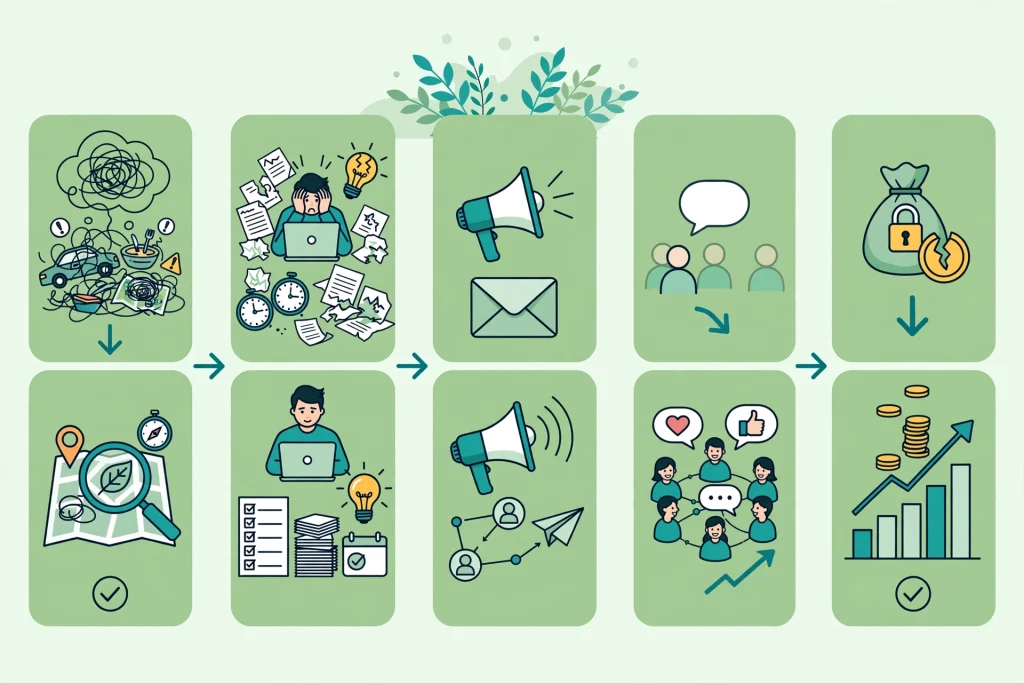
Stage 3: Writing and Content Mistakes
Mistake 7: Copying, lightly rewriting, or publishing unedited AI content
Copied content does not rank well for long, and it can harm AdSense approval and trust. Lightly rewritten content has the same problem. Unedited AI drafts are also risky, because they often repeat generic advice, invent facts, or miss the Indian context readers need.
Fix: Use AI and research as a starting point, then add your own experience, examples, prices in rupees where relevant, and India specific steps. Edit hard, check every factual claim, and write in your own voice. Original, useful content is the one advantage a small blog always has over a generic site.
Mistake 8: Writing for yourself, not for a reader with a problem
Long introductions about your journey, vague advice, and walls of text push readers away. A visitor arrives with a question, and if the answer is buried, they leave.
Fix: Answer the main question early, use clear headings that match real questions, keep paragraphs short, and add lists, steps, and examples. Write the post you wish you had found when you searched for the same topic.
Mistake 9: Using copyrighted images downloaded from Google
Many Indian beginners search Google Images, download a photo, and upload it to their blog. This can lead to copyright problems and AdSense rejection, even if the post itself is original.
Fix: Use your own photos, free stock libraries such as Unsplash, Pexels, or Pixabay with proper checks, or simple graphics you create yourself. Always add descriptive alt text, compress images, and keep a note of where each image came from.
Stage 4: SEO and Technical Mistakes
Mistake 10: No internal linking
Internal links are one of the simplest SEO wins, and one of the most ignored. Beginners publish posts in isolation, so readers have nowhere to go next, and search engines see no structure.
Fix: Link every new post to two or three older related posts, and update older posts to link to new ones where relevant. Use descriptive link text that tells the reader what they will find, not just “click here”.
Mistake 11: Weak titles, no meta descriptions, and messy headings
A good post with a vague title will be ignored in search results. Titles that do not include the topic, meta descriptions that are missing or copied, and headings used only for styling all waste ranking and click potential.
Fix: Write a specific title that includes the main topic and the reader benefit. Write a unique meta description for important posts. Use one H1 for the title, H2 headings for main sections, and H3 headings for subsections and FAQ questions, in order.
Mistake 12: Never updating old posts
Beginners focus only on new posts, while old posts slowly become outdated. Prices change, tools close, links break, and search rankings fall. A blog with stale content looks abandoned, even if new posts still appear.
Fix: Schedule a monthly refresh. Update one or two old posts each week: fix prices and links, add a new section, improve the title, and add internal links to newer posts. Refreshing a post that already ranks is often faster than writing a brand new post from zero.
Stage 5: Consistency and Mindset Mistakes
Mistake 13: Quitting in the first six months
This is the most common blogging mistake of all. Traffic compounds late. Most blogs get little traffic in month one, some impressions in months two and three, and steadier clicks only after four to six months of consistent publishing. Beginners who expect income in eight weeks usually quit just before the compounding starts.
Fix: Commit to a realistic schedule before you judge results. For most beginners, one or two quality posts per week, plus one update per week, is sustainable. Track progress in impressions and rankings, not only in daily visitors, because early growth is slow and uneven.
Mistake 14: Publishing daily, then disappearing for a month
Inconsistent bursts hurt more than a slower steady pace. Readers and search engines both respond better to a predictable rhythm. A month of daily posts followed by silence looks like an abandoned project.
Fix: Build a buffer. Write ahead when you have time, schedule posts in advance, and choose a pace you can keep during exams, work peaks, and festivals. Consistency over a year beats intensity for a month.
Mistake 15: Comparing your month two with someone else’s year five
Social media highlights income screenshots without showing the years, failed blogs, and unpublished drafts behind them. Beginners who compare themselves with established creators feel behind, change niches, buy courses they do not need, or quit.
Fix: Compare your blog with its own past month. Are impressions rising? Are more posts ranking? Are readers staying longer? Small, steady gains in the same niche are the real signal that the system is working.
Stage 6: Monetization Mistakes
Mistake 16: Monetizing too early, or in the wrong order
Beginners often apply for AdSense with five thin posts, add too many ads, or promote affiliate products before readers trust them. Early monetization can slow growth, because ads hurt speed and user experience when traffic is still tiny.
Fix: Follow this order: traffic first, then trust, then income. Build at least 20 to 30 useful posts, get steady traffic, and then add monetization step by step. Test one income method at a time, and keep ads and affiliate links from overwhelming the content.
Mistake 17: Depending on a single income source
A blog that earns only from AdSense is vulnerable to algorithm changes, seasonal drops, and policy issues. The same risk applies to a blog that depends on one affiliate program.
Fix: Diversify slowly. Once traffic is steady, combine display ads, affiliate recommendations you genuinely use, services, or a small digital product in your niche. Keep each income stream honest and clearly disclosed where required.
Your 30 Day Blogging Recovery Plan
If your blog is already stuck, do not start over. Fix it in this order.
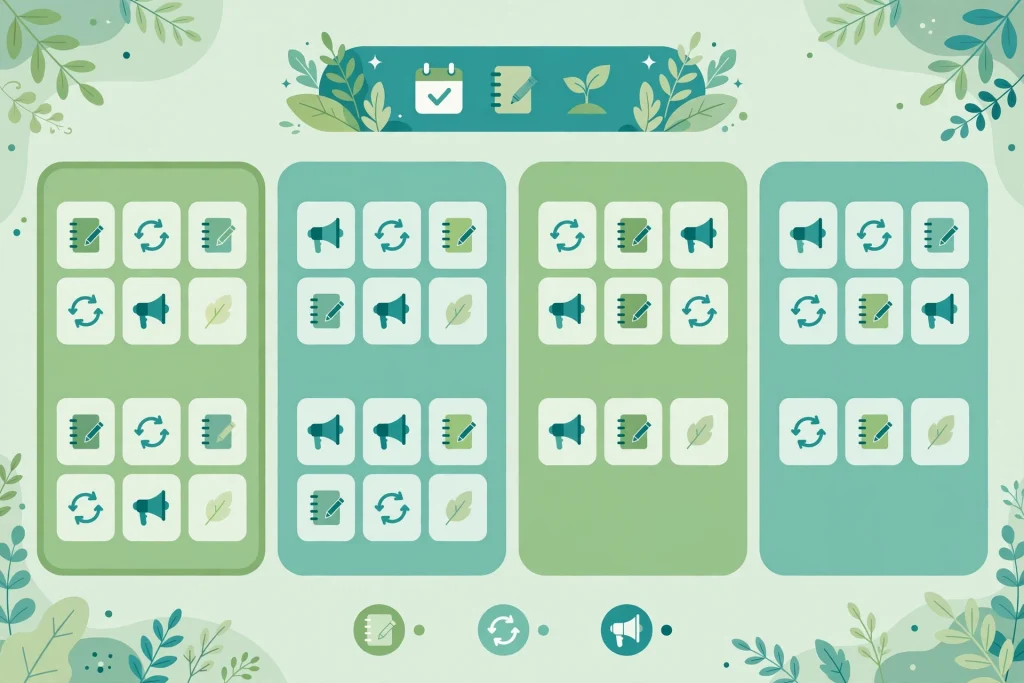
Week 1, audit: List your posts, check which ones get impressions, fix titles and headings on the top five, add internal links, and remove or merge thin duplicate posts.
Week 2, focus: Pick one niche and one pillar topic, plan five connected posts, and write the pillar guide first, with clear headings, examples, and a FAQ section.
Week 3, publish and promote: Publish two supporting posts, share each one where your readers already are, answer related questions on forums or social platforms without spamming links, and update two old posts.
Week 4, measure and repeat: Check Search Console for impressions, clicks, and queries, note which topics are rising, update the weakest post, and plan the next cluster. Repeat this cycle, and judge the blog after three full cycles, not after three posts.
Frequently Asked Questions
How long does it take for a new blog in India to get traffic?
Most new blogs see little traffic in the first month, growing impressions in months two and three, and steadier clicks after four to six months of consistent, useful publishing. The exact timeline depends on niche competition, post quality, and publishing consistency.
How many posts do I need before applying for Google AdSense in India?
There is no official number, but a safer starting point is 20 to 30 original, useful posts, with clear navigation, an about page, a contact page, and a privacy policy, plus some steady traffic. Thin, copied, or mostly AI generated content is a common reason for rejection.
Is blogging still profitable for beginners in India in 2026?
Yes, but not quickly and not from ads alone. Blogs that build topical authority, answer real Indian search questions, and diversify into affiliate income, services, or products have a realistic path. Blogs that chase only quick income usually stall.
Should I write in English, Hindi, or Hinglish?
Write in the language your readers search and read in. English works for many professional and technology niches, while Hindi or regional languages can work very well for cooking, education, jobs, and local topics, with less competition. Pick one primary language per blog, and be consistent.
Can I use AI tools for blogging without harming SEO?
Yes, if you use AI as a drafting and research aid, then edit thoroughly, add real experience and India specific detail, check facts, and publish original content. Publishing unedited AI output at scale, with no added value, is the practice that harms rankings and trust.
What is the single biggest blogging mistake to fix first?
Fix topic choice first. If you write about topics nobody searches for, or keywords you cannot rank for yet, even perfect writing will get no readers. Choose a specific niche, check demand in India, and build connected posts around one pillar at a time.
Conclusion
Blogging mistakes are rarely fatal, but they are expensive when repeated for months. Start with a custom domain and one niche, choose topics people actually search for in India, write original and reader focused content, link your posts together, update old work, publish on a schedule you can keep, and monetize only after traffic and trust exist.
Fix the mistakes in order, follow the 30 day recovery plan, and give the blog at least six months of steady work before you judge it. Most successful Indian bloggers did not avoid every mistake. They noticed the mistakes early, fixed them, and kept going long enough for the compounding to start.
For related reading on the same site, see how to promote a new blog in India without ads, how to measure blog ROI, and how to get published through guest posting.

4 Comments
Pingback: How to Grow a Blog in India in 2026 (Traffic Guide)
Pingback: Affiliate Marketing for Indian Bloggers: How to Start and Earn in 2026
Pingback: Micro-Niche Blogging in India: Pick a Profitable Niche 2026
Pingback: Best Blogging Platforms for Indian Bloggers in 2026