

Introduction
Every few years a new website architecture promises to replace WordPress. In 2026 that promise comes from headless CMS platforms, and it is worth taking seriously, but not at face value. Headless architecture genuinely solves real problems: slow pages, security patching, and content that must feed a website, an app, and other channels at once. It also introduces real costs and complexity that many Indian businesses do not need.
This guide compares headless CMS and WordPress honestly for Indian businesses: what each approach is, what it costs in rupees, how fast it really is, how SEO and editing differ, and how to decide between them. It also covers the middle option most guides skip, which is using WordPress itself as a headless backend. By the end you will have a decision framework you can apply to your own site, budget, and team, rather than a trend to follow blindly.
What Headless CMS Actually Means
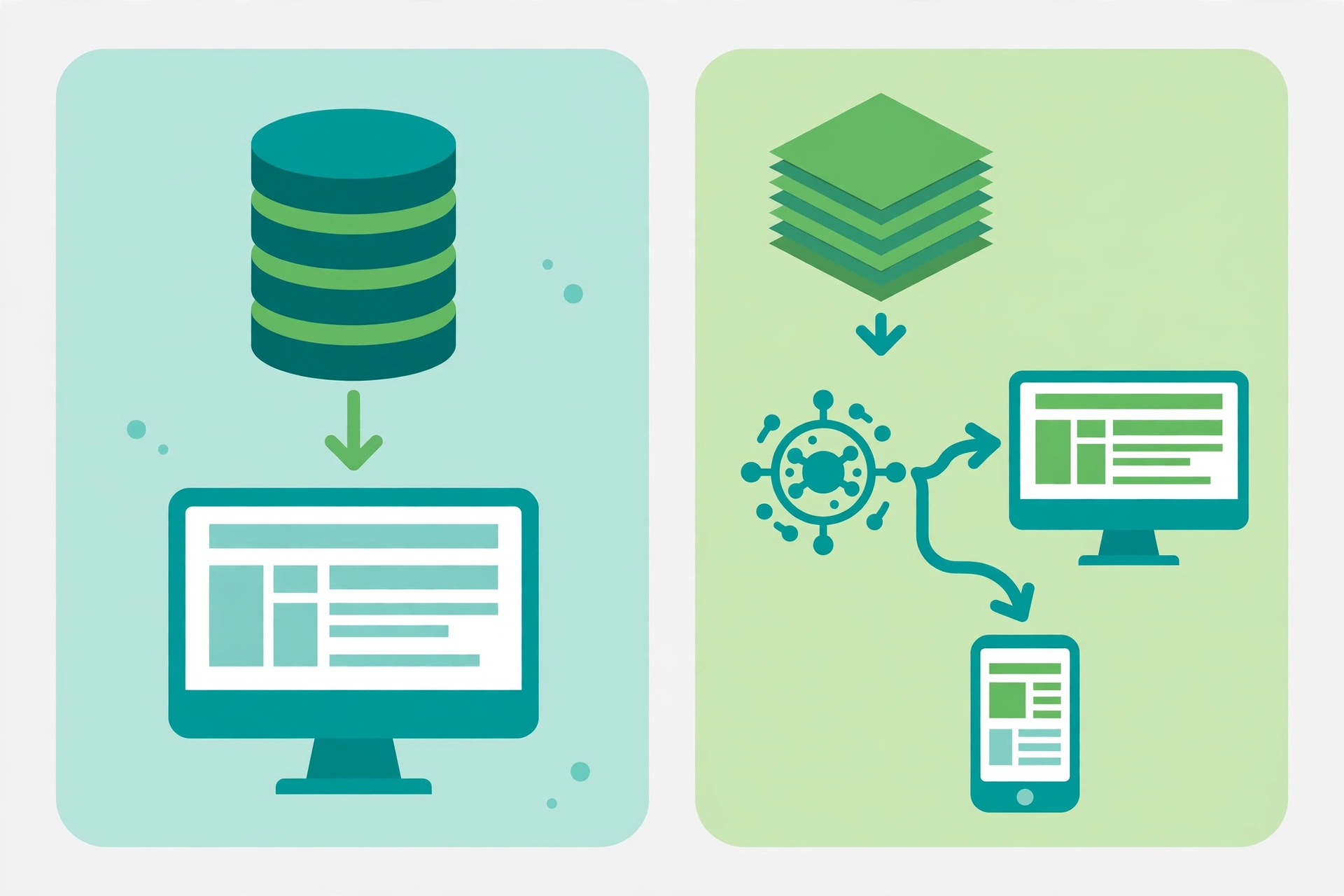
Traditional WordPress is a single system: the place where you write content and the place visitors see are welded together. Your theme, plugins, database, and PHP rendering engine all live in one application. Change the design and you touch the same system that stores your content.
A headless CMS removes the “head”, which is the frontend. The CMS becomes a pure content store with an API, and a separate frontend, built with React, Next.js, Vue, or a similar framework, fetches content through that API and displays it however the designers want. Write once, and the same content can feed a website, a mobile app, a kiosk, or a partner platform without duplication.
A useful analogy: traditional WordPress is a kitchen and dining room in one space, where cooking and serving happen at the same counter. Headless is a kitchen that sends dishes through a window to a separate dining room, which can be redesigned without rebuilding the kitchen. That separation is powerful when you need it, and it is overhead when you do not.
Popular headless options include Strapi and Directus, which are open source and self-hosted, and Contentful and Sanity, which are hosted services with strong editorial tools. Each has different pricing, hosting, and learning curves, which is why the platform choice matters as much as the architecture choice.
The Honest Case for Headless
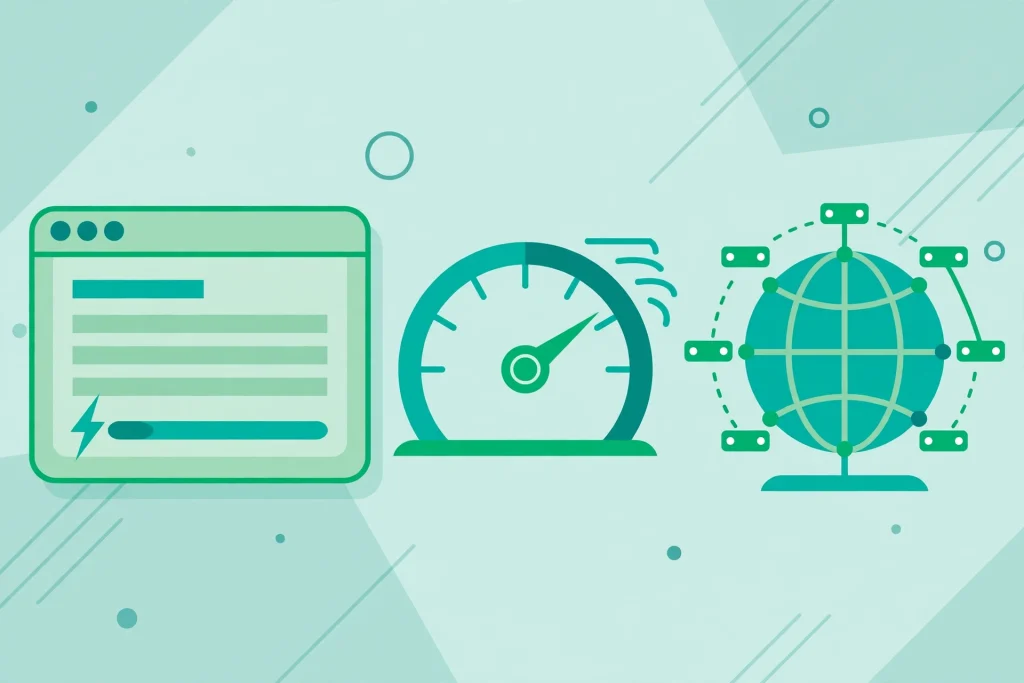
Performance is the strongest argument. A headless site built with static generation serves pre-built pages from a content delivery network, often in under a second, with no database query and no PHP execution when a visitor arrives. Well-optimised WordPress sites can be fast too, but they typically need caching, optimisation plugins, and managed hosting to get there, and they still run more code on every visit.
Security improves for a similar reason. WordPress powers a huge share of the web, which makes it the biggest target for automated attacks: brute force logins, plugin vulnerabilities, and theme exploits are constant. In a headless setup the CMS sits behind a firewall and visitors only touch static files on a CDN, so there is no public database to inject and no login page to attack. The public surface is simply smaller.
Multi-channel publishing is the third genuine advantage. If your content must appear on a website, an Android and iOS app, and a partner feed, a headless API serves all of them from one source. Traditional WordPress can do this through its REST API, but it was not designed for it first, and the workflow is clumsier.
Developer experience matters too. Modern Indian frontend developers work fastest in JavaScript frameworks with component systems, TypeScript, and proper version control. Asking them to build in WordPress PHP theme conventions slows them down and makes hiring harder for product-focused teams.
The Honest Case Against Headless
Cost is the first reality check. For a typical 8 to 12 page brochure site in India, a traditional WordPress build often costs between Rs. 80,000 and Rs. 2,00,000, while a headless build with a custom frontend commonly costs Rs. 2,50,000 to Rs. 6,00,000. Annual maintenance follows the same pattern: headless maintenance often runs higher because you are maintaining a CMS, an API layer, a frontend application, a CDN setup, and a build pipeline instead of one application. The gap narrows over two to three years as WordPress plugin and security costs accumulate, but year one is not close.
Editing experience is the second trade-off, and it surprises many teams. WordPress Gutenberg gives content teams a visual editor close to the final page. Most headless editors present form fields: a title field, a body field, and image uploads, with no real preview until publishing. Platforms like Sanity Studio close this gap, but out of the box, non-technical editors usually find WordPress easier. If your marketing team edits daily without developer help, this matters more than any speed benchmark.
Complexity is the third cost. One server and one application becomes six moving parts that can each break, need updating, and need someone who understands them. For a small business without a developer on staff, that is a real operational risk. Ask the uncomfortable question before signing: who fixes the site at 11 pm when a build fails, and what does that cost?
Talent is a specifically Indian factor. Finding a WordPress developer in India takes days. Finding a developer who understands headless architecture, API design, modern frameworks, and deployment pipelines takes weeks, and such developers command significantly higher salaries. If your developer leaves, replacing them is harder, and fewer agencies can competently take over a custom headless stack.
Cost, Speed and SEO Compared
Costs vary by project, but the pattern is consistent. WordPress wins on upfront cost, on the availability of developers, and on the plugin ecosystem. Headless wins on raw speed potential, on security surface, and on multi-channel delivery. Hosting is cheaper for static headless frontends at small scale, but CMS licences for hosted platforms can erase that saving as content and users grow, so always price the full three-year total, including licences, hosting, and developer hours, before deciding.
On speed, the honest picture is nuanced. Headless sites with static generation regularly score 90 or above on Lighthouse and load in under a second. Optimised WordPress sites on managed hosting typically score lower and load in one and a half to three seconds, though a lean WordPress build with a lightweight theme, few plugins, and good caching can close much of that gap. If your WordPress site already loads in under two seconds and passes Core Web Vitals, paying lakhs to shave half a second is poor value. For a practical WordPress speed plan, see this guide to speeding up WordPress in India for Core Web Vitals.
On SEO, both approaches can rank well, and neither ranks automatically. WordPress gives you Rank Math or Yoast, automatic sitemaps, and schema plugins that non-technical teams can use immediately. Headless gives you complete control over every SEO element and faster pages, but a developer must implement sitemaps, canonicals, schema, redirects, and meta handling from scratch. The SEO risk in headless projects is not the architecture, it is the forgotten checklist item nobody owned.
The Middle Option: WordPress as a Headless Backend
Here is the option many agencies skip because it is less exciting to sell: keep WordPress as your content backend and build a separate frontend that consumes its REST API. Your content team keeps the editor they know, your existing content stays where it is, and you gain much of the frontend speed and design freedom of headless without replacing the whole system.
This hybrid suits teams that want a faster, custom frontend but cannot justify a full migration, or want to test headless benefits on one section, such as the blog, before committing. The trade-offs remain: WordPress still needs updates and security care, the API is slower than purpose-built headless APIs, and not every WordPress feature translates cleanly. Even so, for many Indian businesses this delivers most of the headless benefit at a fraction of the cost and risk, and it is the first step worth considering before a full rebuild.
For teams weighing a mobile app alongside the website, the same logic applies to the frontend choice: a progressive web app can deliver app-like experience without a separate native build, as explained in this comparison of progressive web apps and native apps for Indian businesses.
Decision Framework: Five Questions
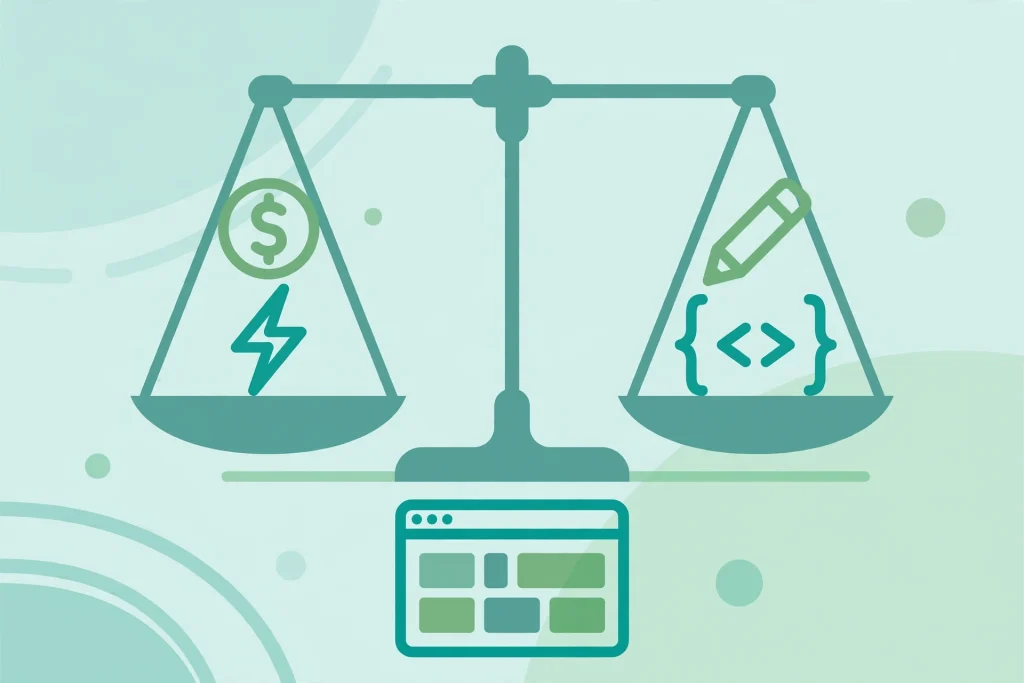
Stop asking whether headless is better in general, and answer these five questions for your business.
First, does your content need to serve multiple platforms? If yes, such as a website plus an app plus partner feeds, headless makes strong sense. If no, and you have one website, headless is optional.
Second, is performance a direct revenue driver? For e-commerce, SaaS funnels, and lead generation pages, speed pays for itself. For an informational brochure site, a well-optimised WordPress site is usually enough. Platform costs also interact with this decision, and this guide to e-commerce website development platforms and costs in India helps put the build budget in context.
Third, does your development team already work in modern JavaScript frameworks? If yes, headless lets them work at full speed. If no, you must hire or retrain, which adds cost and time.
Fourth, is your content team technically comfortable? If yes, they will adapt to a headless editor. If no, the WordPress editor is genuinely better for daily publishing without developer help.
Fifth, what is your annual technology budget? As a rough guide, under Rs. 3 lakhs a year points to optimised WordPress, Rs. 3 to 8 lakhs makes the WordPress-as-headless hybrid worth considering, and above Rs. 8 lakhs makes a full headless build feasible. If your answers point in different directions, weight the budget and editing questions most heavily, because those decide whether the site stays healthy after launch.
Migration Without Regret
If you do migrate, migrate incrementally, not in one big launch. Start with high-impact pages such as the blog, keep the rest on WordPress, set up redirects, validate SEO on the migrated section, and only then move the remaining pages. A typical incremental migration takes 12 to 16 weeks for a business site, but the business never goes offline and problems surface while they are still small.
Protect SEO through the whole move: map every old URL to a new one, preserve titles and meta descriptions, keep schema in place, and monitor Search Console daily for the first month. Most migration disasters are not architecture failures: they are missing redirects, lost meta data, or a sitemap nobody submitted.
Plan the handover before the build starts. Document the stack, the hosting, the build pipeline, and who maintains each part. A system only your original developer understands is a liability, however modern it looks.
FAQ
Is headless CMS always faster than WordPress?
Usually, but not always by enough to matter. A lean, cached WordPress site can be fast, and a badly built headless site can be slow. Measure your current site first: if it already loads in under two seconds, the speed gain alone rarely justifies migration.
Is WordPress still a good choice in 2026?
Yes, for most small and medium Indian businesses. It is cheaper, faster to launch, easier for non-technical teams to edit, and supported by the largest developer pool in India. Headless wins for specific needs, not for every site.
What does a headless build cost in India?
For a typical business site, expect roughly two to three times the upfront cost of WordPress in year one, with higher ongoing developer costs. Always compare three-year totals, including licences, hosting, and maintenance, not just the build quote.
Can I use WordPress as a headless CMS?
Yes. WordPress has a built-in REST API, so you can keep its editor and content while building a separate frontend in Next.js, Astro, or another framework. This hybrid is often the most practical first step toward headless.
Which headless CMS should Indian businesses consider?
For data ownership and India hosting, self-hosted open source options like Strapi and Directus are often the best fit. Hosted options like Contentful and Sanity offer excellent editors but bring subscription costs and vendor lock-in to weigh carefully.
When should I definitely choose headless?
Choose headless when content must feed several platforms, when page speed directly drives revenue, when your team already works in modern JavaScript, and when your budget covers ongoing developer ownership. If those conditions are not met, optimise WordPress instead.
Conclusion
Headless CMS vs WordPress is not a contest with one winner. WordPress wins on cost, speed to launch, editing ease, and hiring in India. Headless wins on raw performance, security surface, and multi-channel content delivery. The right choice depends on your platforms, your revenue model, your team, and your budget, and for many businesses the smartest move is the hybrid in between: WordPress as the backend, a modern frontend on top.
Before you sign anything, answer the five framework questions honestly, price three years rather than one, and ask who will edit and maintain the site in month twelve. A website is not a launch event, it is a system your team must run every week. Choose the stack your team can actually run, improve, and afford long after launch day, and that choice, whichever it is, will be the right one.
