

Introduction
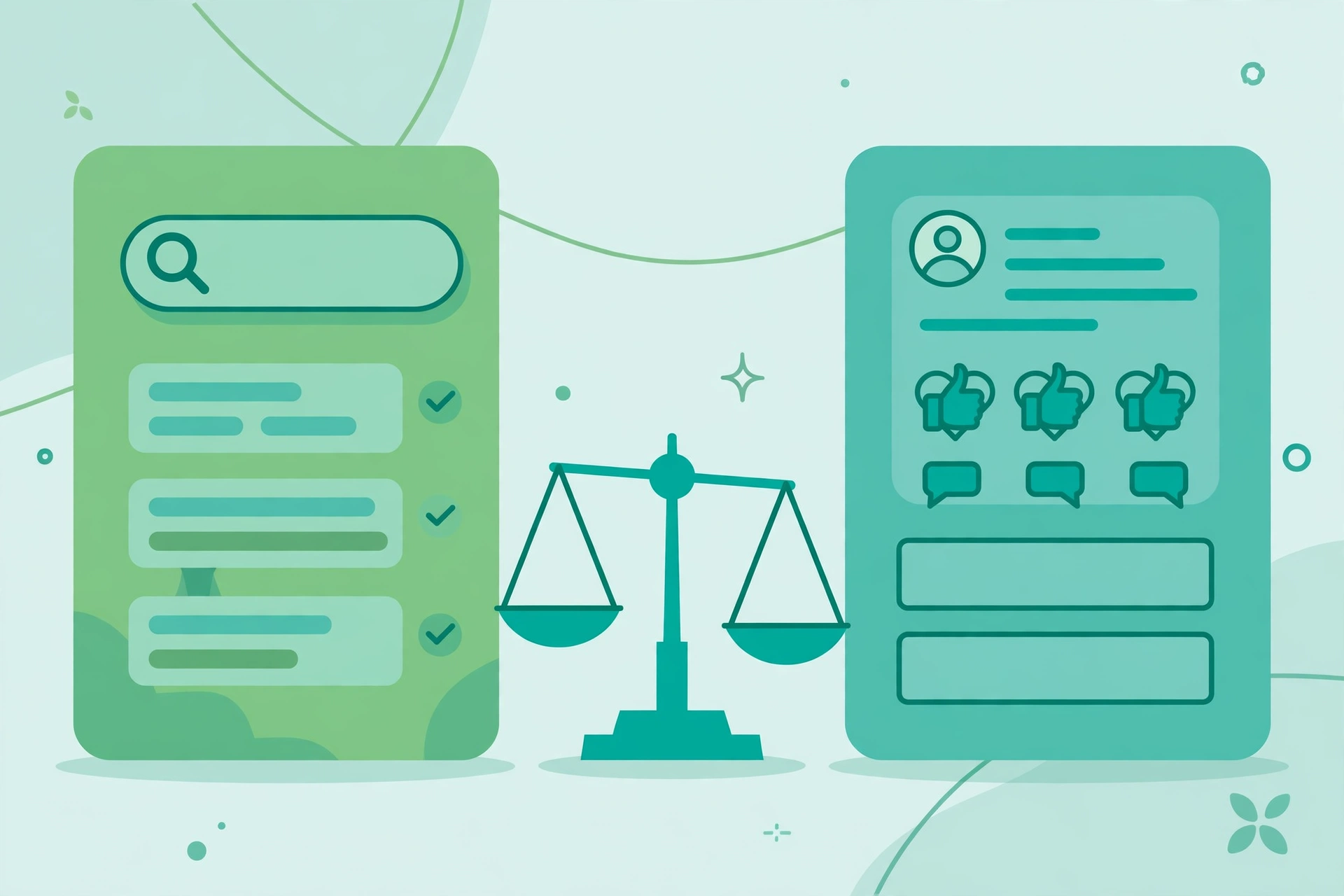
Every Indian business that starts paid advertising asks the same question: Google Ads or Facebook Ads? The two platforms work in opposite ways. Google shows your ad to people who are already searching for what you sell. Facebook and Instagram, which together make up Meta Ads, show your ad to people who fit your customer profile but are not searching yet.
Neither platform is better for every business. Google usually brings higher-intent leads at a higher cost per click. Meta usually brings cheaper clicks that need more convincing before they buy. The businesses that win in 2026 are the ones that pick the right platform for their product, test with a real budget, and use both in sequence once they can afford it.
This guide compares Google Ads and Facebook Ads in India for 2026 with real cost ranges, lead quality, targeting, the business types each one suits, a decision scorecard, budget splits and a 30-day test plan. Meta Ads includes Facebook and Instagram, and the two names are used interchangeably in this guide, because they are managed in the same Ads Manager.
The Quick Answer
If customers already search for your product or service, start with Google. If your product is new, visual or an impulse buy, start with Meta. If your monthly ad budget is above Rs 50,000, run both: Meta to create demand and Google to capture it when those people search later.
A plumber, a dentist, a CA or a lawyer should start with Google, because people search for those services when they need them. A new D2C snack brand, a fashion label, a salon or a fitness studio should start with Meta, because nobody searches for a brand they have never heard of, but a good Reel can make them want it. An e-commerce store should run both, with Meta for discovery and Google Shopping for the purchase.
How Google Ads Works
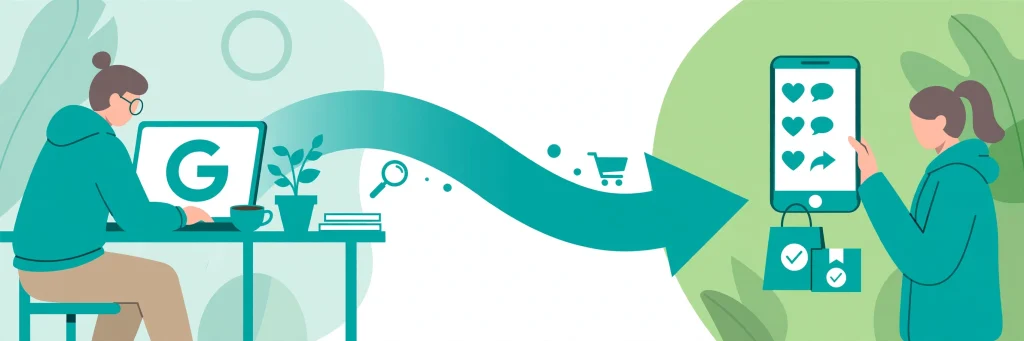
Google Ads shows your ad when someone types a search that matches your keywords. You bid on keywords, write ad copy, and pay when someone clicks. The main formats are Search ads, which appear above organic results, Shopping ads for products, Performance Max campaigns that run across Search, YouTube, Display and Gmail, and Display and YouTube ads for reach.
The strength of Google is intent. A person who searches “dentist in Andheri” or “buy 1.5 ton AC online” is already close to a decision, so the lead quality is high and the sales cycle is short. Google handles almost all search in India, with a search market share above 90%, so the audience is effectively everyone who searches.
The weakness is cost and competition. Popular keywords in finance, insurance, legal and education can cost hundreds of rupees per click, and a new advertiser with a small budget can burn through it quickly on the wrong keywords. Google also needs a good website and landing page, because an ad that sends traffic to a slow or confusing page wastes the click.
How Facebook Ads (Meta Ads) Works
Meta Ads shows your ad in the Facebook feed, Instagram feed, Stories and Reels to people chosen by age, location, interests, behaviour and lookalike audiences. You pay for impressions, and the algorithm learns who responds. The main formats are image and video ads, carousel ads, Reels ads, lead ads that collect details without leaving the app, and WhatsApp click-to-chat ads.
The strength of Meta is discovery and price. India has more than 500 million Meta users, and the median cost of reaching 1,000 people is among the lowest in the world. A good creative can find customers who did not know they wanted your product, which is exactly how most D2C brands in India grew.
The weakness is intent. People on Instagram are scrolling for entertainment, not shopping, so the leads are colder, the sales cycle is longer, and the creative has to do far more work. Meta’s targeting has also become less precise since privacy changes, so the algorithm needs time and enough budget to learn who converts.
Head-to-Head Comparison
The table below compares the two platforms on the factors that matter to an Indian small business.
| Factor | Google Ads | Facebook Ads (Meta) |
|---|---|---|
| Audience intent | High, people are searching | Low to medium, people are scrolling |
| Typical cost per click in India | Rs 15 to Rs 400+, by industry | Rs 4 to Rs 50 |
| Typical cost per 1,000 impressions | Rs 80 to Rs 300 (Display) | Rs 40 to Rs 120 |
| Lead quality | Strong, already in market | Variable, depends on creative |
| Best for awareness | Limited | Excellent, Reels and Stories |
| Best for purchase intent | Excellent, Search | Moderate |
| Targeting | Keywords, intent, in-market audiences | Interests, behaviour, lookalikes |
| Learning time | 2 to 4 weeks | 2 to 4 weeks to exit learning |
| Minimum viable budget | Rs 500 to Rs 2,000 a day | Rs 500 to Rs 1,000 a day |
| Best for B2B | Higher lead quality | Lower lead quality |
| Best for D2C and e-commerce | Good, Shopping and Performance Max | Excellent, Advantage+ and Reels |
The numbers are working ranges from published 2026 India benchmarks, not quotes. Your actual costs depend on your industry, your city, your creative and the season. Compare channels on cost per qualified lead or cost per sale, never on cost per click alone, because a cheap click that never buys is the most expensive click of all.
India Cost Benchmarks: What Leads Actually Cost
Cost per click is the wrong number to budget on. Cost per lead is what matters, and the gap between the platforms is smaller than the click prices suggest. Typical India ranges in 2026 are roughly Rs 150 to Rs 600 per lead on Google Search, and roughly Rs 120 to Rs 450 per lead on Meta. Meta leads are usually cheaper but colder, while Google leads cost more but close faster.
Costs vary sharply by industry. Real estate, finance and education leads cost the most on both platforms. Local services such as salons, clinics and home services sit in the middle. E-commerce cost per purchase depends on the product price: a Rs 500 product needs a far lower cost per purchase than a Rs 5,000 product to stay profitable.
Remember that both Google and Meta add 18% GST on ad spend in India, so a Rs 30,000 monthly budget is really Rs 25,424 of media and Rs 4,576 of GST. Plan budgets with GST included, or your campaigns will stop early in the month.
Which Platform Wins by Business Type
Local services such as plumbers, electricians, dentists, lawyers and CAs should start with Google. Customers search when they need the service, and the first business in the search results gets the call. Add Meta later for offers and retargeting.
D2C and e-commerce brands should start with Meta for discovery, then add Google Shopping and Performance Max to catch the people who saw the ad and searched for the product later. The combination consistently beats either platform alone.
B2B and SaaS companies should start with Google, because search intent signals a serious buyer, and LinkedIn can be added for account targeting. Meta works for B2B only with strong lead magnets, such as a free guide or a webinar, and careful retargeting.
Coaching, courses and education should run both. Meta finds the audience with Reels and lead ads, while Google captures the searches for course names and exam preparation. WhatsApp lead ads on Meta are especially strong for Indian education businesses, because parents and students prefer chatting to filling forms.
Restaurants, salons and local retail should start with Meta for offers and discovery, and add Google for “near me” searches and Maps visibility. A small budget split across both, with clear offers, works better than a large budget on one platform with no offer.
The Decision Scorecard
Answer these five questions and score your business. Each answer points to a platform.
- Do customers already search for what you sell? If yes, Google. If no, Meta.
- Is your product visual, emotional or an impulse buy? If yes, Meta. If it is a considered purchase, Google.
- Is your average order value above Rs 2,000? If yes, Google’s higher click cost is easier to absorb. If it is below Rs 500, Meta’s cheap reach matters more.
- Do you have strong photos and videos? If yes, Meta rewards good creative. If no, Google’s text ads are more forgiving.
- Can you wait 4 to 6 weeks for results? If no, Google converts faster, usually in 2 to 4 weeks. If yes, Meta’s learning period is manageable.
Most home services, healthcare, legal, real estate and B2B businesses score Google-heavy. Most D2C products, food and beverage, fashion, fitness studios, salons and event businesses score Meta-heavy. If your score is tied, start with the platform where your best customers already spend time, and test the other one next month.
Budget Splits That Work in India
For a first test budget of Rs 30,000 to Rs 50,000 a month, pick one platform for 30 to 45 days. Splitting a small budget across both platforms starves both of learning data, and Meta needs roughly 50 conversion events per ad set per week to exit its learning phase. On a thin split budget, the algorithm keeps guessing and your cost per lead stays high.
Once the budget crosses Rs 50,000 a month, a 60-40 split works for most businesses: 60% to the platform that won the test, 40% to the other. Above Rs 1,00,000 a month, most businesses do best running both together, with Meta creating demand at the top of the funnel and Google capturing it at the bottom. A common structure is Meta for prospecting and retargeting, Google Search for brand and high-intent keywords, and Performance Max for shopping and remarketing.
Our guide to Social Media Advertising for Indian Small Businesses in 2026 covers Meta campaign setup in detail, and our Telegram Marketing guide explains a low-cost channel that pairs well with both platforms for community building.
Running Both Together: The Sequence That Works
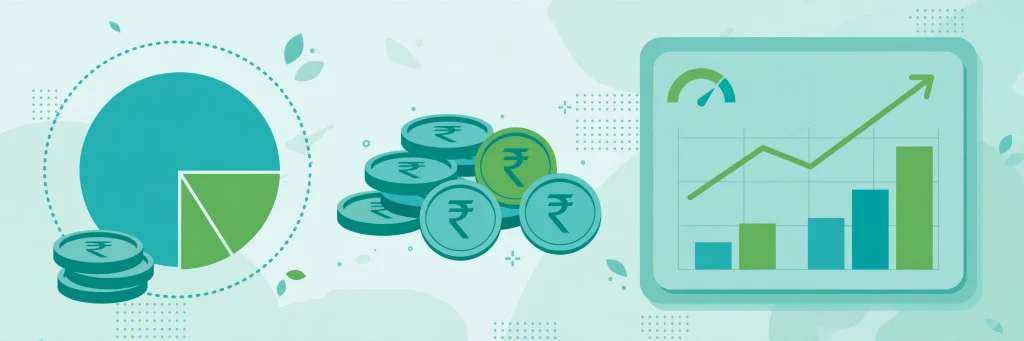
The most profitable Indian brands in 2026 do not choose between Google and Meta. They use them in sequence. A customer sees a Reel on Instagram, becomes curious, Googles the product name, and clicks a Google ad or an organic result. If you run Meta without Google, a competitor’s ad can appear when that customer searches, and you lose the sale you paid to create. If you run Google without Meta, you only reach people who already know the category, and you never grow the market.
Set up retargeting in both directions. Retarget Meta visitors with Google Search ads when they search for your brand or category. Retarget Google visitors with Meta ads showing the product they viewed. Use the same offer and the same creative style in both places, so the customer recognises the brand instantly.
Measure everything in Google Analytics 4 as the source of truth. Both platforms inflate their own reported conversions, so cross-check them against GA4’s actual sales or leads before you decide which platform is winning. Our guide to Marketing Automation Tools for Indian Small Businesses in 2026 explains how to connect leads from both platforms into one system so nothing falls through the cracks.
Your First 30-Day Test Plan
Week 1: pick one platform using the scorecard, define one goal such as leads or purchases, set up conversion tracking in GA4, and build one landing page with a clear offer and a WhatsApp button.
Week 2: launch two ad sets with different audiences, and two creatives per ad set. Keep the daily budget at Rs 500 to Rs 1,000. Do not touch the campaigns for the first seven days, because the algorithm is still learning.
Week 3: check cost per lead, not cost per click. Pause the worst ad set and the worst creative. Double the budget on the winner, but only by 20% at a time, because sudden jumps reset learning.
Week 4: judge the test on cost per qualified lead or cost per sale, not on clicks or likes. If the numbers work, scale the budget gradually. If they do not, fix the landing page and the offer before you blame the platform, because a weak offer fails on both.
Common Mistakes to Avoid
- Splitting a small budget across both platforms so neither gets enough data to learn.
- Judging the platforms on cost per click instead of cost per qualified lead or sale.
- Sending ad traffic to a slow homepage instead of a focused landing page with one offer.
- Running one creative for a month and wondering why performance falls.
- Trusting either platform’s self-reported conversions without checking GA4.
- Forgetting the 18% GST when planning the monthly budget.
- Pausing campaigns after three days because the algorithm has not finished learning.
- Targeting all of India when your business serves one city, and paying for clicks you cannot serve.
FAQ
Which is better for small businesses in India, Google Ads or Facebook Ads?
It depends on the business. Google Ads is better when customers already search for what you sell, such as a plumber or a dentist. Facebook Ads is better when the product is discovered rather than searched, such as a new D2C brand or a salon. On a Rs 30,000 to Rs 50,000 budget, pick one platform for 30 to 45 days and test it properly.
How much do Google Ads cost in India in 2026?
Google clicks in India typically cost Rs 15 to Rs 400 or more per click, depending on the industry, and the cost per lead is roughly Rs 150 to Rs 600. Finance, legal and education keywords cost the most. Add 18% GST to every budget.
How much do Facebook Ads cost in India in 2026?
Facebook Ads clicks in India typically cost Rs 4 to Rs 50, and the cost per lead is roughly Rs 120 to Rs 450. Reaching 1,000 people typically costs Rs 40 to Rs 120. Meta clicks are cheaper, but the leads are colder and need more follow-up.
Can I run Google Ads and Facebook Ads together?
Yes, and above Rs 50,000 a month you should. Use Meta to create demand and Google to capture it when people search later. Retarget in both directions, keep the offer consistent, and measure the result in Google Analytics 4.
What is the minimum budget for Google Ads or Facebook Ads in India?
A meaningful test needs Rs 500 to Rs 1,000 a day on one platform for 30 to 45 days, which is roughly Rs 15,000 to Rs 45,000 a month. Below that, the platforms do not get enough data to learn, and the results tell you nothing.
Do I need a website to run Facebook Ads?
Not always. Meta’s lead ads and WhatsApp click-to-chat ads work without a website, which is why they are popular with small Indian businesses. Google Ads needs a landing page, and the quality of that page decides whether the clicks turn into customers.
Conclusion
There is no universal winner in the Google Ads versus Facebook Ads debate, and anyone who says there is has not run ads at scale in India. Google wins when your buyer is searching. Meta wins when your buyer is scrolling. The best Indian businesses in 2026 use both: Google for capture, Meta for creation, with retargeting connecting the two. Start with the platform your scorecard points to, test it for 30 to 45 days on a real budget, judge it on cost per qualified lead, and scale what works. The platform is not the strategy. The offer, the creative, the landing page and the follow-up are the strategy, and they decide the result on either platform.

1 Comment
Pingback: Meta Advantage+ Ads in India 2026: A Practical Guide for Small Businesses