

Introduction
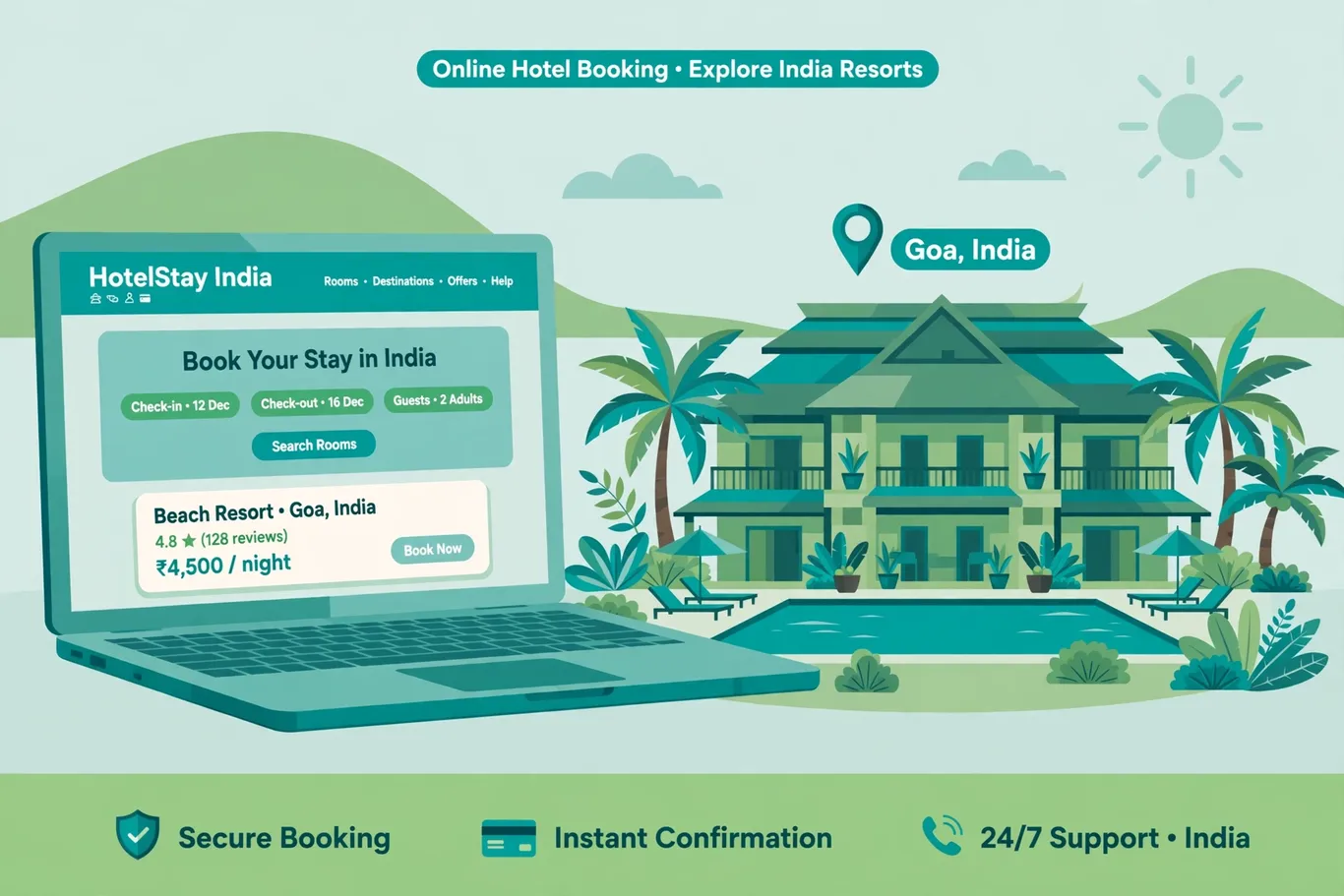
Most travellers in India now start their hotel search on a phone, comparing prices on MakeMyTrip or Goibibo before deciding where to stay. The problem is that when the booking happens on someone else’s platform, you pay commission on every night, and the guest remembers the platform more than your hotel.
A hotel website in India solves that problem. It gives your property a home on the internet that you fully control: your photos, your prices, your offers, and a booking button that sends the money to you. With WordPress, a good hotel theme, and a UPI ready booking plugin, a small hotel can be live within a week.
Why Your Hotel Needs Its Own Website Alongside Booking Platforms
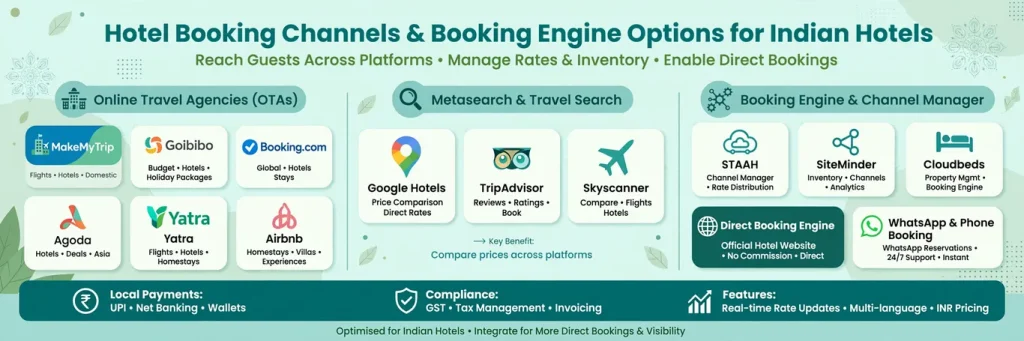
Listing on MakeMyTrip, Goibibo, Booking.com, and OYO is still worth doing, because they bring visibility, especially for new properties. But relying on them alone is expensive: commissions run from 15 percent to 25 percent of every booking. A direct booking costs almost nothing beyond hosting and gateway charges of around 2 percent. Shifting just 20 percent of bookings direct can save a small hotel several lakh rupees a year.
Direct bookings also give you the guest relationship. When a guest books through an aggregator, the platform owns the communication. When they book on your website, you get their email and phone number, so you can confirm details and invite them back with a discount. Brand control matters too: on a listing site, your hotel sits in a grid next to ten competitors, while on your own website you tell your story, the rooftop restaurant, the heritage building, the view from the balcony. The smart approach in 2026 is both: keep listings for discovery, and use your own website to convert guests who search for your hotel name.
Step by Step: Building Your Hotel Website on WordPress
WordPress powers a large share of hotel websites in India.
Step 1: Choose a Domain Name
Pick a domain that matches your hotel name, is short, and is easy to spell over the phone. A .com domain costs roughly Rs. 800 to Rs. 1,200 per year. If your exact name is taken, add your city, such as yourhotelnamejaipur.com.
Step 2: Buy Hosting
Choose a plan with an SSL certificate, daily backups, and servers in India or Singapore. Shared hosting costs about Rs. 2,000 to Rs. 5,000 per year and suits most small hotels.
Step 3: Install WordPress and Pick a Hotel Theme
Install WordPress through your hosting control panel; it usually takes a few minutes. Then choose a hotel theme with room layouts and booking buttons, such as Astra or MotoPress. A premium theme costs around Rs. 4,000 to Rs. 6,000. For a broader sense of website costs, read our guide on how much a website costs in India in 2026.
Step 4: Create the Essential Pages
The core pages every hotel website needs:
- Home: best photo, location, intro, room highlights, reviews, and booking button.
- Rooms: one section per room type, with photos, size, occupancy, and price.
- Gallery and Dining: real photos, restaurant timings, and a sample menu.
- Location: a map, distances, and nearby attractions.
- Offers and Contact: seasonal deals, phone, WhatsApp, email, and an enquiry form.
Step 5: Add a Booking Engine and Payment Options
This step turns a brochure website into a booking machine. Choose a booking plugin, connect a UPI payment gateway, test a booking yourself from your phone, and only then announce the website.
Step 6: Set Up Google Business Profile and Basic SEO
Create or claim your Google Business Profile with the same photos and contact details as your website. Install Rank Math, write a title and meta description for each page, and submit your sitemap to Search Console.
Step 7: Test Everything on Mobile, Then Launch
More than 80 percent of hotel searches in India happen on mobile phones, so test your site on a budget Android phone. Check photos load quickly, the booking button is easy to tap, and the payment page works on mobile data.
Platform Comparison: WordPress vs Website Builders vs Custom Development
WordPress is the best choice for most hotels. It costs the least over time, gives you full ownership of your site and data, and offers the widest choice of booking plugins, themes, and payment gateways. The trade off is that setup needs a little technical confidence. Typical first year cost: Rs. 10,000 to Rs. 30,000.
Website builders such as Wix and Squarespace are the easiest option: you drag, drop, and publish, and hosting and security are handled for you. They suit a very small property that needs a simple site quickly. The downsides are higher monthly fees, limited options for Indian payment gateways, and less control over SEO. Typical first year cost: Rs. 15,000 to Rs. 40,000.
Custom development gives you complete freedom and can integrate with your property management system and channel manager. This makes sense for hotel chains and large resorts, but for a single independent hotel it is usually unnecessary. Typical first year cost: Rs. 75,000 to Rs. 3,00,000 or more.
Booking Engines and Plugins for Indian Hotels
A booking engine shows room availability, calculates prices, takes the reservation, and collects payment or a deposit. Without one, your website is just a brochure. MotoPress Hotel Booking is one of the most popular WordPress booking plugins for Indian hotels; the paid version costs roughly Rs. 6,000 to Rs. 8,000 per year. WP Hotel Booking is a lighter free alternative for small guest houses and homestays. For larger properties, a cloud engine such as Staah, eZee Reservation, or SiteMinder connects your website to your property management system and prevents double bookings, usually for Rs. 2,000 to Rs. 5,000 per month.
Whichever engine you choose, insist on a real time availability calendar, seasonal pricing, UPI support through Razorpay, PayU, or Cashfree, a partial payment option, automatic confirmation email and SMS, and cancellation rules shown before payment. Test the full flow before launch: book a room, pay through UPI, check the confirmation arrives, then cancel and confirm the refund works. A broken booking flow loses more guests than having no booking button at all.
Design Tips That Convert Lookers into Bookers
A hotel website has one job: to make a visitor confident enough to book. Use real, high quality photos, and use plenty of them. Hire a local photographer for half a day to capture the rooms, the food, and the view. Put genuine guest reviews near the top of the homepage, with names and star ratings. Make the booking button impossible to miss: put it in the header on every page.
Show trust signals on every page: your phone number and WhatsApp button, free cancellation, UPI payment, and your Google rating. Design mobile first: keep the homepage light, compress images, and make sure the booking form works with one thumb. A site that takes more than three seconds to load on mobile data loses bookings. Keep the content honest: do not call a 15 minute walk to the beach a beachfront property. If you also run a restaurant, our guide on how to create a restaurant website in India in 2026 covers similar lessons on photos, menus, and local search.
Local SEO for Hotels: Getting Found on Google
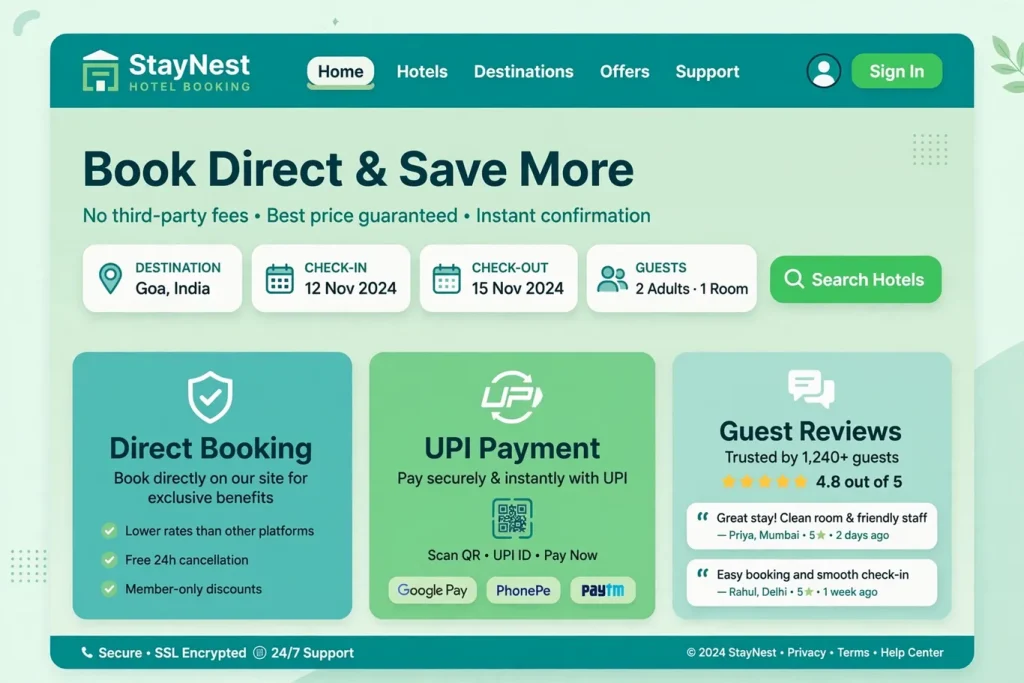
A beautiful hotel website is useless if nobody finds it. Local SEO is how you appear when someone searches for hotels in Udaipur, resorts near Lonavala, or budget hotels near Delhi airport. Start with your Google Business Profile: claim it, fill in every field, add your website link, and upload your best photos. Encourage happy guests to leave a Google review, and reply to every review. Use locality keywords naturally, such as boutique hotel in Jaipur near Hawa Mahal, or family resort in Lonavala with pool. Create a location page with directions and nearby attractions, and build local links through tourism directories and nearby businesses. Add a blog with useful local content, such as the best time to visit your city. Track results in Google Search Console and your Business Profile, and update pages that rank but do not convert.
Handling Bookings, Cancellations, and Guest Communication
Confirm every booking immediately with an email and a WhatsApp message, including dates, room type, total amount, amount paid, balance due, check in and check out times, your address, and a Maps link. Send a reminder one day before arrival, with check in time, directions, and your phone number.
Publish a clear cancellation policy: the deadline for free cancellation, the refund percentage after that date, and how many days a refund takes. Offer flexible options during low season, such as a free date change or a room upgrade. After check out, send a thank you message and a review link, then share a seasonal offer with returning guests.
Maintenance and First Year Cost
A hotel website needs regular care. Update WordPress, your theme, and plugins monthly, keeping a backup before each update. Refresh photos seasonally.
First year costs for a typical small hotel website on WordPress:
| Item | First year cost |
|---|---|
| Domain name (.com) | Rs. 800 to Rs. 1,200 |
| Hosting (shared or managed WordPress) | Rs. 2,000 to Rs. 6,000 |
| Premium hotel theme (one time) | Rs. 4,000 to Rs. 6,000 |
| Booking plugin (annual licence) | Rs. 0 to Rs. 8,000 |
| Payment gateway setup | Rs. 0 (about 2 percent per transaction) |
| SSL certificate | Rs. 0 (usually included with hosting) |
| Photography (one half day shoot) | Rs. 5,000 to Rs. 15,000 |
| Setup help from a developer (optional) | Rs. 5,000 to Rs. 20,000 |
| Total first year cost | Rs. 17,000 to Rs. 62,000 |
Most small hotels land near the lower half of that range with a free booking plugin and DIY setup. Our guide on how to create a real estate website in India in 2026 shows how listing based businesses face similar choices.
FAQ
How much does it cost to create a hotel website in India?
Between Rs. 17,000 and Rs. 62,000 in the first year on WordPress, including domain, hosting, theme, booking plugin, and photography. Running costs after year one are usually Rs. 5,000 to Rs. 15,000 a year.
Do I still need MakeMyTrip or Goibibo?
Yes, at least at the start. Listing platforms bring bookings from travellers who have never heard of you, while your website converts guests who find you on Google. Most hotels keep both.
Which platform is best for a hotel website?
WordPress, for most Indian hotels. It is affordable, flexible, and supports booking plugins and UPI gateways. Builders cost more over time; custom development suits large hotels and chains.
How do guests pay on a hotel website?
Through a gateway such as Razorpay, PayU, or Cashfree, which support UPI, net banking, cards, and wallets. Offer full payment or a 20 to 30 percent deposit.
How long does it take to build a hotel website?
A WordPress hotel site can be ready in 5 to 10 working days if photos, room details, and prices are ready. Custom sites take 4 to 8 weeks.
How can my hotel website rank on Google?
Claim your Google Business Profile, use locality keywords, collect and reply to reviews, publish useful local content, and keep the site fast on mobile. Results usually take 2 to 3 months.
Conclusion
Creating a hotel website in India in 2026 is one of the best investments a hotel owner can make. It is affordable, it can be live within a week, and it pays for itself through direct bookings that avoid commission. Start with WordPress, choose a hotel theme with a proper booking engine, connect UPI payments, and use real photos. Treat it as part of daily operations, not a one time project. The guests are already searching on their phones. Build the website, and make sure the next booking comes directly to you.
