

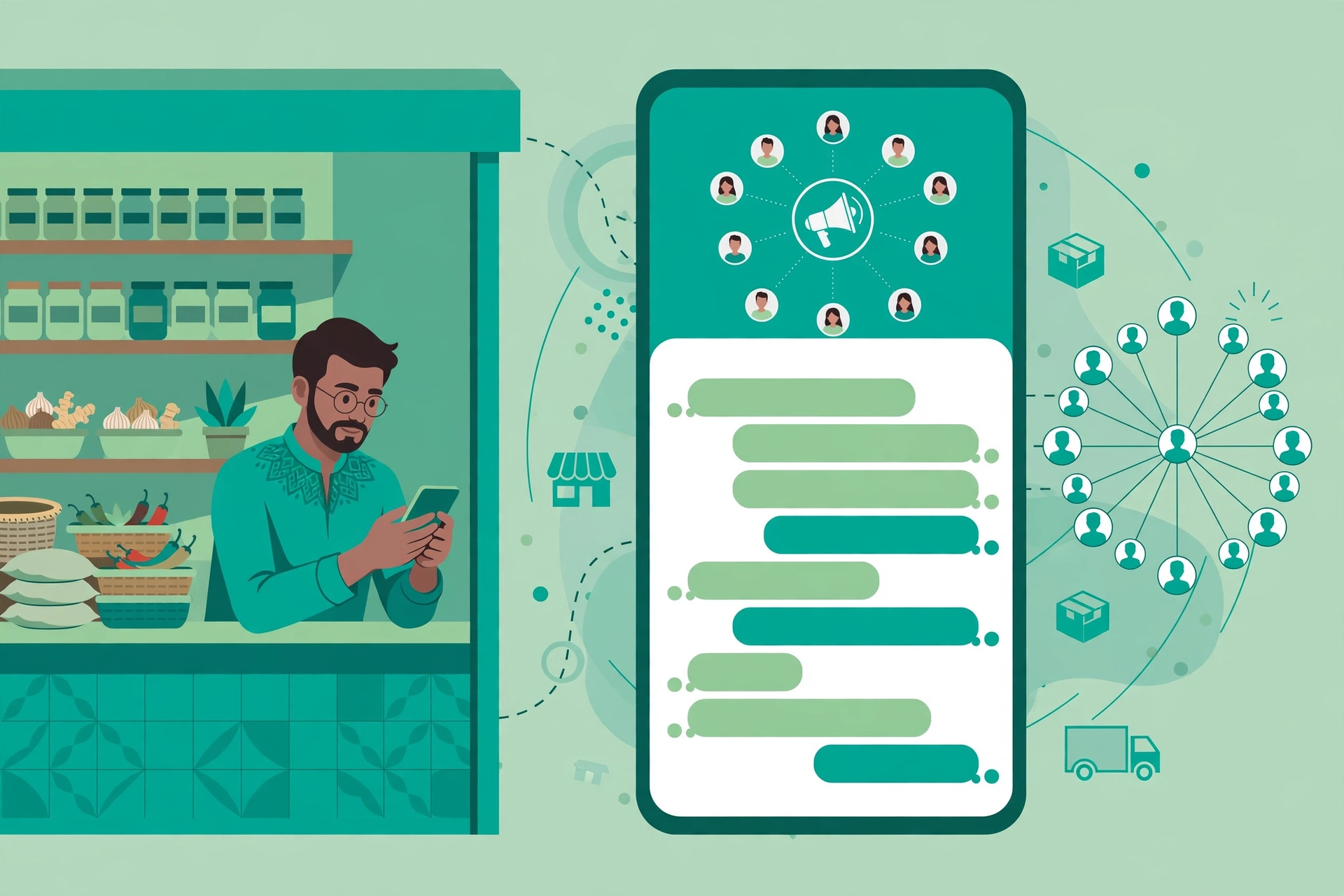
In India, WhatsApp is not just a messaging app. It is where business happens. Customers discover products on Instagram, ask questions on WhatsApp, and pay via UPI without ever leaving their phones. With over 500 million Indian users, WhatsApp gives even the smallest business a direct line to its customers, with open rates that email can only dream of.
Yet most Indian businesses use WhatsApp only for casual chatting. They are missing the structured approach that turns it into a real marketing channel. This 2026 guide covers everything: setting up correctly, broadcast lists, the WhatsApp Business API, chatbots, and campaign ideas that actually convert.
Why WhatsApp Marketing Works So Well in India
The numbers tell the story. WhatsApp messages in India see open rates of 90 percent or more, compared to 20 to 30 percent for email. Response times are measured in minutes, not days. And critically, Indian customers trust WhatsApp. A message from a business on WhatsApp feels personal in a way that an SMS blast or a cold email never will.
This trust comes with responsibility. WhatsApp is a personal space, and businesses that spam it get blocked fast. The golden rule of WhatsApp marketing: every message must earn its place in the customer’s chat list. Useful updates, genuine offers, and quick support are welcome. Random forwards are not.
Step 1: Set Up WhatsApp Business Properly
Before any marketing, get the foundation right. Download WhatsApp Business (free) or set up the WhatsApp Business Platform (API) through an official provider if you need automation at scale.
Complete your business profile thoroughly:
- Business name, category, and description with your key offerings.
- Address, business hours, and website link.
- A product catalogue with photos and prices in rupees. This turns your profile into a mini storefront.
- Quick replies for common questions about pricing, delivery, and timings.
- Greeting messages and away messages so customers always get a response, even at midnight.
A complete profile builds instant credibility. When a new customer opens your chat and sees a proper catalogue and business details, you look established, not fly-by-night.
Step 2: Build Your Contact List the Right Way
Your WhatsApp marketing is only as good as your contact list, and this is where most businesses go wrong by adding numbers without permission. That leads to blocks and, on the API, to account quality penalties.
Build your list with clear opt-ins:
- At checkout or enquiry: Ask customers if they want order updates and offers on WhatsApp. Most say yes.
- On your website: Add a click-to-chat button and a checkbox for WhatsApp updates on forms.
- In your store: A QR code at the billing counter with “Scan for offers on WhatsApp” works remarkably well.
- On social media: Run click-to-WhatsApp ads on Facebook and Instagram, which open a chat directly.
- From existing customers: Send a one-time request to your customer database asking them to opt in. Respect every no.
Never buy WhatsApp number lists. They destroy your sender reputation, get your number banned, and violate WhatsApp’s policies. A smaller list of people who want to hear from you will always outperform a large list of strangers.
Step 3: Master Broadcast Lists and Communities
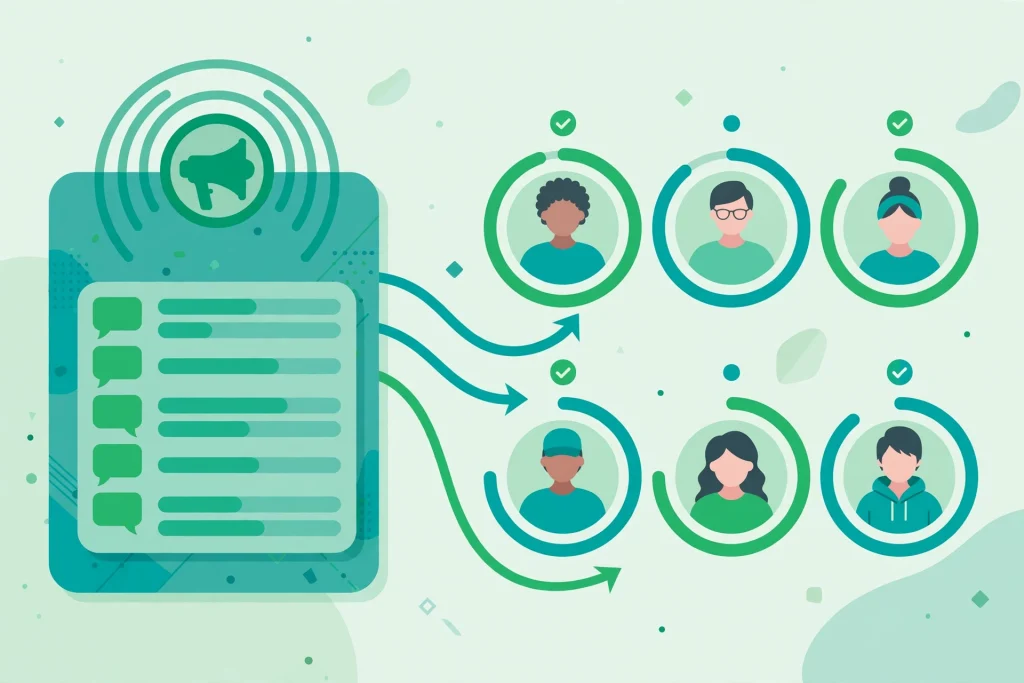
Broadcast lists are the simplest form of WhatsApp marketing. One message goes to many individual recipients, and each sees it as a personal chat. On the free WhatsApp Business app, a broadcast list holds up to 256 contacts, and recipients must have your number saved to receive it.
Use broadcasts for:
- New product or service launches.
- Festival offers and limited-time discounts, which work brilliantly in India around Diwali, Eid, and wedding season.
- Restock alerts for popular items.
- Useful content, like tips related to your products, not just promotions. A 3-to-1 ratio of value to promotion keeps people subscribed.
WhatsApp Communities let you organise multiple related groups under one umbrella, useful for businesses with different customer segments, like separate groups for wholesale and retail buyers, or per-city customer groups.
WhatsApp Channels, the one-way broadcast feature, are worth setting up too. Followers get your updates in a separate tab without sharing their number with you, which suits audiences cautious about privacy.
Segment your broadcasts whenever possible. Sending relevant messages to smaller groups, like past buyers of a category versus new leads, gets far better response than blasting everyone with everything.
Step 4: Automate with the WhatsApp Business API and Chatbots
When your message volume grows, the free app hits its limits. The WhatsApp Business Platform (API), accessed through official Business Solution Providers, unlocks serious automation:
- Automated order updates: Confirmations, shipping notifications, and delivery alerts sent instantly.
- Abandoned cart recovery: A well-timed WhatsApp nudge recovers far more carts than email in India.
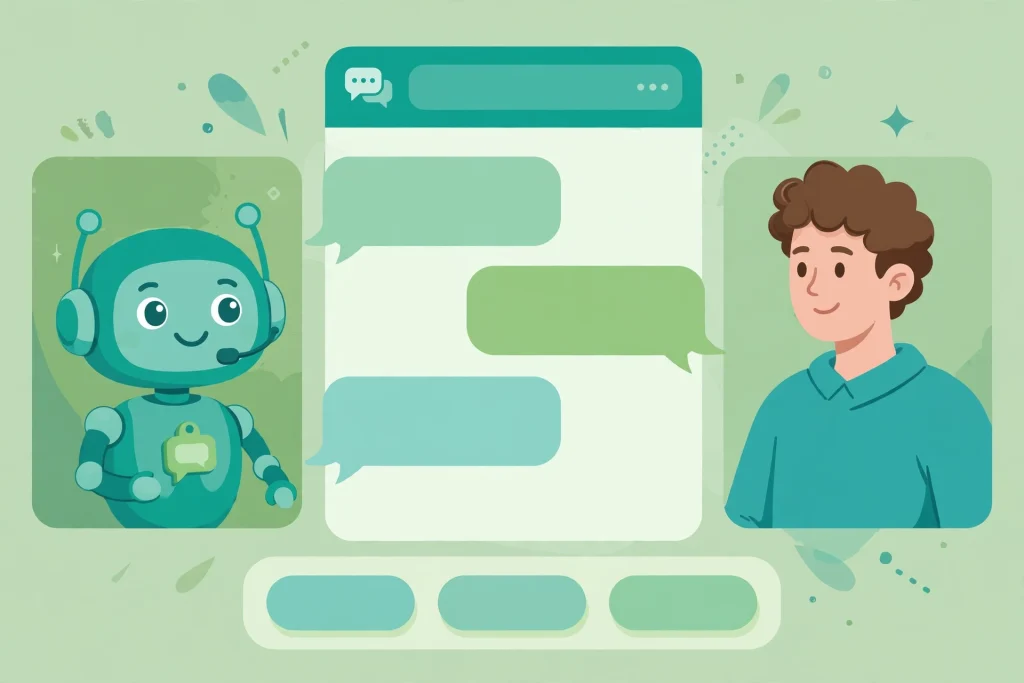
- Lead qualification chatbots: A bot can ask the key questions, share the catalogue, and book a callback, so your team talks only to serious prospects.
- Support automation: Answer FAQs instantly and escalate complex issues to a human agent.
API messaging uses pre-approved message templates for business-initiated conversations, and pricing is per conversation. Choose a provider with Indian support and transparent pricing, and start with one or two high-impact automations, like order updates and cart recovery, before expanding.
Chatbots deserve realistic expectations. A good WhatsApp chatbot handles routine questions and captures leads around the clock. It does not replace human warmth for complex sales. The winning formula is bot-first for speed, human handoff for depth. Our roundup of AI tools for small businesses in India covers chatbot platforms worth evaluating.
Step 5: Run Campaigns That Convert
With setup, list, and automation in place, here are campaign ideas proven to work for Indian businesses:
Festival campaigns. Plan your Diwali, Dussehra, Eid, Christmas, and wedding season campaigns weeks ahead. Teaser messages, early-bird offers for your list, and last-chance reminders form a simple three-message sequence.
Flash sales. A 6-hour or 24-hour offer announced only on WhatsApp makes your list feel exclusive and drives fast action. Keep the message short: what, how much off, till when, and a clear call to action.
Re-engagement win-backs. Message customers who have not bought in 3 to 6 months with a personal-feeling check-in and a small incentive. “We miss you” messages with a 10 percent code recover surprising revenue.
Review requests. After delivery or service completion, ask for a Google review via WhatsApp with a direct link. Timing it right after a positive experience multiplies your review count.
Referral drives. Offer existing customers a reward for referring friends via WhatsApp. Since sharing on WhatsApp is frictionless in India, referral campaigns spread fast.
For every campaign, track the basics: delivery rate, read rate, click-through rate, and conversions. WhatsApp’s intimacy means small improvements in message copy produce outsized results.
Common Mistakes to Avoid
- Messaging too often. For most businesses, 2 to 4 promotional messages per month is plenty. More than that and blocks pile up.
- No opt-out option. Always tell people how to stop receiving messages, and honour it immediately.
- Sending at bad hours. Avoid late nights and very early mornings. Late morning and early evening generally perform best in India.
- Walls of text. Keep messages short, use line breaks, and put the key offer or link where it cannot be missed.
- Ignoring replies. WhatsApp is two-way. If campaigns generate questions, answer them fast or the goodwill evaporates.
These mistakes compound. WhatsApp monitors quality ratings on the API, and poor practices can restrict your messaging limits or get your number banned.
WhatsApp works best as part of a wider mix, not a replacement for everything. Pair it with the fundamentals in our guide to digital marketing strategies for Indian startups on a low budget, and use each channel for what it does best.
FAQ
Is WhatsApp marketing free for businesses in India?
The WhatsApp Business app is free. The WhatsApp Business API, needed for automation at scale, charges per conversation through official providers. Marketing messages on the API are paid; utility messages like order updates have different pricing.
How many promotional messages can I send on WhatsApp per month?
There is no fixed number, but 2 to 4 promotional broadcasts per month is a safe range for most businesses. Quality and relevance matter more than frequency. Watch your block and report rates closely.
What is the difference between a broadcast list and a group?
In a broadcast, each recipient gets the message as an individual chat and cannot see other recipients. In a group, everyone sees each other and can reply to all. Broadcasts suit promotions; groups suit communities and discussions.
Do I need the WhatsApp Business API or is the free app enough?
The free app suits small businesses with modest volumes and manual messaging. Move to the API when you need automation, chatbots, multiple agents on one number, or message volumes beyond what you can handle manually.
Can WhatsApp marketing replace email marketing?
Not entirely. They complement each other. WhatsApp wins on open rates and immediacy, while email handles longer content, newsletters, and formal communication. Most Indian businesses should run both. See our guide to email marketing for Indian small businesses.
Conclusion
WhatsApp marketing gives Indian businesses something rare: a direct, trusted, high-attention channel to their customers at a fraction of advertising costs. Set up your business profile properly, build your list with genuine opt-ins, use broadcasts and communities thoughtfully, automate the repetitive work with the API and chatbots, and run focused campaigns around what your customers actually want.
Start this week: complete your profile, add the catalogue, and send your first value-packed broadcast to opted-in customers. Do it consistently and respectfully, and WhatsApp will become one of your highest-return marketing channels in 2026.

4 Comments
Pingback: Festive Season Marketing in India 2026: A Plan for the Last Month Rush
Pingback: Google Analytics 4 for Indian Businesses: Setup and Reporting Guide 2026
Pingback: Telegram Marketing: A Complete 2026 Guide for Indian Businesses
Pingback: Instagram Marketing India: Grow Your Business in 2026