

Introduction
Social media algorithms change every few months, ad costs keep climbing, and WhatsApp broadcasts now come with strict limits. Through all of this, one channel has stayed remarkably steady for Indian small businesses: email.
Email marketing in India delivers one of the highest returns of any digital channel, often cited at 36 rupees or more for every rupee spent when done well. You own your list, nobody can throttle your reach overnight, and a well-timed email during Diwali or the wedding season can outperform a week of social posts.
This guide is a practical playbook for Indian SMEs. You will learn how to build a permission-based list from scratch, which email tools make sense with INR pricing, how to write subject lines that Indian audiences actually open, and which rules you must follow in 2026.
Why Email Still Works for Indian Small Businesses
Before the tactics, it helps to understand why email deserves a place in your marketing mix, especially when budgets are tight.
- You own the audience. Followers on Instagram belong to the platform. Email subscribers belong to you, and you can reach them without paying per message.
- It converts. Email subscribers have already shown interest, so they buy at higher rates than cold traffic from ads.
- It is cheap at scale. Most tools let you start free and stay affordable well past 10,000 subscribers, which pairs well with the low-budget approach we describe in our digital marketing strategies for Indian startups
- It works alongside your other channels. Email amplifies everything, from new blog posts to festive sale announcements you also push on Instagram and WhatsApp
Step 1: Build a Permission-Based List the Right Way
A list of 2,000 people who chose to hear from you beats a bought database of 2,00,000 every time. Bought lists destroy deliverability, invite spam complaints and violate consent rules. Build your list properly instead.
Offer a Lead Magnet Indians Actually Want
A lead magnet is the freebie you exchange for an email address. The best ones solve an immediate problem for your audience.
- A boutique can offer a 10 percent off coupon for the first order
- A coaching institute can offer a free PDF of previous year question papers
- A restaurant can offer a free dessert voucher on the next visit
- A B2B agency can offer a free website audit checklist or pricing guide
Keep the offer specific and instantly useful. Generic “subscribe to our newsletter” forms convert poorly everywhere, and India is no exception.
Place Sign-Up Forms Where Traffic Already Flows
- Homepage hero section and footer
- Blog sidebar and the end of every popular article
- Checkout page with a checkbox for offers (unchecked by default, so consent is explicit)
- Exit-intent popups with the lead magnet, shown once per visitor
- QR codes at your physical store or stall linking to a simple sign-up page
Use Double Opt-In for a Cleaner List
Double opt-in means subscribers confirm via a link in a welcome email before they join. It slightly reduces sign-up numbers but dramatically improves open rates and keeps bots and fake addresses out. For Indian SMEs fighting spam filters, that trade is worth it.
Step 2: Choose the Right Email Tool (With INR Pricing)
Your email tool should support INR billing or at least affordable dollar pricing, good deliverability to Gmail and Yahoo inboxes in India, and templates that look fine on the budget Android phones most of your subscribers use.
Mailchimp
The most recognised name in email marketing, with a generous free plan.
- Free for up to 500 contacts with basic templates and analytics
- Paid plans start around 13 dollars per month, roughly 1,100 rupees
- Easy drag-and-drop builder, good for beginners
- Watch the pricing as your list grows, it gets expensive past 10,000 contacts
Zoho Campaigns
The natural pick if your business already uses Zoho products, and an Indian company, which helps with support hours and payment.
- Pricing in rupees, with plans starting around 250 rupees per month for small lists
- Deep integration with Zoho CRM, Books and other Zoho apps
- Good deliverability within India
- Forever-free plan for up to 2,000 contacts with limited sends
Brevo (formerly Sendinblue)
Brevo prices by emails sent rather than contacts stored, which suits businesses with large lists but infrequent campaigns.
- Free plan includes 300 emails per day
- Paid plans start around 25 dollars per month, roughly 2,100 rupees, for 20,000 emails
- Built-in SMS campaigns, handy for the Indian market where SMS still converts
- Good automation workflows on affordable plans
Indian SMS Plus Email Combos
Several Indian providers bundle email with SMS and WhatsApp-style messaging, which matches how Indian customers actually communicate. If your audience responds better to SMS reminders than emails, a combo platform lets you run both from one dashboard. Compare the email cost against your Google Ads spend before deciding where each rupee works hardest.
How to choose: start free on Mailchimp or Zoho, and switch to a paid plan once you cross 2,000 engaged subscribers or need automation. Do not pay for features you will not use in the first six months.
Step 3: Write Subject Lines Indian Audiences Open
Open rates live or die on the subject line. Indian inboxes are crowded, especially during festive seasons, so yours must earn the click in a few words.
What Works
- Specific numbers and offers: “Flat 40% off kurtas, ends Sunday”
- Curiosity with relevance: “Your Diwali gift list is ready”
- Personalisation: “Priya, your cart misses you (15% off inside)”
- Hinglish where your audience uses it: “SALE shuru ho gayi, pehle aao pehle pao”
- Short length: under 45 characters so it shows fully on mobile
What to Avoid
- ALL CAPS and excessive exclamation marks, which trigger spam filters
- Misleading promises like “You have won a prize” when they have not
- English idioms that confuse readers who think in Hindi or regional languages
- More than one emoji, or any emoji in every single email
Test Everything
Send two subject lines to 10 percent of your list each, then send the winner to the rest. Most tools automate this. Over a few months of testing, you will learn whether your audience prefers Hinglish, pure English, discounts, or stories, and that knowledge compounds.
Step 4: Plan a Festive Campaign Calendar
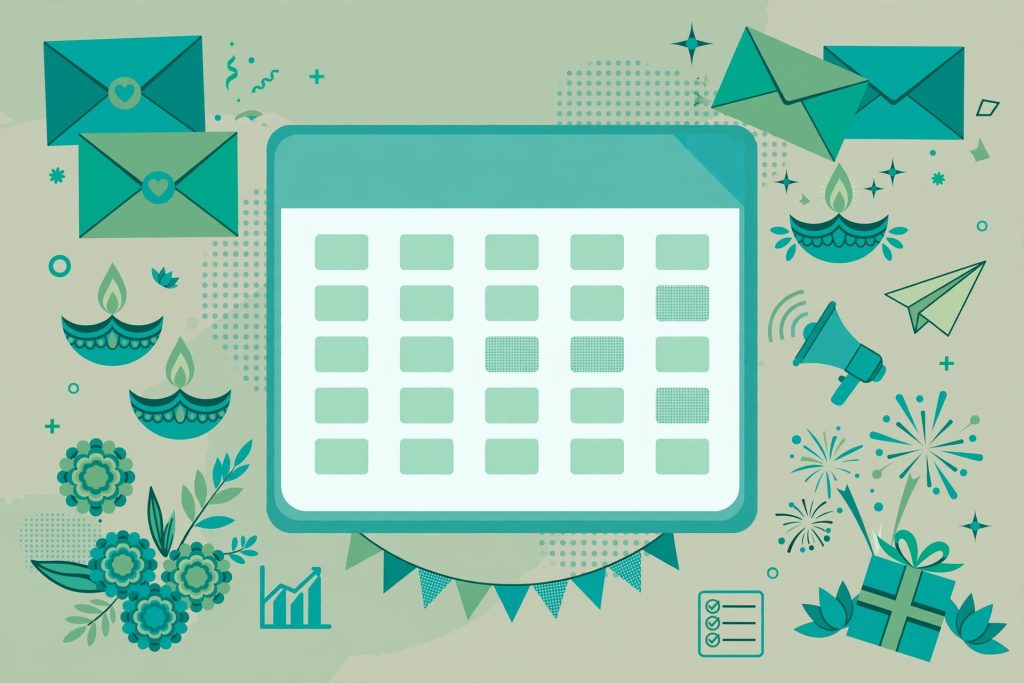
India’s shopping calendar revolves around festivals, and email lets you ride every wave. Plan these campaigns at least a month ahead.
- Diwali: the biggest season. Start teasers three weeks early, run the main sale emails during Dhanteras and Diwali week, and follow up with “extended sale” emails.
- Raksha Bandhan, Holi and Eid: strong for gifting, fashion, sweets and personal care.
- Wedding season (November to February): jewellery, apparel, photography and event services should run nurture sequences for engaged couples.
- Republic Day and Independence Day sales: e-commerce and electronics see reliable spikes.
- End of financial year (March): B2B services, tax consultants and financial products get attention.
For each festival, plan a simple three-email sequence: teaser, launch, and last-chance reminder. Three focused emails beat ten random ones.
Step 5: Follow the Rules in 2026
Indian email marketers must respect consent and privacy law. The Digital Personal Data Protection Act (DPDPA) makes consent a legal requirement, not just best practice.
Consent and Compliance Checklist
- Collect explicit consent before adding anyone. Pre-ticked boxes do not count.
- Tell subscribers what they are signing up for and how often you will email.
- Include your business name and physical address in every email footer.
- Provide a one-click unsubscribe link that actually works within a reasonable time.
- Never buy email lists or scrape addresses from websites.
- Keep a record of when and how each subscriber consented.
- Honour unsubscribe requests promptly and confirm removal.
Breaking these rules risks more than fines. Gmail and Yahoo now penalise bulk senders with high complaint rates, so non-compliant sending quietly kills your deliverability too.
Deliverability Basics for Indian Senders
- Authenticate your domain with SPF, DKIM and DMARC records
- Warm up new sending domains gradually instead of blasting 50,000 emails on day one
- Remove hard bounces immediately and sunset subscribers who ignore you for six months
- Keep your list clean: a smaller engaged list outperforms a large cold one in every metric
Step 6: Automate the Emails That Earn While You Sleep
Manual campaigns are good, but automation is where email marketing pays for itself. Set up these five flows once and let them run.
- Welcome series: three emails introducing your brand, your best products and a first-purchase incentive.
- Abandoned cart: two to three reminders over 48 hours, with the discount growing slightly each time.
- Post-purchase: thank-you email, usage tips, then a review request a week later.
- Win-back: a “we miss you” email with an offer after 90 days of silence.
- Birthday or anniversary: a small personalised offer. Indian customers respond warmly to these.
Each flow takes an afternoon to build and then generates revenue for years with minor tweaks.
Measuring What Matters
Track these five metrics monthly and ignore the rest until these are healthy.
- Open rate: aim for 20 to 30 percent for Indian SME lists. Below 15 percent means subject lines or list quality need work.
- Click-through rate: 2 to 4 percent is solid. Low CTR with good opens means your email content or offer is weak.
- Conversion rate: the percentage of clickers who buy or enquire. This is the metric that pays the bills.
- Unsubscribe rate: under 0.5 percent per campaign is normal. Spikes mean you emailed too often or off-topic.
- Revenue per email: total campaign revenue divided by emails sent. Compare this across campaigns to learn what your audience values.
Frequently Asked Questions
Is email marketing legal in India?
Yes, as long as you email people who consented to hear from you and you follow the DPDPA’s consent and grievance rules. Include an unsubscribe option in every marketing email and never use purchased lists.
Which is the cheapest email marketing tool in India?
Zoho Campaigns is usually the cheapest credible option with rupee pricing starting around 250 rupees per month, and its free plan covers up to 2,000 contacts. Brevo’s free tier is also generous if you send infrequently.
Should I use Hindi or English in my emails?
Use the language your customers use. For metro, English-speaking audiences, clean English works. For mass-market or Tier 2 and Tier 3 audiences, Hinglish subject lines and simple Hindi body copy often outperform pure English. Test both with your own list.
How often should a small business send marketing emails?
One to two emails per week is the sweet spot for most Indian SMEs. During festive sales you can go daily for short bursts, but watch unsubscribe rates closely and pull back the moment they spike.
Email vs WhatsApp marketing: which is better in India?
They complement each other. WhatsApp gets higher open rates but has strict template rules and per-message costs. Email is cheaper at scale, better for long content, and you fully own the list. Most successful Indian SMEs use both: WhatsApp for urgent alerts and email for newsletters, offers and nurture sequences.
Conclusion
Email marketing in India rewards the patient builder. Start with a clean permission-based list, pick a tool that fits your budget in rupees, write subject lines your audience cannot ignore, plan around India’s festive calendar, and stay on the right side of consent law.
You do not need a huge list to see results. A thousand engaged subscribers who chose to hear from you will outperform any shortcut, and the automations you set up this month will still be earning for you next Diwali. Build the list, respect the inbox, and let email become the quiet, reliable engine of your small business growth.

4 Comments
Pingback: Cybersecurity for Small Businesses India: 2026 SME Guide
Pingback: How to Start a Newsletter in India in 2026: Grow and Monetise It
Pingback: Content Marketing Strategy for Indian Small Businesses in 2026: A Practical Guide
Pingback: Marketing Automation Tools for Indian Small Businesses in 2026