

Introduction
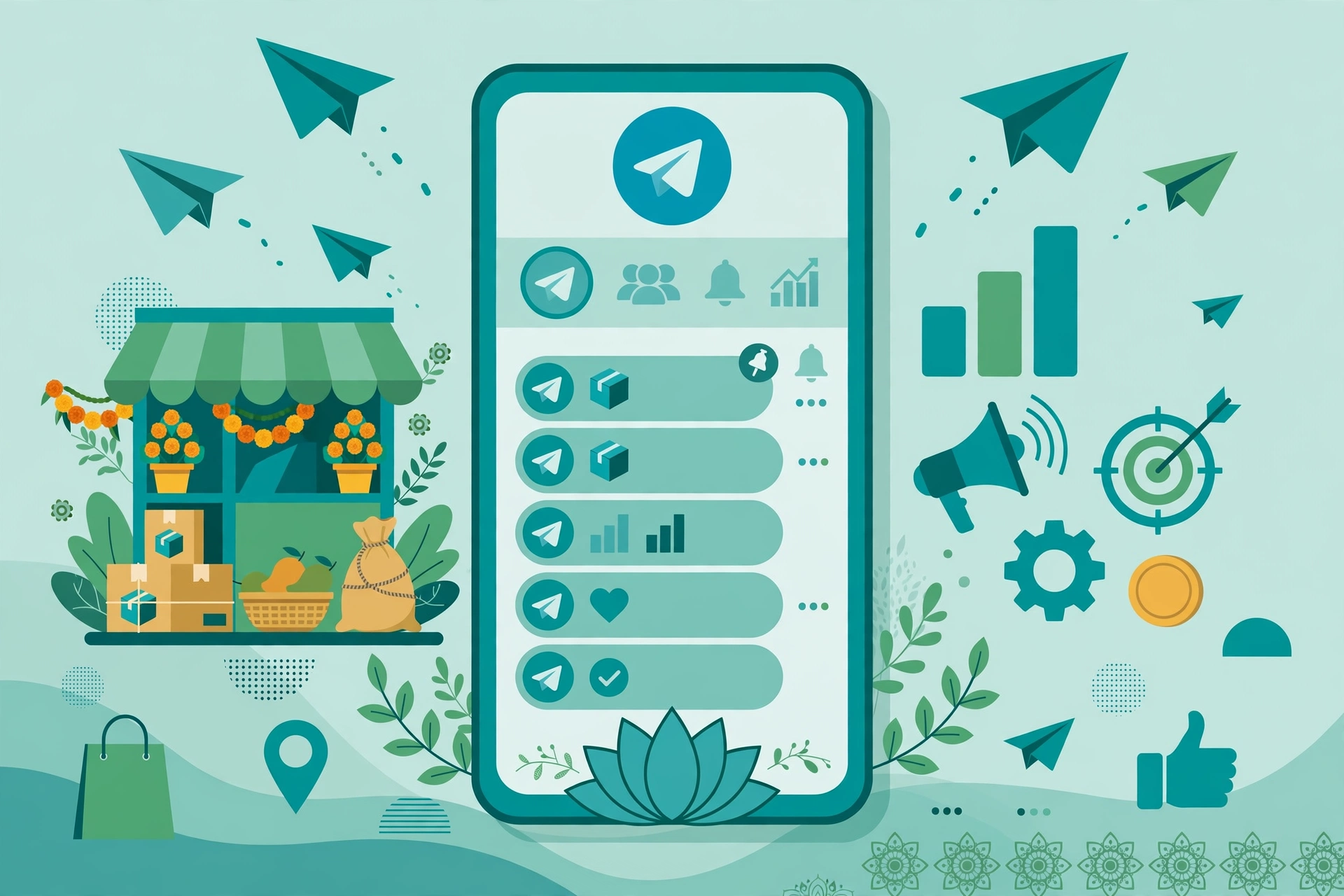
Telegram has quietly become one of India’s largest messaging platforms, with hundreds of millions of users, and Indian businesses are only beginning to use it properly. Most brands treat Telegram as a broadcast list and wonder why nobody engages. The brands that win use it as a complete channel: public channels for reach, groups for community, bots for automation, paid ads for growth, and Mini Apps for sales.
This guide covers Telegram marketing for Indian businesses end to end. You will learn how the platform works in India, how to choose between a channel and a group, how to set both up properly, what to post and how often, how paid Telegram Ads work and what they cost in India, how bots and Mini Apps capture leads, how to measure results, and the mistakes that get channels banned. Whether you run a coaching institute, an e-commerce store, a D2C brand, or a B2B service, there is a playbook here for you.

Telegram in India: Why It Matters Now
India is Telegram’s largest market, and its users are different from WhatsApp users. Telegram users skew younger, more tech-comfortable, and more willing to join public channels about deals, jobs, courses, crypto, and exam preparation. Tier 2 and Tier 3 cities are growing fast, and regional-language channels in Hindi, Bengali, Telugu, Marathi, and Malayalam attract large, loyal audiences.
Three features make Telegram special for marketers. First, channels have no algorithmic feed: every subscriber sees every post, so reach is close to 100 percent, unlike Instagram or Facebook. Second, groups support up to 200,000 members with real discussion, polls, and moderation tools. Third, bots and Mini Apps let you automate lead capture, payments, and support inside the app. No other Indian messaging platform combines all three.
Channel or Group: Which One Do You Need?
Channels and groups serve different jobs, and most successful businesses run both. A channel is a one-way broadcast: only admins post, subscribers read. Use it for announcements, deals, new launches, and daily content. A group is a two-way community: members talk, ask questions, and help each other. Use it for support, peer learning, and loyalty.
The standard setup is a public channel linked to a discussion group. The channel broadcasts, and the group hosts the conversation underneath each post. A coaching institute can post daily practice questions on the channel and discuss answers in the group. An e-commerce store can post deals on the channel and let buyers ask about sizes and delivery in the group. A B2B brand can post industry updates on the channel and run a private group for paying clients.
Setting Up Your Channel the Right Way
Setup takes an hour, but small choices decide whether people join and stay. Pick a short, searchable name that says what the channel is about, such as “UPSC Daily Current Affairs” rather than a brand name nobody searches for. Choose a public @username that matches the name, because that username is your shareable link.
Write a description that states who the channel is for and what subscribers get, with a posting schedule. Pin a welcome post that explains the rules, the schedule, and the one action to take first, such as downloading a free guide or joining the discussion group. Add a clear profile photo and, if you have a website, link it in the description.
Link a discussion group to the channel so every post gets a comment thread. Set the group rules in the pinned message, appoint one moderator per 1,000 members, and turn on slow mode during launches to stop spam. These basics separate professional channels from the thousands of dead ones.
What to Post: Content Pillars and a Weekly Calendar
Telegram subscribers leave channels that post only promotions. Follow the 80/20 rule: 80 percent useful content, 20 percent offers. Build four content pillars for your niche and rotate them through the week.
A coaching institute might use daily questions, exam tips, toppers’ strategies, and weekly test announcements. A D2C brand might use new arrivals, styling tips, customer photos, and weekend deals. An e-commerce deal channel might use morning deals, price-drop alerts, coupon codes, and a weekly best-of roundup. A B2B brand might use industry news, how-to guides, case studies, and webinar invites.
Posting frequency depends on the business type. Deal and news channels can post 1 to 3 times a day. Shops and service businesses do well with 2 to 4 posts a week. Coaching and exam channels often post daily, because their audience expects it. Whatever you choose, keep a fixed schedule so subscribers know when to expect you, and never post five times in an hour and then disappear for a week.
Growing Subscribers Without Spam
Telegram growth is slow at first, and that is normal. The honest methods work best. Put your channel link and QR code at the point of sale, on invoices, on packaging, and on your website. Offer a lead magnet, such as a free e-book, a discount code, or a practice test, that is only available inside the channel. Cross-promote from Instagram, YouTube, and WhatsApp with a clear reason to join, not just a link.
Partner with similar channels for shout-out swaps: you recommend them once, they recommend you once. Run a giveaway that requires joining the channel, but make the prize relevant to your niche so you attract buyers, not freebie hunters. Never buy subscribers. Bought subscribers never read, never buy, and they destroy your view-to-subscriber ratio, which is the number advertisers and partners actually check.
Paid Telegram Ads: Formats, Costs and Setup
Telegram Ads run through the official Telegram Ads platform and appear as sponsored messages in large public channels. The main formats are sponsored messages, Mini App ads, channel placements, and poll ads. You target by channel topic, language, and geography, not by personal data, which makes Telegram advertising unusually privacy-friendly.
Costs in India are reasonable compared with Meta and Google. Expect CPMs roughly in the range of Rs 30 to Rs 100 per 1,000 impressions for broad targeting, with niche channels costing more. A test budget of Rs 5,000 to Rs 10,000 is enough to learn which channels and messages convert. Some advertisers use Telegram ad exchanges as a workaround for payment in Toncoin, but start with the official platform, where you pay in euros and get proper reporting.
Set up a campaign in eight steps: create an Ads account and verify it, set your budget, pick target channels or topics, write a short ad under 160 characters, add a clear call to action, launch with a small daily budget, track clicks with UTM parameters, and scale only the channels that produce subscribers or sales at your target cost. Check Telegram’s ad policies before you launch, because ads for crypto, gambling, and misleading claims face strict approval rules.
Bots and Mini Apps: Your 24 Hour Sales Team
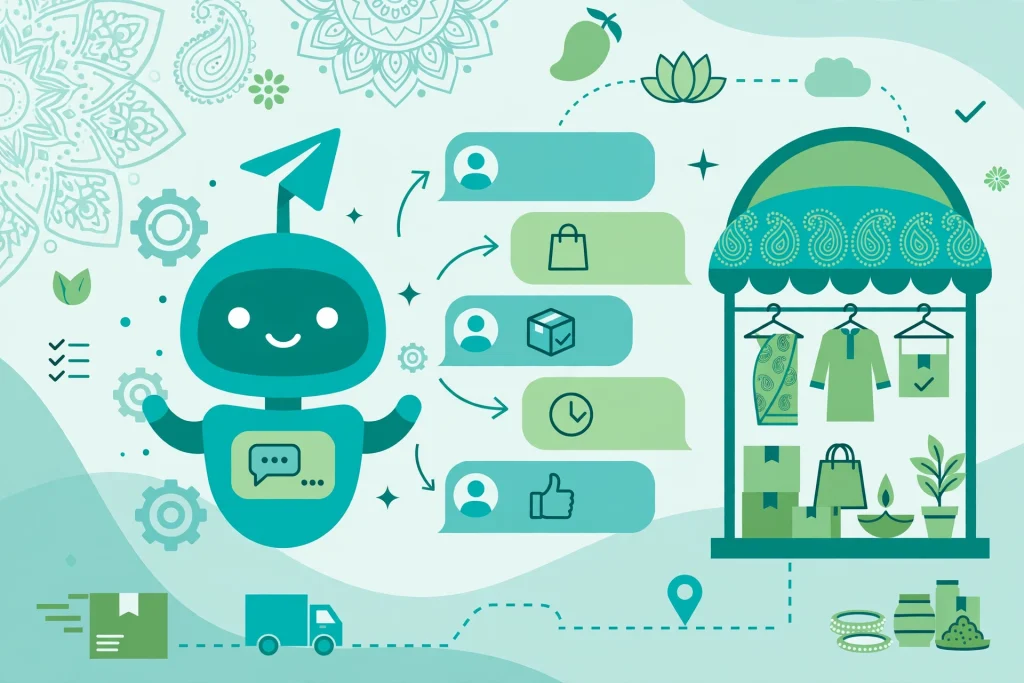
Bots turn a channel into a business. Create a bot with @BotFather in a few minutes, add it as an admin to your channel or group, and it can welcome new members, answer FAQs, collect phone numbers, send drip messages, and take orders. A welcome bot can greet a new subscriber, ask what they need, and send the right lead magnet automatically.
Mini Apps go further. A Mini App is a small web app that opens inside Telegram, and it can run a store, a booking form, a quiz, or a course player without the user ever leaving the app. An e-commerce brand can sell through a Mini App with UPI payment. A coaching institute can run mock tests inside one. A local shop can take orders and delivery addresses through one. Set up a bot before you build a Mini App, because the bot is what drives traffic to it.
For lead capture, combine the two. A bot asks three questions, saves the answers, and passes hot leads to your sales team on WhatsApp or email. Our guide to Marketing Automation Tools for Indian Small Businesses shows how to connect Telegram bots to your CRM and email tools.
Telegram vs WhatsApp: Which Fits Your Business?
Telegram and WhatsApp solve different problems, and most Indian businesses need both. WhatsApp is better for one-to-one conversations, order updates, and customer support, because every Indian customer already has it and checks it constantly. Telegram is better for broadcasting to a large audience, building a public community, running groups of thousands, and automating with bots.
Use WhatsApp for support and closing sales, and Telegram for content, community, and reach. Our guide to WhatsApp Marketing for Indian Businesses covers broadcasts, chatbots, and campaigns on that platform. Use Email Marketing in India alongside both, because email is the one channel you fully own.
Measuring Results: KPIs and Benchmarks
Telegram gives you real numbers if you look in the right places. Track subscribers, views per post, the view-to-subscriber ratio, emoji reactions, forwards, link clicks, and conversions. A healthy channel has a view-to-subscriber ratio of 30 to 60 percent in its first months, because not every subscriber reads every post, and new channels attract some inactive members.
Add UTM parameters to every link you post, so Google Analytics shows exactly which posts produce website visits and sales. Track cost per subscriber from paid ads, cost per lead from bots, and revenue per campaign. Review these numbers weekly for the first month, then monthly. If views fall below 20 percent of subscribers, you are posting too much, too little, or the wrong content, and it is time to ask subscribers what they want.
Industry Playbooks: Who Telegram Works Best For
EdTech and coaching institutes are the strongest fit. Daily questions, test series, and result announcements build huge channels, and bots handle admissions enquiries around the clock. E-commerce and D2C brands use deal channels, flash-sale alerts, and Mini App stores to drive repeat purchases. Local shops use channels for daily offers and groups for neighbourhood orders. Fintech and investing educators use channels for market updates, but must follow SEBI rules and never promise returns. B2B brands use private groups for clients and public channels for thought leadership, and they should expect slower growth but higher-value leads.
Compliance, Spam Rules and Mistakes to Avoid
Telegram bans channels that spam, and recovery is hard. Never add people to a channel or group without their permission. Never post the same message to dozens of groups. Never buy subscribers or engagement. Never make misleading claims, especially about investments, jobs, or government schemes. Follow Telegram’s terms, and follow Indian law on advertising, data protection, and financial advice.
Common mistakes to avoid include posting only offers, ignoring comments, using a brand name nobody searches for, having no pinned welcome post, and never measuring results. The channels that grow are the ones that post useful content on a fixed schedule, answer their community, and treat Telegram as a long-term asset, not a quick traffic hack.
Your 30 Day Starter Plan
Week 1: create the channel and the linked discussion group, write the description and the pinned welcome post, and set up a welcome bot with @BotFather. Week 2: publish four useful posts from your content pillars and invite your first 100 subscribers from WhatsApp, Instagram, and your customer list. Week 3: launch a lead magnet, start a shout-out swap with one similar channel, and test a small Telegram Ads campaign with a Rs 5,000 budget. Week 4: review the numbers, double down on the best-performing content type, and plan next month’s calendar around what subscribers actually read and clicked.
FAQ
How much does Telegram marketing cost in India?
Organic Telegram marketing is free apart from your time. Paid Telegram Ads usually cost Rs 30 to Rs 100 CPM, and a Rs 5,000 to Rs 10,000 test budget is enough to learn what works. Bots are free to create, and a simple Mini App can cost Rs 20,000 to Rs 1,00,000 to build, depending on features.
Is Telegram marketing free?
Yes, channels, groups, and bots are free to use, with no limit on subscribers or messages. You only pay if you run Telegram Ads, build a custom Mini App, or hire someone to manage the channel.
Can Telegram marketing work for B2B businesses in India?
Yes, but expect slower growth and higher-value leads. B2B brands do best with a public channel for industry updates and a private group for clients, plus bots that qualify enquiries before a sales call.
How do I get my first 1,000 Telegram subscribers?
Invite your existing customers from WhatsApp and email, put the channel link and QR code on your website and packaging, offer a lead magnet that is only available in the channel, and do shout-out swaps with similar channels. Paid ads can speed this up, but organic methods build a better audience.
Is Telegram better than WhatsApp for business in India?
Neither is better overall. WhatsApp wins for one-to-one support and closing sales. Telegram wins for broadcasting to large audiences, building public communities, and automating with bots. Most successful Indian businesses use both.
How often should I post on my Telegram channel?
Deal and news channels can post 1 to 3 times a day. Shops and service businesses do well with 2 to 4 posts a week. Coaching and exam channels often post daily. Keep a fixed schedule and never post five times in an hour and then disappear for a week.
Conclusion
Telegram marketing works for Indian businesses when you treat it as a complete channel, not a broadcast list. Build a channel and a linked group, post useful content on a fixed schedule, grow subscribers honestly, test paid ads with a small budget, and let bots and Mini Apps handle lead capture around the clock. Measure views, clicks, and conversions every week, fix what does not work, and give the channel 30 days of consistent effort. Done this way, Telegram becomes a high-reach, low-cost asset that keeps working long after a paid campaign ends.
