

Introduction
India’s ecommerce market continues to grow at a remarkable pace, and 2026 is shaping up to be another record year. With millions of shoppers buying on mobile phones, digital payments accepted everywhere, and logistics reaching even small towns, there has never been a better time to launch an online store in India. Yet the first decision every business owner faces is the most important one: how should you build your ecommerce website?
Choosing the right platform, budgeting realistically, and planning the features your customers actually need can make the difference between a store that converts visitors into buyers and one that quietly fades away. This guide walks you through the best ecommerce platforms available in India, the real cost of ecommerce website development in India in 2026, and the must-have features for a profitable online store.
Why Build an Ecommerce Website in India in 2026
The Indian online retail market is driven by a few powerful trends that make 2026 a strong year to invest in ecommerce website development in India:
- Mobile commerce dominates: more than 80 percent of online purchases in India happen on smartphones, so mobile-first design is no longer optional.
- Digital payments are mainstream: UPI, wallets, and net banking make checkout fast and trustworthy for Indian buyers.
- Regional language shopping is growing: shoppers from Tier 2 and Tier 3 cities increasingly prefer browsing in Hindi, Tamil, Bengali, and other languages.
- Social commerce feeds demand: Instagram, WhatsApp, and YouTube Shorts drive discovery, and a proper website converts that traffic into repeat sales.
- Logistics and same-day delivery have matured, letting even new stores offer dependable shipping across the country.
Choosing the Right Ecommerce Platform in India
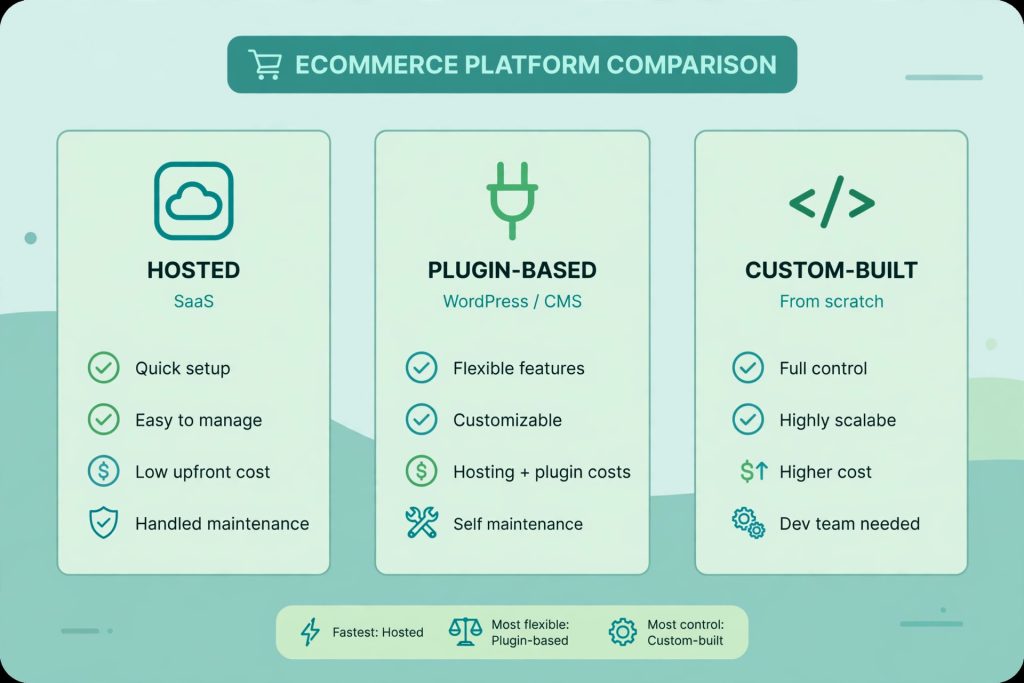
Your platform choice decides how much you pay upfront, how easily you can grow, and how much control you have over your store. Here are the leading options for ecommerce website development in India.
WooCommerce: The Flexible WordPress Option
WooCommerce turns a WordPress website into a complete online store. It is the most popular choice among Indian small businesses and startups because it is open source, highly customisable, and supported by a huge community.
Best for: businesses that want full ownership, low upfront cost, and complete design freedom. If you already run a WordPress site, WooCommerce is the natural next step.
Key advantages:
- No monthly platform fee; you pay only for hosting, themes, and extensions.
- Thousands of Indian payment gateway plugins, including Razorpay, PayU, and Cashfree.
- Full control over SEO, URLs, and content, which helps you rank in Google searches across India.
- Easy to scale from a few products to thousands with the right hosting setup.
Shopify: The Hosted All-in-One Platform
Shopify is a hosted ecommerce platform, which means it handles hosting, security, and updates for you. It is a strong choice for business owners who want to launch quickly without dealing with technical maintenance.
Best for: first-time sellers and D2C brands that want a professional store live within days.
Key advantages:
- Quick setup with polished themes and a simple dashboard.
- Built-in tools for discounts, abandoned cart recovery, and multi-currency selling.
- Reliable uptime and security managed by the platform itself.
- Large app store for shipping, marketing, and analytics integrations.
Custom Development: For Unique Requirements
Sometimes a business needs features no platform offers out of the box: a multi-vendor marketplace, a subscription box model, or deep integration with an ERP system. In these cases, a custom-built ecommerce website makes sense.
Best for: established businesses with unique workflows and the budget to invest in long-term technology.
Key advantages:
- Complete creative and functional freedom.
- Optimised performance tailored to your catalogue and traffic.
- No platform lock-in or recurring licence fees.
If you are weighing WordPress against a fully custom build, read our detailed comparison of WordPress vs custom website development for Indian businesses to see which approach fits your budget and goals.
How Much Does Ecommerce Website Development Cost in India
Ecommerce development costs in India vary widely depending on the platform, design complexity, number of products, and the agency you hire. Here is a realistic breakdown for 2026.
WooCommerce Stores: ₹40,000 to ₹1,50,000+
A basic WooCommerce store with a premium theme, essential plugins, payment gateway setup, and 20 to 50 products typically costs between ₹40,000 and ₹80,000 when built by a professional agency.
Stores with custom design, multilingual support, advanced shipping rules, or integrations with tools like Tally or Zoho can run from ₹1,00,000 to ₹1,50,000 or more.
Shopify Stores: ₹35,000 to ₹90,000 Setup + Monthly Fees
Shopify development costs are lower upfront because the platform handles hosting. A professional Shopify setup with a premium theme, apps, and payment integration usually costs ₹35,000 to ₹60,000. Ongoing Shopify plan fees start at roughly ₹1,500 per month, plus app subscriptions of ₹1,000 to ₹5,000 per month.
Custom-Built Stores: ₹1,50,000 to ₹5,00,000+
Fully custom ecommerce websites are priced on scope. A small custom store with 50 to 100 products starts around ₹1,50,000, while marketplace or enterprise builds with custom dashboards, APIs, and mobile apps can exceed ₹5,00,000.
Ongoing Costs to Budget For
Beyond the build, plan for these recurring costs:
- Domain and SSL: ₹1,500 to ₹3,000 per year.
- Hosting (WooCommerce) or plan fees (Shopify): ₹8,000 to ₹60,000 per year.
- Payment gateway transaction fees: 1.5 to 3 percent per order.
- Maintenance and updates: ₹2,000 to ₹10,000 per month.
- Marketing and ads: varies, but budget at least ₹10,000 per month to drive traffic.
For a broader view of what websites cost in the Indian market, see our guide to website development cost in India.
Must-Have Features for Indian Ecommerce Websites
Whatever platform you choose, these features are non-negotiable for selling successfully to Indian customers:
- Mobile-first responsive design that loads in under three seconds.
- UPI, card, net banking, wallet, and cash-on-delivery payment options.
- Guest checkout to reduce friction for first-time buyers.
- Product search with filters for price, size, brand, and category.
- WhatsApp order notifications and customer support integration.
- Multi-language support for Hindi and at least one regional language.
- Clear return, refund, and shipping policies to build trust.
- Customer reviews and ratings on every product page.
- Basic analytics to track visitors, conversions, and best-selling products.
Payment Gateways and Shipping for Indian Stores
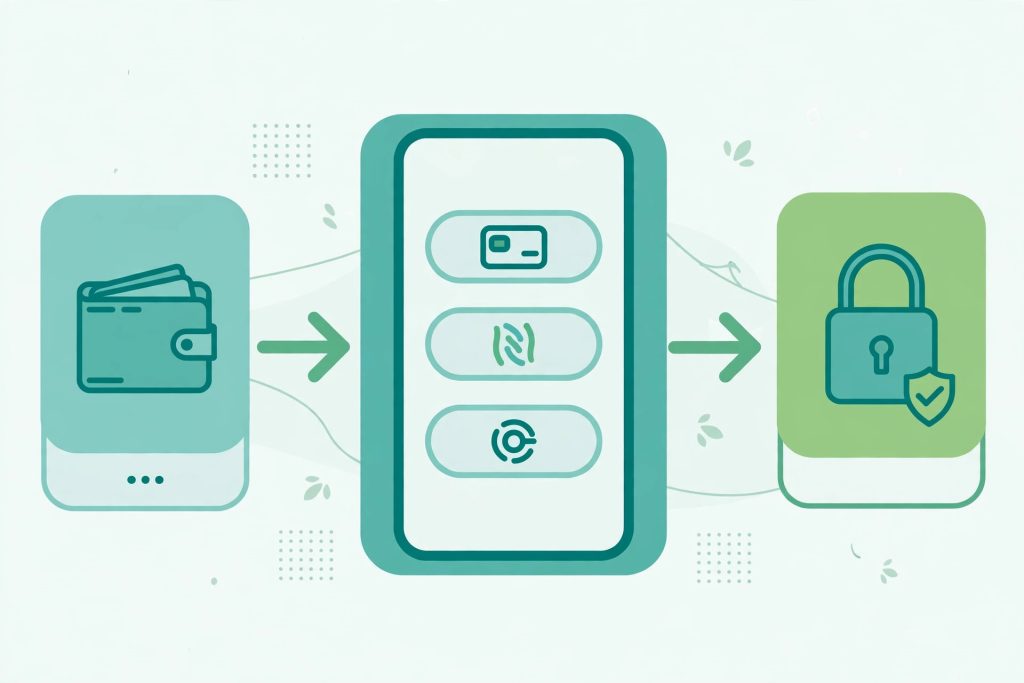
Payments and shipping can make or break an Indian ecommerce store. Offer the payment methods your customers actually use: UPI for instant mobile payments, cards and net banking for larger orders, popular wallets, and cash on delivery, which many first-time buyers still prefer.
For shipping, integrate with aggregators like Shiprocket or Pickrr to compare courier rates and automate label printing. Offer free shipping above a threshold value to lift average order values, and display clear delivery timelines on every product page.
SEO for Indian Ecommerce Websites
Building the store is only half the job; customers need to find it. Ecommerce SEO in India means targeting product keywords with local intent, writing unique descriptions for every product, and building category pages that rank for high-volume searches.
Your product descriptions deserve special attention, because duplicate manufacturer text will hold back your rankings. Our guide to copywriting for Indian ecommerce product descriptions that sell shows how to write descriptions that rank and convert at the same time.
Other high-impact SEO actions include submitting a product sitemap to Google Search Console, adding product schema for rich results, and building internal links between category and product pages so search engines understand your site structure.
How to Get Started: A Practical Roadmap
- Define your niche and product catalogue: know exactly what you will sell and to whom before spending on development.
- Choose your platform: WooCommerce for control and low cost, Shopify for speed and simplicity, custom development for unique needs.
- Plan your budget: include development, hosting, payment gateway fees, and at least six months of marketing.
- Build with mobile first: design every page for smartphones, then adapt for desktop.
- Integrate payments and shipping: test UPI, COD, and courier integrations thoroughly before launch.
- Add essential pages: About, Contact, Shipping Policy, Returns Policy, and Privacy Policy build buyer trust.
- Optimise for SEO from day one: titles, meta descriptions, headings, and image alt text on every page.
- Launch, measure, improve: track conversion rate, cart abandonment, and traffic sources, then iterate.
Frequently Asked Questions
What is the best platform for ecommerce website development in India?
For most Indian businesses, WooCommerce offers the best balance of cost, control, and flexibility. Shopify is the better pick if you want to launch fast without technical work. Choose custom development only when your requirements go beyond what platforms can offer.
How long does it take to build an ecommerce website in India?
A basic store on WooCommerce or Shopify typically takes two to four weeks. A mid-range customised store takes six to ten weeks. Large custom or marketplace builds can take three to six months depending on complexity.
Do I need GST registration to sell online in India?
Yes. If you sell goods through an ecommerce website or marketplace in India, GST registration is mandatory regardless of turnover. Your developer should set up GST-compliant invoicing on the store.
Which payment gateway is best for Indian ecommerce stores?
Razorpay, PayU, and Cashfree are the most popular choices for Indian stores because they support UPI, cards, net banking, and wallets with competitive transaction fees. Compare settlement cycles and support quality before choosing.
Can I sell in regional languages on my ecommerce website?
Yes. Both WooCommerce and Shopify support multilingual setups through plugins and apps. Adding Hindi or other regional languages can significantly expand your customer base in Tier 2 and Tier 3 cities.
How much does it cost to maintain an ecommerce website in India?
Expect to spend INR 15,000 to INR 50,000 per year on maintenance, including updates, backups, security checks, and minor improvements. Marketing and SEO costs are separate and depend on how aggressively you want to grow.
Conclusion
Ecommerce website development in India in 2026 offers more options than ever, from affordable WooCommerce stores to polished Shopify setups and fully custom platforms. The right choice depends on your budget, technical comfort, and growth plans. Budget realistically, insist on mobile-first design, offer the payment options Indian shoppers expect, and invest in SEO from the start. Do these things well, and your online store will be ready to capture its share of India’s booming digital market.

2 Comments
Pingback: Why Search Intent Matters More Than Keyword Density - Sharii Tech
Pingback: Product Description Writing for Indian E-commerce Brands: A Practical 2026 Guide