

Introduction
“Should we build our website on WordPress or get it custom developed?” It is one of the most common questions Indian business owners ask — and one of the most misunderstood. Agencies with a vested interest will push you toward whichever option makes them more money, leaving you with a site that is either overpowered and expensive or underpowered and limiting.
The honest answer: both are excellent choices — for different businesses. A local clinic, a D2C fashion brand and a logistics company with custom workflows have genuinely different needs, and the right choice follows from those needs, not from trends.
This guide gives you the real picture for 2026: what each option costs in India, where each one shines, where each one struggles, and a simple framework for choosing correctly the first time.
What Each Option Actually Means
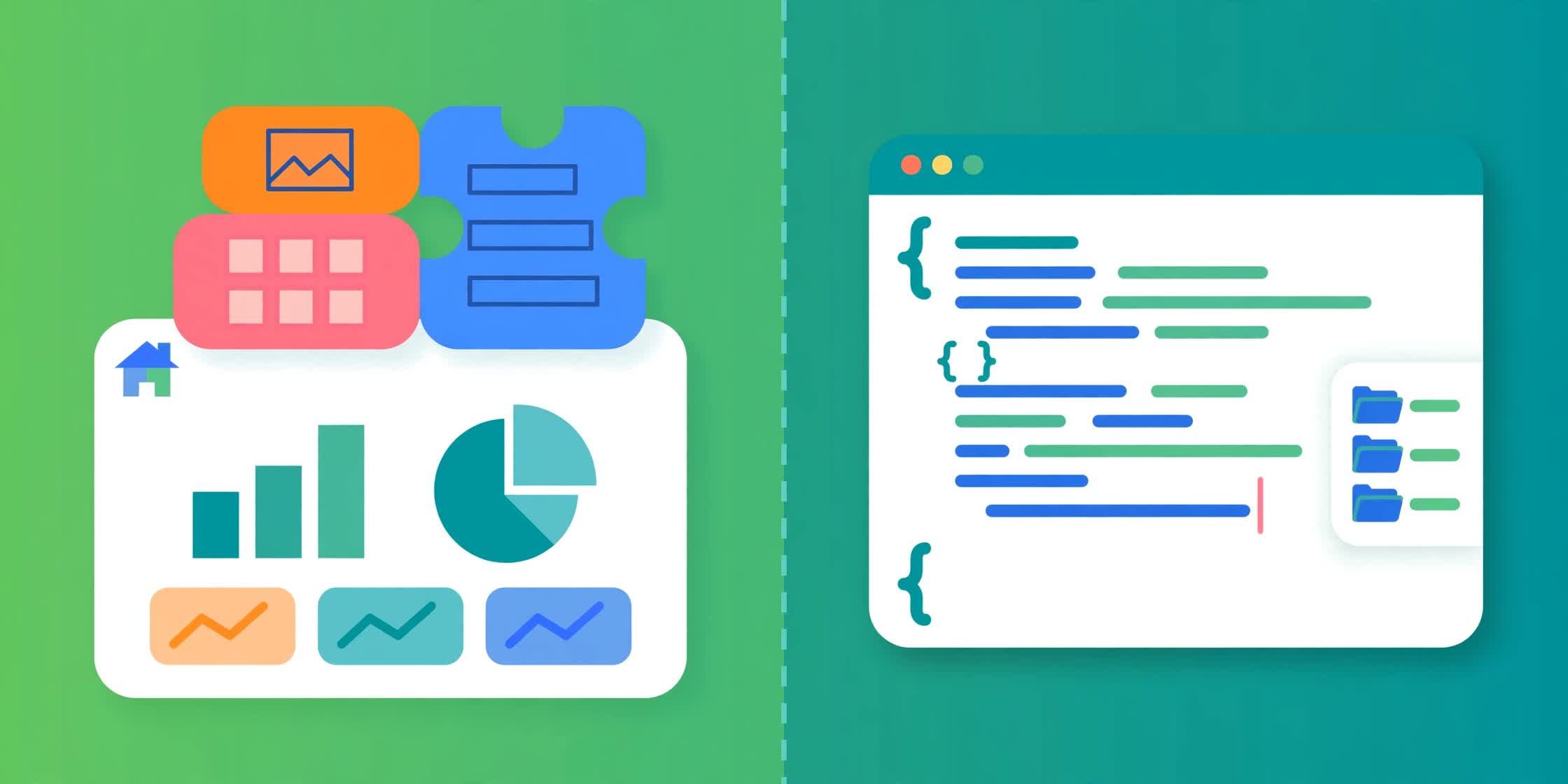
WordPress is the world’s most popular content management system, powering over 40% of all websites. You (or your agency) build the site using WordPress plus themes and plugins — pre-built components for everything from contact forms to payment gateways to SEO. Think of it as building with high-quality Lego blocks: fast, flexible and proven.
Custom development means the site is coded from scratch (or with frameworks like React, Laravel or Next.js) specifically for your requirements. Think of it as architecture: designed exactly for your plot, your needs and your future expansion — but requiring real engineering.
Neither is “better” in the abstract. The question is always: better for what, and for whom?
The Real Cost Comparison in India (2026)
Let us talk numbers, because this is where most advice gets vague. Approximate Indian market rates:
WordPress website:
- Basic business site (5–10 pages): ₹15,000–₹50,000
- Advanced site with custom theme work: ₹50,000–₹1,50,000
- WooCommerce store: ₹40,000–₹2,00,000 depending on complexity
- Annual running costs: hosting (₹3,000–₹15,000/year) + domain + occasional maintenance
Custom-developed website:
- Basic custom site: ₹1,00,000–₹3,00,000
- Web application / portal: ₹3,00,000–₹15,00,000+
- Annual running costs: hosting (often higher, ₹15,000–₹60,000/year) + ongoing developer support
WordPress is typically 3–5x cheaper upfront. But cost-per-rupee is not the whole story — a ₹30,000 WordPress site that your team can update themselves often delivers more business value than a ₹2,00,000 custom site that needs a developer for every text change. For perspective on what your site needs to deliver technically regardless of platform, see our guide on why Indian businesses need a fast, mobile-first website.
Where WordPress Wins
Choose WordPress when:
- You need to launch fast. A professional WordPress site can go live in 2–4 weeks; custom builds typically take 2–4 months.
- Your team will update content. WordPress’s editor is genuinely easy — if your staff can use MS Word, they can update pages, publish blogs and add products. This independence saves enormous agency fees over time.
- You need standard features. Blogs, portfolios, business sites, online stores (WooCommerce), booking systems, membership areas — all solved problems with mature plugins.
- SEO matters to you. WordPress plus Rank Math gives you best-in-class SEO tooling out of the box — the same setup powering this very blog.
- Budget is a real constraint. For startups and SMEs, WordPress delivers 90% of what most businesses need at a fraction of custom cost.
WordPress powers everything from small business sites to major news portals. “WordPress is only for blogs” has not been true for a decade.
Where Custom Development Wins
Choose custom development when:
- You have genuinely unique functionality. A custom configurator, a multi-vendor marketplace with special commission logic, an internal operations dashboard — when no plugin does what you need, custom is the answer.
- Performance is mission-critical at scale. A well-built custom site can be leaner and faster than a plugin-heavy WordPress site — important if you serve millions of pageviews or run a high-volume store.
- You need deep integrations. Complex ERP/CRM integrations, custom APIs, real-time features (live tracking, chat, collaboration) are cleaner to build custom than to bolt onto WordPress.
- Security requirements are stringent. Fewer moving parts and no public plugin ecosystem can mean a smaller attack surface for sensitive applications (though well-maintained WordPress is secure for normal business use).
- You are building a product, not a website. If the website IS your business (SaaS, fintech, edtech platform), custom development gives you the control a product company needs.
The key test: can you describe your requirement as “like X, but with Y”? If Y is small, WordPress with customisation probably covers it. If Y is the whole point, go custom.
The Honest Downsides of Each
WordPress downsides: plugin bloat can slow your site if you install recklessly; you depend on third-party plugin developers for updates; a poorly built WordPress site (cheap theme + 40 plugins) is a security and performance liability. Mitigation: use a reputable agency, keep plugins minimal and updated, and use good hosting. Many technical SEO issues we see on Indian sites trace back to bloated WordPress builds — avoidable with discipline.
Custom downsides: you are locked into developer dependency — every change costs time and money; timelines slip; documentation is often poor, so switching developers later is painful; and you own every bug. Mitigation: insist on a proper contract with documentation, use standard frameworks (not the developer’s pet system), and budget for ongoing maintenance from day one.
A Simple Decision Framework
Answer these five questions:
- Can WordPress plugins cover 80%+ of what I need? Yes → WordPress. No → Custom.
- Will non-technical staff update the site weekly? Yes → WordPress (its editor is unmatched for this).
- Is my budget under ₹1,00,000? Yes → WordPress, done well, beats custom done cheaply every time.
- Am I building a unique software product? Yes → Custom.
- Do I need to launch within a month? Yes → WordPress.
For roughly 80% of Indian small and medium businesses — service companies, clinics, restaurants, retailers, consultants, D2C brands starting out — WordPress is the right answer. For funded startups building products and enterprises with complex workflows, custom earns its premium.
Red Flags When Hiring (Either Option)
- “Custom is always better” or “WordPress can do everything” — anyone who recommends before understanding your requirements is selling, not advising.
- No maintenance plan discussed. Every website needs updates, backups and monitoring. If the agency goes silent on this, walk away.
- You don’t own your domain and hosting. Non-negotiable: domain and hosting must be in your name, with full access credentials given to you.
- No staging or backup process mentioned for WordPress, or no documentation promise for custom builds.
- Suspiciously cheap quotes. A ₹8,000 “custom website” is a nulled theme with your logo pasted in. You will pay for it later in hacks, penalties and rebuilds.
Frequently Asked Questions
What is the average website development cost in India in 2026?
A professional WordPress business website costs ₹15,000–₹50,000; an advanced WordPress/WooCommerce build runs ₹50,000–₹2,00,000. Custom-developed sites start around ₹1,00,000 for basic builds and ₹3,00,000+ for web applications. Always get itemised quotes — “website” means wildly different things to different agencies.
Is WordPress good for e-commerce in India?
Yes, WooCommerce (WordPress’s e-commerce plugin) powers a huge share of Indian online stores and handles COD, UPI, Razorpay/PayU gateways, GST invoicing plugins and shipping integrations well. Consider custom development only when you need marketplace-style complexity or very high transaction volumes with custom logic.
Is WordPress secure enough for a business website?
Yes, when built and maintained properly: keep core, themes and plugins updated, use minimal reputable plugins, enforce strong passwords with two-factor authentication, and use quality hosting with backups. Most WordPress hacks exploit neglected updates and nulled themes — not WordPress itself.
Can I switch from WordPress to custom development later (or vice versa)?
Yes, and it is common. Many businesses start on WordPress to validate and launch fast, then rebuild custom when scale or unique needs justify it. Starting on WordPress does not trap you — your content, domain authority and SEO can all be migrated with proper planning.
How long does each option take to build?
A WordPress business site: 2–4 weeks. A WooCommerce store: 4–8 weeks. A custom website: 8–16 weeks. A custom web application: 4–9 months. Anyone promising a quality custom build in two weeks is cutting corners you will discover later.
Conclusion
WordPress vs custom development is not a battle — it is a matching problem. Match the tool to your needs, timeline and budget. For most Indian businesses in 2026, a well-built WordPress site is the smart, economical choice that launches fast and stays manageable. When your needs are genuinely unique or product-scale, custom development earns its premium.
Whatever you choose, the fundamentals do not change: own your domain and hosting, demand a maintenance plan, keep the site fast and mobile-friendly, and hire for honesty over hype.
Make the decision with the framework above, not with whatever the salesperson recommended. Your website is a business asset — choose like an owner, not a buyer.

3 Comments
Pingback: How Much Does a Website Cost in India in 2026? Complete Price Breakdown
Pingback: How to Speed Up WordPress in India: Core Web Vitals Guide (2026)
Pingback: Ecommerce Website Development India: Platforms & Cost 2026