


Introduction
A good website can bring your business enquiries every week. A badly chosen developer can cost you months, a large part of your budget, and a website you cannot control. In India, the choice is wide, from freelancers charging a few thousand rupees to large IT firms serving global clients. All may call themselves a web development company in India.
The most common mistake is choosing on price alone. A fast quote tells you little about how your project will be built.
Define Your Project Before You Contact Anyone
Start with a one page brief, not a shortlist. Without one, every company will sell you what it knows how to build.
Name the type of website you need: a marketing site, an online store, a customer portal, or a booking system. Write the goal in one sentence, such as generating phone enquiries or selling products online. Then list the features you need: a contact form, WhatsApp chat, a product catalogue, payments through UPI or net banking, a blog, or a customer login area.
Decide who will maintain the site day to day. If that person is not technical, you need a simple admin panel and training. Add your budget range and launch date. Under the Digital Personal Data Protection Act, 2023, the DPDP Act, a site collecting personal data must handle consent, storage, and retention properly.
Types of Web Development Companies in India
- Freelancers are the cheapest option, and a skilled freelancer can suit a small brochure site, landing page, or simple WordPress site. Ask who covers support if they are unavailable.
- Boutique firms are small teams, often five to twenty people in one city, suiting small and medium businesses wanting a quality marketing site or a modest online store.
- Mid-size agencies have larger teams and handle ecommerce stores, custom applications, and maintenance, the right category for most growing Indian businesses in 2026.
- Large IT firms serve enterprise clients, with bigger budgets and formal processes. They fit complex portals and large ecommerce platforms, but may be slower for a small business website.
How to Check a Portfolio Properly
A portfolio page is a sales tool, so treat it as a starting point, not proof. Ask each shortlisted company for links to three live websites it built that are still online today.
Open each site on your phone first, using mobile data, since most Indian visitors will reach your site on a phone. Tap the buttons, try the menu, and check loading speed. Then open the sites on a laptop and check sharp images, clean text, and a working contact page.
If you can, speak to one past client for two minutes. Ask whether the project finished on time and whether the final cost matched the quote. For typical budgets, read our guide on how much a website costs in India in 2026.

Questions to Ask Before You Sign
Ask these on the first or second call, write down the answers, and send them back by email so both sides agree.
- Team: who will actually write the code, and can you meet that person before signing? Will any work be subcontracted?
- Technology: do they recommend WordPress, a custom build, or another platform, and why? Read our comparison of WordPress vs custom website development.
- Ownership and exit: will the code, hosting, and domain be in your name? Does the contract assign intellectual property to you on final payment?
- Delivery and aftercare: what are the milestones, how are change requests priced, what support is included after launch, and how are patches, backups, and uptime monitored?
Red Flags When Hiring a Web Development Company
Two or three of these should make you pause.
- Full payment before work starts. Insist on milestone payments tied to finished work.
- A single price with no list of what is included. Insist on a line by line written scope.
- A domain bought in the developer’s name or email. You may not be able to renew it or prove you own it.
- No admin panel. Every small edit then becomes a paid request.
- A promise of the number one position on Google. Nobody can promise a search ranking.
- No live work to show, no discovery phase, pressure to sign quickly, or no named contact.
- A quote far below every other proposal, which usually leaves out testing, security, or performance work.
What a Written Scope Must List
A written scope lists everything the company will build and deliver. If it is not written down, assume it is not included. It should name every page and feature, such as forms, payments, booking, search, and user accounts, and state who writes the text and who supplies the photos, and by when.
It should list the technology, the payment milestones, and what you check at each one before paying. It should describe testing and who fixes defects. It should also cover support after launch, the warranty period, and the yearly cost of domain, hosting, and upkeep. Finally, it must state that the domain, hosting, code, design files, and all logins are handed over to you, in writing, on final payment.
Pricing, Milestone Payments and Total Cost in India
A simple brochure website from a freelancer may cost Rs. 15,000 to Rs. 40,000. A professional business website often costs Rs. 50,000 to Rs. 1,50,000. An ecommerce store often costs Rs. 1,00,000 to Rs. 4,00,000 or more. A custom web application can cost Rs. 3,00,000 and above. These are broad ranges for 2026, not fixed prices.
Never compare proposals on the headline build fee alone. Compare the total cost over two to three years, including hosting, domain renewal, SSL certificate, payment gateway charges, and the support retainer. A cheap build with expensive yearly renewals can cost more than a fairly priced build.
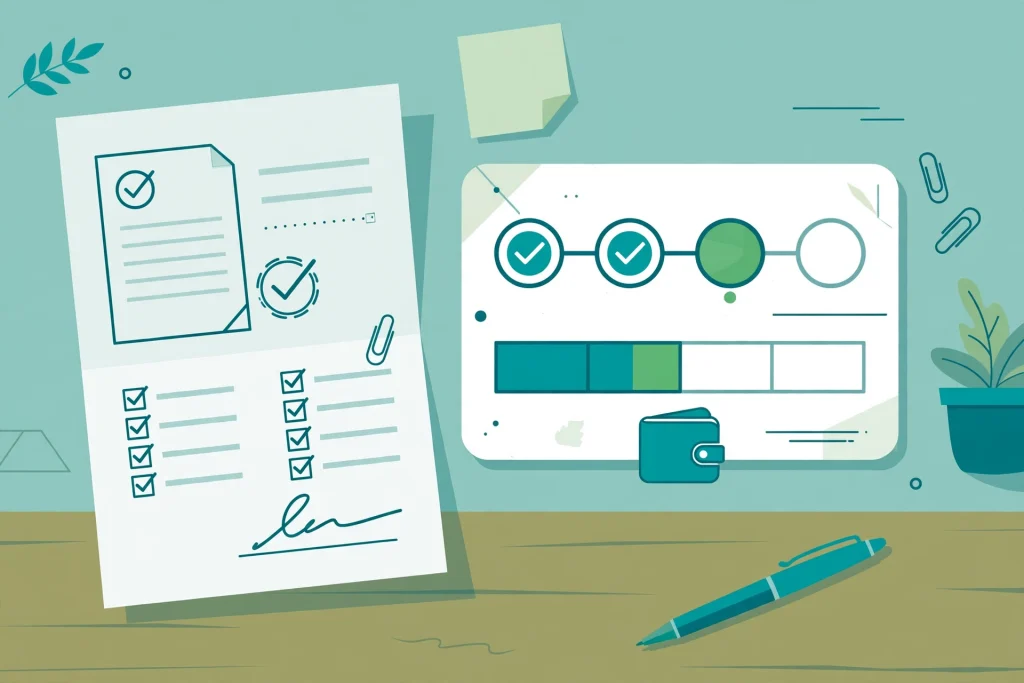
Pay in milestones tied to visible work: 20 to 30 percent at the start; a further payment when the design is approved; another when the test site is ready; and a final payment only after launch, when the site is live and you hold all the logins. Keep 10 to 20 percent for after launch and handover. Agree the split before work starts, put it in the scope, and confirm whether GST is included. If your project is an online store, read our guide to e-commerce website development in India before comparing store quotes.
Ownership of Domain, Hosting and Code, in Writing
The domain, hosting account, and code should all be in your business name, with your email as the main contact. Your domain, such as yourshop.in, should be registered in your name and on your email, never the developer’s. If the company sets it up from its own account, ask it to transfer the domain to your account before the final payment. Keep the registrar login yourself, switch on auto-renewal, and ask for the hosting account to be opened in your name.
Under India’s Copyright Act, 1957, the author of a work is the first owner of its copyright, and computer programs count as literary works. An outside company is not your employee, so the transfer of the code must be written into the contract. Ask for the contract to cover the full copyright term and all countries, and for the full handover in writing.
Post-Launch Support and Maintenance
A website is not finished on launch day. WordPress, plugins, themes, and payment gateways all change, and a site that is never updated becomes slow, insecure, or broken. Ask what happens after launch before you sign.
A good arrangement covers a warranty period, usually 30 to 90 days, during which defects are fixed free of charge. After the warranty, most companies offer a monthly or yearly maintenance plan. Ask exactly what it includes: software updates, backups, security checks, uptime monitoring, and a stated response time. Ask how often backups are taken and how quickly one can be restored. Agree the support scope, response times, and yearly cost in the contract.
How to Compare Proposals on the Same Brief
Compare two or three serious candidates on the same brief and the same criteria, not on instinct or the lowest price. Send every company the same brief, the same list of pages and features, and the same ten questions.
Build a simple comparison table with one row per company and columns for total price, what is included, what is excluded, the technology, the timeline, the milestone split, the warranty, and the yearly maintenance cost. Speak to references for the final two companies.
A Scoring Checklist You Can Use
Score each shortlisted company from 1 to 5 on each point.
- Portfolio quality: live sites that load fast on mobile and match your project type.
- Relevant experience: similar projects completed, in your industry or of similar complexity.
- Team and process: a named contact, a clear process, and the actual team introduced before signing.
- Technology fit: a stack chosen for your needs.
- Written scope: every page and feature listed, with exclusions, timelines, and revision limits stated.
- Pricing and payments: a fair total cost, milestone payments, GST clarity, and a final payment held until handover.
- Ownership: domain, hosting, code, and logins in your name, with intellectual property assignment in writing.
- Communication: prompt replies, a weekly update, and clear working hours in Indian time.
- Support after launch: a warranty period, a maintenance plan, backups, and stated response times.
- References: at least one past client willing to speak, with honest feedback about time, cost, and support.
Score well on ownership, scope, and communication above all. Weakness in those three areas causes most failed projects.
Frequently Asked Questions
How much does a web development company in India charge in 2026?
A simple brochure site may cost Rs. 15,000 to Rs. 40,000, a professional business website often costs Rs. 50,000 to Rs. 1,50,000, and an ecommerce store often costs Rs. 1,00,000 to Rs. 4,00,000 or more. Compare the total cost over two to three years.
Should I hire a freelancer or a web development company in India?
A freelancer can suit a small, simple website with a tight budget, provided the code is documented and support cover is agreed. A company is usually better for ecommerce stores and custom applications.
How long does it take to build a website in India?
A simple business website usually takes three to six weeks from an approved brief, an ecommerce store six to twelve weeks, and a custom portal three to six months or more.
Who should own my domain name and website code?
You should. The domain, hosting, and code should be in your business name, with your email as the main contact, and the contract should assign the intellectual property to you on final payment. Never accept a domain registered in the developer’s name.
What is the safest way to pay a web development company?
Pay in milestones tied to visible work, such as design approval, a working test site, and launch with full handover. Keep 10 to 20 percent back until the site is live and you hold all the logins.
How do I check whether a web development company is reliable?
Check three live websites it built on your phone, speak to at least one past client, and ask for a written scope and milestone payments. Confirm that the domain, hosting, and code will be in your name.
Conclusion
Choosing a web development company in India is less about the most impressive pitch and more about reducing risk before you commit. Start with a clear brief, match the provider to your project, and test real portfolio work on your phone. Insist on a written scope, pay in milestones, and keep the domain, hosting, and code in your name.

2 Comments
Pingback: How to Speed Up a WordPress Website in India in 2026: A Practical Guide for Beginners
Pingback: How to Build an Ecommerce Website in India in 2026: A Complete Step by Step Guide