
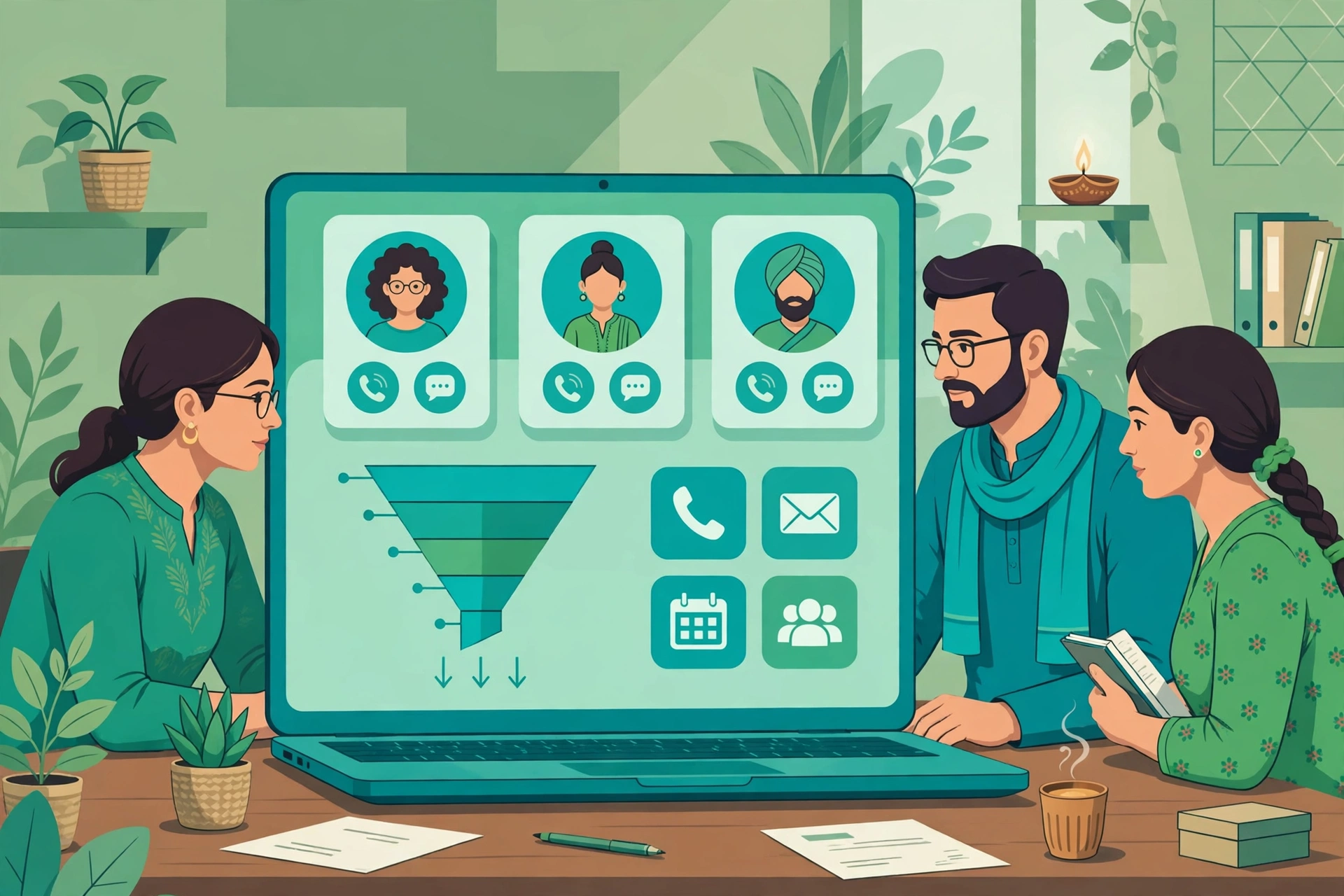
Indian small and medium enterprises lose more deals to poor follow-up than to competition. Leads come in from the website, WhatsApp, IndiaMART, trade shows, and referrals, and then sit in spreadsheets, phone notes, and memory. A customer relationship management (CRM) system fixes this by keeping every lead, conversation, and follow-up in one place.
But choosing a CRM is confusing. Global giants charge in dollars, Indian startups offer aggressive pricing, and every vendor claims to be the best. This 2026 guide compares the best CRM software for Indian SMEs on the things that actually matter: India pricing, features for small teams, GST-ready billing, and local support.
Why Indian SMEs Need a CRM Now
Customer expectations have changed. Buyers research online, compare multiple vendors, and expect quick responses on WhatsApp and email. Meanwhile, your competitors are getting organised. Here is what a CRM gives a small team:
- No lead ever gets lost. Every enquiry is captured and assigned automatically.
- Follow-ups happen on time. Reminders and automation make sure nobody forgets to call back.
- The whole team sees the full picture. When a salesperson is on leave, anyone can pick up the conversation.
- You know what is working. Reports show which lead sources and campaigns actually bring revenue.
For a team of even 5 to 10 people, a CRM typically pays for itself within a few months through recovered deals alone. And as more Indian SMEs move their operations to the cloud, a CRM fits naturally alongside other tools. If you are still weighing the move, our guide to cloud computing for Indian SMEs explains the infrastructure side of going digital.
What to Look for in a CRM for an Indian SME
Before comparing products, know your checklist. The right CRM for a 10-person trading company in Ludhiana is different from what a 50-person SaaS startup in Bengaluru needs.
Must-have features
- Lead capture from Indian sources: Website forms, WhatsApp, Facebook and Instagram lead ads, IndiaMART, and JustDial integrations matter more here than elsewhere.
- Pipeline management: A clear visual view of deals by stage, from new enquiry to won or lost.
- Follow-up reminders and automation: Task reminders, automated welcome messages, and drip follow-ups.
- Mobile app: Your field sales team lives on phones, not laptops. The mobile app must be genuinely usable.
- Reports that a non-technical owner can read: Simple dashboards on sales, team activity, and lead sources.
India-specific requirements
- Pricing in rupees: Dollar-priced tools become painful with currency swings and forex charges.
- GST invoicing: If your CRM handles quotes and invoices, it should support GST formats and tax calculations.
- Local support: Support during Indian business hours, ideally with phone support, makes a big difference during onboarding.
- UPI and Indian payment options: For paying the subscription itself, and for any payment links you send customers.
Pricing models to understand
Most CRMs charge per user per month. For Indian SMEs, the realistic range is roughly 500 to 2,500 rupees per user per month for a capable product. Watch out for:
- Implementation and onboarding fees, which some vendors charge separately.
- Per-user minimums that punish small teams.
- Add-ons for automation, telephony, or WhatsApp integration that inflate the real cost.
Always calculate the total cost for your actual team size for one full year before deciding.
The Best CRM Software for Indian SMEs in 2026
Here are the strongest options for small and medium Indian businesses this year, each suited to a slightly different profile.
1. Zoho CRM: the all-round Indian favourite
Zoho CRM remains the default choice for Indian SMEs, and for good reason. It is built by an Indian company, priced in rupees, and integrates deeply with the rest of the Zoho suite, including Books for GST invoicing, Campaigns for email marketing, and Desk for support.
Strengths: Very affordable entry plans, strong automation even at lower tiers, good WhatsApp and telephony integrations through partners, and support in Indian time zones. The free edition covers up to 3 users, which suits micro businesses.
Watch out for: The interface can feel overwhelming at first because of the sheer number of features. Plan for a week or two of setup and training.
Best for: SMEs that want one ecosystem for CRM, accounting, and marketing at a sensible price.
2. Freshsales: simple and sales-focused
From Freshworks, another Indian-origin company, Freshsales is built around one idea: make it easy for salespeople to sell. The interface is cleaner than most competitors, and the built-in phone, email, and chat keep the team working inside one window.
Strengths: Easy onboarding, good built-in telephony for Indian numbers, AI-powered lead scoring on higher plans, and a generous free tier for small teams.
Watch out for: Advanced customisation and some integrations are reserved for higher plans. Marketing automation is lighter than in Zoho’s ecosystem.
Best for: Small sales teams that want to get running in days, not weeks.
3. HubSpot CRM: the free-to-start global option
HubSpot’s free CRM is genuinely free for unlimited users, which makes it attractive for very small businesses. The paid Sales Hub adds the automation and reporting growing teams need.
Strengths: Best-in-class free tier, excellent email integration, huge library of integrations, and polished reporting.
Watch out for: Paid plans are priced in dollars and get expensive quickly as you add users and features. GST invoicing is not native, and support hours may not align with Indian business hours on lower plans.
Best for: Startups comfortable with English-language tools that want a powerful free starting point and expect to scale.
4. Kylas: built specifically for Indian small businesses
Kylas is designed ground-up for Indian SMEs rather than adapted from an enterprise product. Its pricing is simple and in rupees, and it focuses on the workflows small Indian sales teams actually use.
Strengths: Simple pricing, quick setup, features tailored to Indian sales processes, and responsive local support.
Watch out for: A smaller integration ecosystem than Zoho or HubSpot, so check your must-have integrations before committing.
Best for: Traditional SMEs, distributors, and service businesses that want a no-fuss CRM with local support.
5. Salesforce Starter: enterprise power, simplified
Salesforce needs no introduction. Its Starter suite packages the essentials for small businesses at a lower price point than its enterprise editions.
Strengths: Extremely powerful and customisable, massive app marketplace, and strong brand trust.
Watch out for: Even the Starter edition costs more than Indian alternatives, and you may need a consultant for proper setup. Overkill for teams under 10.
Best for: Funded startups and mid-sized companies that plan to scale aggressively and want room to grow.
How to Choose: a Simple Decision Framework
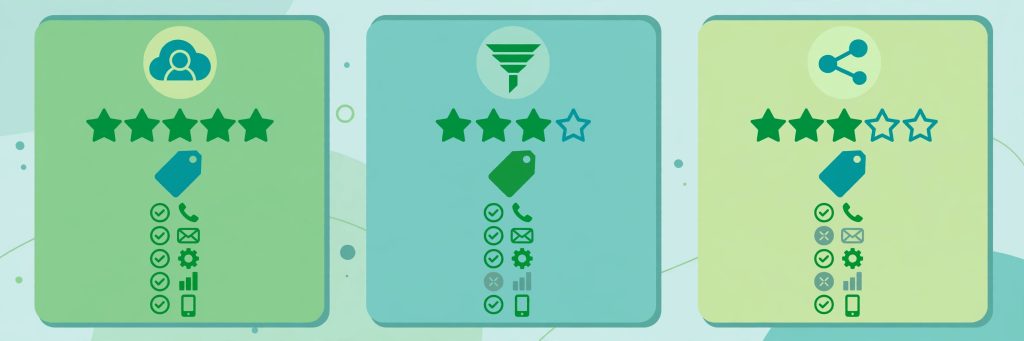
With so many options, use this five-step process to decide in a week:
- List your must-haves. Write down your lead sources, team size, and the 5 features you cannot live without.
- Shortlist three. Based on this guide, pick the three that best match your must-haves and budget.
- Take the free trials. Use real data from your business, not demo data. Run each trial for at least 5 working days.
- Test with your actual team. The salesperson who will use it daily should try it, not just the owner.
- Check the total cost. Include users, add-ons, and any implementation fees for 12 months.
The biggest mistake SMEs make is choosing based on a demo alone. A CRM lives or dies on daily adoption, so the one your team will actually use beats the one with the longest feature list.
Implementation Tips for Small Teams
Buying a CRM is step one. Getting value from it is step two. These practices separate successful implementations from expensive shelfware:
- Import clean data. Deduplicate your contacts before importing. Messy data in means messy reports out.
- Define your pipeline stages clearly. Use the stages your team already talks about, like New Lead, Quoted, Negotiation, and Won.
- Automate the boring parts. Lead assignment, welcome messages, and follow-up reminders should run without human effort.
- Integrate WhatsApp. For Indian customers, WhatsApp follow-ups get far better response rates than email alone.
- Review reports weekly. A 15-minute weekly review of the pipeline keeps the whole team honest and focused.
Many SMEs pair their CRM with email marketing for nurturing leads over time. If that is on your roadmap, see our guide to email marketing for Indian small businesses.

FAQ
How much does CRM software cost for a small business in India?
Expect roughly 500 to 2,500 rupees per user per month for a capable CRM, with free tiers available from Zoho, Freshsales, and HubSpot for very small teams. Always calculate the 12-month total including add-ons.
Which CRM is best for a 5-person team in India?
For most 5-person teams, Zoho CRM or Freshsales offer the best balance of price, features, and local support. Kylas is worth a look if you want something simpler and built specifically for Indian SMEs.
Do I need GST invoicing inside my CRM?
Not necessarily. Many SMEs keep invoicing in their accounting software and use the CRM for sales. But if your CRM generates quotes, GST-ready tax calculations save manual work and errors.
Can a CRM integrate with WhatsApp?
Yes. Most leading CRMs integrate with WhatsApp through the official Business API, either natively or via partners. This is almost essential for Indian SMEs, since customers respond far better on WhatsApp than email.
How long does CRM implementation take for an SME?
A simple setup takes 1 to 2 weeks, including data import and basic training. More complex setups with heavy customisation can take a month or more. Start simple and expand later.
Conclusion
The best CRM software for Indian SMEs in 2026 is the one your team will actually use every day, priced in rupees, with support in your time zone. Zoho CRM and Freshsales lead the pack for most small businesses, Kylas is a strong local contender, HubSpot offers the best free start, and Salesforce Starter suits companies planning rapid scale.
Shortlist three, trial them with real data, check the true 12-month cost, and commit. Every month without a CRM is a month of leads quietly slipping away, and in a competitive Indian market, you cannot afford that.

2 Comments
Pingback: Best GST Billing Software for Indian Small Businesses in 2026: How to Choose
Pingback: Best Accounting Software for Indian Small Businesses in 2026: How to Choose